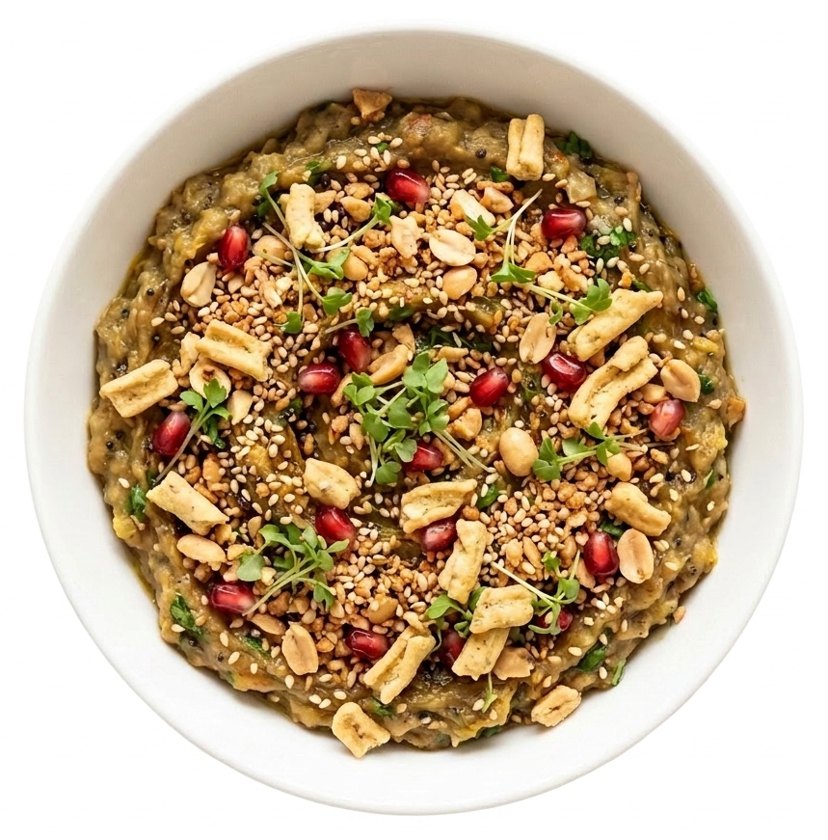
Smoked Aubergine with Sesame Raita & Papdi Gathya
Smoky roasted aubergine mashed into a rough paste and folded through a mustard-and-curry-leaf masala, served cold with a crunchy peanut-sesame crumble, sesame raita and papdi gathya for scooping. It tastes savoury, tangy and lightly sweet, with a nutty crunch on top.
Whole spices for the oil
8 gDropped into the hot oil at the start of frying (step 4)Ground spices for the pan
42 gStirred into the fried aromatics (step 5)Peanut crumble spices
4.1 gTossed with the roasted nuts and sesame (step 8)Everything else

Method
- Heat the oven to 160°C (320°F).
- Rub 1600 g aubergine with 1 tablespoon of the vegetable oil, set them on a baking tray and roast for 30 minutes, until the flesh gives completely and the skins are charred; a hot grill works too. Leave the oven on.
- While still hot, tip the aubergines into a bowl, seal with cling film and let them steam and cool for 10 minutes. Strip off the skins and pulse the flesh in a blender to a coarse paste.
- Warm 91.3 g vegetable oil in a wide pan and add the whole spices for the oil, letting them pop.
- Add half of the 80 g curry leaves, 18 g green chilli and the ground spices for the pan, and fry until fragrant, then pull the pan off the heat.
- Stir the aubergine paste into the pan, then mix in the rest of the 80 g curry leaves, 30 g coriander leaves, 300 g red onion, lemon juice, sugar and sea salt to taste.
- For the crumble, roast 100 g peanut in a roasting tin in the oven for 10 minutes, then add 50 g sesame seed and the peanut crumble spices and cook 5 minutes more. Cool, then blitz briefly to a coarse rubble.
- Scatter 100 g coriander cress, 250 g pomegranate seeds and the crumble over the aubergine and serve with 200 g sesame raita and 200 g papdi gathya alongside.
Don't have something?


 Baby aubergine
Use the same weight; halve or quarter and cook 2–3 minutes longer. They hold their shape better in the sauce.
 Small aubergine
Use the same weight; slice or cube to the recipe's size. Similar flesh, slightly firmer.
 Round aubergine
Use the same weight; cube and salt for 10 minutes if the recipe does. It absorbs oil a little more.


 Peanut oil
Use 1:1 by weight. Handles high-heat frying identically and introduces a very subtle, pleasant nuttiness.
 Ghee
Use 1:1 by weight. Yields a much richer, authentic aroma and a glossy, heavier mouthfeel.
 Mustard oil
Use 1:1 by weight. Heat until smoking, then cool slightly before cooking to temper its intensely pungent, sharp mustard kick.


 Mustard seeds
Use equal weight. Pop in hot fat until they crackle and turn greyish; yields an almost identical nutty, pungent finish.
 Yellow mustard seeds
Use equal weight. Fry over medium heat; delivers a milder, sweeter pop and turns bitter quickly if the oil is excessively hot.


 Ground cumin
Use 70% of the weight; add with ground spices or sauce bases rather than hot oil tempering, where it scorches quickly and turns bitter.
 Black cumin seeds
Use equal weight for oil tempering. Delivers an earthy profile with an additional musky, smoky, and slightly bitter edge.
 Fennel seed
Use 60% of the weight for tempering; offers comparable warm aroma, but leans sweet and liquorice-like rather than savoury and earthy.


 Bay leaf
Fry 1 bay leaf for every 5 curry leaves in hot oil; imparts a warm, woodsy background note, but misses the citrus-sulphury punch entirely.
 Lime juice
Add a small squeeze (about 5 ml per sprig of curry leaves) right before serving; provides sharp citrus top notes without the toasty, herbal aroma.


 Chilli powder
Use 10 to 15% of the weight (about 1/4 teaspoon per chilli); imparts dry pungent heat and reddens the dish without the grassy crunch.
 Dried red chilli
Use 1 dried pod per fresh green chilli; snap in half and temper in hot oil for a deeper, toastier heat.


- Ginger and garlic paste
Use the same weight; the difference is only the order of the names.
 Garlic paste
Mix with an equal weight of ginger paste and use the same total weight.
 Garlic
For 20 g paste use about 10 g crushed garlic and 10 g grated ginger root with a splash of water. Add a little extra water if the dish looks dry.


 Ground ginger
Use 50% of the weight. Mimics turmeric's warm, earthy, rhizome background, but provides none of the golden-yellow colour.
 Saffron
Steep a tiny pinch (0.1 g per 2 g turmeric) in 2 tbsp warm water; use to match the rich golden hue. Contributes an aristocratic, honeyed floral flavour rather than earthy bitterness.


 Dried kashmiri chilli
Grind deseeded dried pods to an equal weight of powder; gives identical vivid red colour and gentle warmth.
 Red chilli powder
Use 25% of the weight mixed with sweet paprika for colour; straight red chilli powder is substantially hotter and will make the dish fiery.
- Chilli powder
Use one-third of the weight; the sauce will be less intensely red and notably sharper in heat.


 Coriander (cilantro) or basil
Use the same weight, choosing the coriander element if available. If only basil is available, expect a sweeter, more aniseed flavour.
 Basil leaves
Use the same weight. Basil is sweeter and more aromatic in a different way; add near the end so it keeps its perfume.
 Coriander paste
Use 1.5 times the weight and reduce other liquid slightly; it is less fresh and more concentrated, so taste before adding more.


- Ground cumin
Use 50% of the weight mixed with equal parts ground coriander and a pinch of ground cinnamon, ground cloves, and ground green cardamom. Sprinkle near the end for a warming finish.
 Lentil stew spice mix
Use 75% of the weight. Simmer briefly in the gravy; imparts roasted warmth and complexity, though it adds a slight tang and earthy lentil undertone.


 Mustard powder
Use equal weight (1:1). Whisk with a tablespoon of cold water 10 minutes prior to adding to develop full pungent heat, or stir directly into curries for gentle warmth.
- Yellow mustard seeds
Grind to a fine powder in a spice grinder; use equal weight (1:1). Gives mild, tangy heat without overpowering the sauce.
- Black mustard seed
Grind finely; use 75% of the weight. Noticeably more pungent, peppery, and bitter than yellow ground mustard.


 Fenugreek seeds
Grind whole seeds finely in a spice grinder; use equal weight (1:1). Ensure it cooks through gently, as undercooked or burnt ground seeds become intensely bitter.
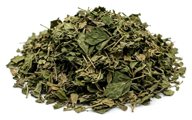 Dried fenugreek leaves
Crush dried leaves between your palms and add towards the end; use 50% of the weight. Gives the unmistakable maple-herb aroma without the sharp bitterness of the seeds.
- Yellow mustard seeds
Grind finely; use 50% of the weight. Adds an earthy, sharp bite, though it lacks the distinctive sweet-curry smell.


- Lime juice
Use equal volume or weight; delivers almost identical sharp acidity with a faintly more aromatic, bitter-edged profile.
 Dried mango powder
Use 25% of the weight (about 1 g amchoor for 4 g juice); provides clean fruity tartness without thinning the sauce.
 White vinegar
Use 75% of the volume; gives direct sourness without any citrus floral fragrance.


 Onion
Use the same weight; cook a little longer. Milder and less sweet when raw.
 Shallot
Use the same weight; sweeter and softer, so reduce cooking time slightly.
 Spring onion
Use only the white parts, weight for weight, for raw or quick-cooked dishes; green parts are too grassy for long cooking.


 Jaggery
Use equal weight; grate or shave finely so it dissolves rapidly, giving a warm, caramel-like sweetness and slightly darker sauce.


 Peanut
Dry-roast raw peanuts until spotted and fragrant; use the same weight.
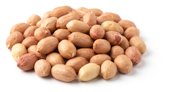 Shelled peanut
Roast and rub off skins; use the same weight.
 Roasted cashew nut
Use the same weight for a milder crunch; less earthy, so adjust salt.


 White sesame seed
Use the same weight. Toast lightly before use; white seeds are milder and give a cleaner look.
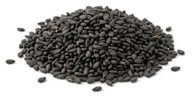 Black sesame seed
Use the same weight. They are stronger and more bitter; toast briefly and use slightly less if the dish is delicate.
- Peanut
Use the same weight, crushed or chopped. It gives crunch but not the same nutty sesame aroma.


 Tandoori snack spice mix
Use the same weight; taste first as it can be smokier and saltier. Add lime or amchoor if the dish needs more tang.
 Dried mango powder
Use about half the weight, mixed with black salt and a pinch of ground cumin. It gives tang and saltiness but lacks the minty, asafoetida notes.
 Black salt
Use about half the weight and add lime juice to taste. It gives the salty, sulphurous edge but not the full tangy blend.


 Coriander microgreen
Use the same weight; use raw as a garnish, with no cooking.
 Micro coriander cress
Use the same weight; identical raw garnish use.
 Coriander leaf
Use the same weight, chopped fine; it is stronger, so use 75% if used raw as a garnish.


 Plain yoghurt
Use the same weight; stir in 1 teaspoon toasted sesame seed per 100 g and a pinch of salt.
 Yoghurt
Use the same weight; stir in toasted sesame seed and salt as above.
 Tahini paste
Use about 5 g tahini per 100 g plain yoghurt; stir well, as it adds sesame flavour without seeds.


 Crisp chickpea-flour noodles
Use the same weight; thinner and saltier, crush lightly over the dish.
 Boondi
Use the same weight; crush lightly, softer and spongier.
 Lentil crisp
Use the same weight, crushed; crisper but less rich.


 Pomegranate seed
Use the same weight of seeds only; no preparation needed. This is identical for garnish or fresh eating.
 Dried pomegranate seeds
Use 20–25% of the weight, crush or soak; they give sourness but not fresh juicy garnish.
 Green grape
Use the same weight, halved; they add juiciness but less crunch and less sourness.


Similar dishes

- Same: Goan Brinjal Pickle shares aubergine, vegetable oil, curry leaf, black mustard seed, cumin seed and Kashmiri chilli powder with this dish, and both balance sourness with sweetness.
- Different: Goan Brinjal Pickle is a matured pickle made with garlic, dried Kashmiri chilli, malt vinegar and jaggery, while this dish is a cold roasted aubergine mash served with sesame raita, a peanut-sesame crumble and papdi gathya.

- Same: Tandoori Baingan shares aubergine, red onion, yoghurt, kashmiri chilli, garam masala and chaat masala with this dish.
- Different: Tandoori Baingan grills aubergine chunks in a spiced yoghurt marinade and folds them through a creamy cooked marinade with mustard oil, butter, garlic, ginger and bird's-eye chilli, while this dish roasts and mashes aubergine with mustard seed and curry leaf and serves it cold with peanut-sesame crumble, sesame raita and papdi gathya.

- Same: It shares aubergine, curry leaf, black mustard seed, cumin, green chilli, ginger garlic paste, turmeric, Kashmiri chilli powder, coriander leaves, vegetable oil, peanut and sesame with this dish.
- Different: It simmers baby aubergines in a thick coconut milk gravy built on toasted coconut, peanut, sesame, coriander seed and cumin paste with fried onion and tamarind-date chutney, while this dish roasts and mashes aubergine, adds lemon juice, and serves it cold with sesame raita, papdi gathya, pomegranate and a peanut-sesame crumble.

- Same: Baingan Raita shares aubergine, vegetable oil, black mustard seed, cumin seed, curry leaf, turmeric, chilli powder, coriander and salt with this dish, and both use a mustard-seed tempering with curry leaves and yogurt.
- Different: Baingan Raita uses yogurt as its base and soft fried aubergine with dried red chilli, while this dish smokes and mashes aubergine with lemon juice, sugar, red onion, peanuts, sesame, chaat masala, pomegranate and papdi gathya and lacks ginger garlic, garam masala, ground mustard and fenugreek.