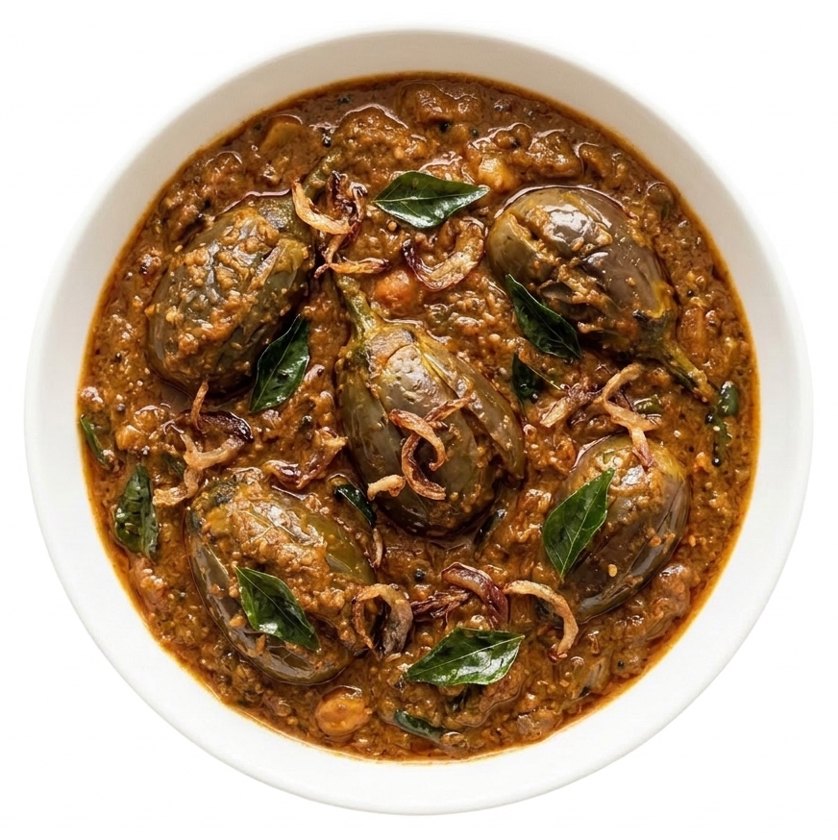
Hyderabad Baby Aubergine with Coconut & Curry Leaf
Baby aubergines simmered in a thick coconut and curry-leaf gravy, enriched with a toasted coconut, peanut and spice paste and finished with tamarind chutney. It tastes nutty, creamy and tangy, with gentle heat and a fresh curry-leaf aroma.
Toasted coconut masala
55 gToasted with the coconut and peanuts before blending (step 3)Tempering seeds
3.5 gAdded to the hot oil with curry leaves before the onions (step 5)Sauce ground spices
41 gStirred into the cooked onions before the coconut milk (step 7)Everything else

Method
- Cut a deep cross into the base of each of the 280 g baby aubergine. Put them in very salty water with sea salt for 30 minutes, then drain well.
- Heat 10 g of the 27 g vegetable oil in a large frying pan. Fry the aubergines for about 5 minutes, until just tender. Lift out and set aside. Wipe the pan.
- Toast 100 g desiccated coconut, 50 g peanut and the toasted coconut masala (40 g white sesame seed, 6.8 g coriander seeds, 8.4 g cumin seed) in the dry pan for about 30 seconds, until they smell nutty. Tip out and cool.
- Blend the cooled toasted mixture with 12 g green chilli, 100 g coriander leaves and a splash of water to make a paste.
- Heat the remaining 17 g vegetable oil in the same pan over medium heat. Add the tempering seeds (3.5 g black mustard seed) and 80 g curry leaf; fry for about 30 seconds, until the seeds begin to pop.
- Add 300 g brown onion, finely chopped, and cook for 10 minutes, until soft and pale.
- Stir in the sauce ground spices (30 g ginger garlic paste, 3 g ground turmeric, 7.8 g kashmiri chilli powder). Add 507 g coconut milk and bring to a boil.
- Lower to a simmer, cover and cook for about 20 minutes, until everything is soft and combined.
- Season with sea salt and stir in 122 g tamarind and date chutney.
- Add the reserved aubergines and cook for another 10 minutes.
- Scatter over fried onion and a few curry leaves to garnish.
Don't have something?


 Small aubergine
Use the same weight; cut into baby-aubergine-sized wedges. Cooking time is nearly the same, maybe 1 minute less.
 Aubergine
Use the same weight; cut into 3 cm cubes. It releases more water, so cook 3–4 minutes longer and adjust salt.
 Round aubergine
Use the same weight; quarter and cook 2 minutes longer. Flesh is softer and absorbs more oil.


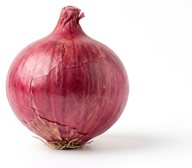 Crispy onion
Use the same weight; it is the same fried onion, so adjust salt if already salted.
 Fried onion paste
Use 1.2 times the weight; it is wetter, so cook a little longer to dry.
 Onion
Slice and fry 100 g raw onion to get about 30 g fried; use that weight.


 Bay leaf
Fry 1 bay leaf for every 5 curry leaves in hot oil; imparts a warm, woodsy background note, but misses the citrus-sulphury punch entirely.
 Lime juice
Add a small squeeze (about 5 ml per sprig of curry leaves) right before serving; provides sharp citrus top notes without the toasty, herbal aroma.


 Peanut oil
Use 1:1 by weight. Handles high-heat frying identically and introduces a very subtle, pleasant nuttiness.
 Ghee
Use 1:1 by weight. Yields a much richer, authentic aroma and a glossy, heavier mouthfeel.
 Mustard oil
Use 1:1 by weight. Heat until smoking, then cool slightly before cooking to temper its intensely pungent, sharp mustard kick.


 Grated desiccated coconut
Use equal weight directly; it is the identical ingredient under a different label.
 Fresh coconut
Grate finely and use 130% to 140% of the weight to compensate for higher moisture; toast gently in a dry pan over low heat if a dry texture is needed.
 Dried coconut
Grate finely using a microplane and use equal weight. Offers a slightly oilier, toastier coconut profile.


 Roasted peanut
Use the same weight; adjust salt if they are already salted, and crush or grind as the recipe asks.
 Cashew nut
Use the same weight; they are richer and softer, so roast for a shorter time and reduce added fat.
 Almond
Use the same weight; blanch and peel for sauces, or chop for texture. They are firmer and less oily.


 Sesame seeds
Use 100% of the weight. Toast lightly in a dry pan until fragrant; works identically in gravies, spice blends, and tadkas.
 Poppy seed
Use 80% of the weight, soaked in hot water and ground to a paste. Perfect for thickening kormas and royal gravies without altering the pale colour.
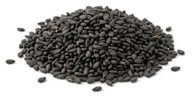 Black sesame seeds
Use 100% of the weight. It has an earthier, slightly more bitter flavour and will dramatically darken the dish.


 Ground coriander
Use 75% of the weight; stir in along with wet masala or tomato purée rather than frying in hot oil, as the fine powder burns instantly.
 Cumin seed
Use 50% of the weight for tempering in hot oil. Lacks the floral, sweet citrus flavour of coriander, introducing warm, pungent earthiness instead.
 Fennel seed
Use 50% of the weight in tempering; provides pleasant aromatic sweetness, though noticeably aniseedy rather than citrusy.


 Ground cumin
Use 70% of the weight; add with ground spices or sauce bases rather than hot oil tempering, where it scorches quickly and turns bitter.
 Black cumin seeds
Use equal weight for oil tempering. Delivers an earthy profile with an additional musky, smoky, and slightly bitter edge.
- Fennel seed
Use 60% of the weight for tempering; offers comparable warm aroma, but leans sweet and liquorice-like rather than savoury and earthy.


 Chilli powder
Use 10 to 15% of the weight (about 1/4 teaspoon per chilli); imparts dry pungent heat and reddens the dish without the grassy crunch.
 Dried red chilli
Use 1 dried pod per fresh green chilli; snap in half and temper in hot oil for a deeper, toastier heat.


 Coriander (cilantro) or basil
Use the same weight, choosing the coriander element if available. If only basil is available, expect a sweeter, more aniseed flavour.
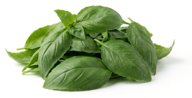 Basil leaves
Use the same weight. Basil is sweeter and more aromatic in a different way; add near the end so it keeps its perfume.
 Coriander paste
Use 1.5 times the weight and reduce other liquid slightly; it is less fresh and more concentrated, so taste before adding more.


 Mustard seeds
Use equal weight. Pop in hot fat until they crackle and turn greyish; yields an almost identical nutty, pungent finish.
 Yellow mustard seeds
Use equal weight. Fry over medium heat; delivers a milder, sweeter pop and turns bitter quickly if the oil is excessively hot.




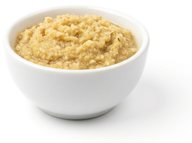
- Ginger and garlic paste
Use the same weight; the difference is only the order of the names.
 Garlic paste
Mix with an equal weight of ginger paste and use the same total weight.
 Garlic
For 20 g paste use about 10 g crushed garlic and 10 g grated ginger root with a splash of water. Add a little extra water if the dish looks dry.


 Ground ginger
Use 50% of the weight. Mimics turmeric's warm, earthy, rhizome background, but provides none of the golden-yellow colour.
 Saffron
Steep a tiny pinch (0.1 g per 2 g turmeric) in 2 tbsp warm water; use to match the rich golden hue. Contributes an aristocratic, honeyed floral flavour rather than earthy bitterness.


 Dried kashmiri chilli
Grind deseeded dried pods to an equal weight of powder; gives identical vivid red colour and gentle warmth.
 Red chilli powder
Use 25% of the weight mixed with sweet paprika for colour; straight red chilli powder is substantially hotter and will make the dish fiery.
- Chilli powder
Use one-third of the weight; the sauce will be less intensely red and notably sharper in heat.


 Single cream
Use equal weight; simmer gently over low heat to prevent curdling. Imparts a comparable rich texture, though it adds dairy richness without any coconut fragrance.
 Cashew paste
Whisk 1 part cashew paste with 2 parts water to match the consistency, then use equal weight. Provides a thick, velvety body without coconut flavour.
 Whole milk
Use equal weight, but reduce other cooking liquids by 20% to compensate for the lower viscosity. The curry will be lighter and lack sweetness.


 Tamarind chutney or mint chutney
Use the same weight of the tamarind chutney part and stir in crushed jaggery to taste; mint chutney will be herby.
 Mango chutney
Use the same weight; sweeter and fruitier, with less tamarind tang.
 Tamarind and coriander chutney
Use the same weight; more herby and tart, so add a little jaggery.


Similar dishes

- Same: Andhra Vankaya Thakkali shares aubergine, coconut, curry leaves, mustard seed, cumin, coriander seed, turmeric and Kashmiri chilli powder with this dish.
- Different: Andhra Vankaya Thakkali uses tomato, garlic, urad dal and dried red chilli and has no coconut milk, peanut, sesame, tamarind chutney, ginger-garlic paste or fried onion, while this dish is a coconut-milk gravy finished with tamarind-date chutney.
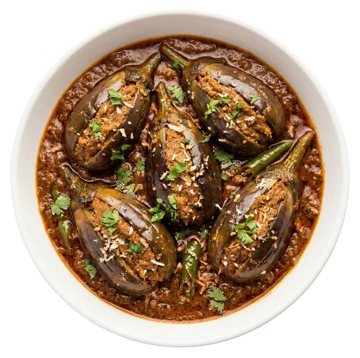
- Same: Bharli Wangi shares baby aubergines, vegetable oil, desiccated coconut, coriander seeds, Kashmiri chilli powder and tamarind with this dish.
- Different: Bharli Wangi slits and stuffs the aubergines with a cashew or peanut, coconut, garlic, jaggery and tamarind paste, then simmers them in gravy, while this dish simmers aubergines in a coconut-milk gravy with curry leaf, mustard seed, sesame, peanut and fried onion.

- Same: Andhra Vankaya Pulusu shares aubergine, coconut, curry leaf, black mustard seed, turmeric, Kashmiri chilli powder and tamarind with this dish.
- Different: Andhra Vankaya Pulusu uses roasted aubergine, Greek yoghurt, whole coconut, garlic, cinnamon, water, tamarind paste and sugar, while this dish uses baby aubergines simmered in a thick gravy with desiccated coconut, peanut, sesame, fried onion, ginger garlic paste and tamarind-date chutney.

- Same: Kutchi Bhagare Baingan shares baby aubergines, curry leaves, onion, turmeric, Kashmiri chilli powder, cumin, sesame, coconut and tamarind with this dish.
- Different: Kutchi Bhagare Baingan adds tomato, poppy seed paste, black pepper and dried red chilli, and lacks this dish's peanut, coconut milk, black mustard seed, ginger-garlic paste and tamarind-date chutney, cooking in an onion-tomato sauce thickened with poppy seed, sesame and coconut paste rather than a coconut-milk gravy.