
Smoked Haddock Kichri
Smoked haddock kichri is a creamy rice and moong dal dish with flaked poached fish, pickled cauliflower and a raw egg yolk on top. It tastes smoky, mild and rich, with gentle spice and a fresh pepper finish.
Poaching aromatics
0.4 gAdded to the milk before the haddock is poached (step 2)Turmeric for the dal
6 gStirred into the moong dal as it cooks (step 5)Cumin for the kichri
4.2 gAdded to the onion with the garlic, chilli and ginger (step 9)Garnish pepper
0 gGround over the finished bowls (step 13)Everything else

Method
- Thinly slice 600 g small cauliflower and put it in 199 g pickling liquor. Steep for 1–2 hours, then keep in a sterilised jar in the refrigerator.
- Pour 362 g whole milk into a heavy saucepan and add the poaching aromatics masala (0.4 g Indian bay leaf and black peppercorn to taste).
- Heat the milk to a low simmer, add 300 g smoked haddock skin-side down, and poach for about 10 minutes.
- Strain off and discard the liquid and spices, let the fish cool, then flake it, removing skin and bones.
- Put 200 g yellow moong dal in a saucepan, cover with cold water, and stir in the turmeric for the dal masala (6 g ground turmeric).
- Boil, then simmer for about 10 minutes, until the dal has broken down and absorbed the water.
- Cool the dal, then purée it in a food processor.
- Heat 27 g vegetable oil in another saucepan, add 150 g small chopped onion, and cook over medium heat until soft and clear.
- Stir in the cumin for the kichri masala (4.2 g cumin seed), 6 g finely chopped garlic, 12 g finely chopped green chilli and 4 g peeled finely chopped ginger.
- Add the dal purée, 400 g cooked cooled basmati rice, the poached haddock and 100 g diced unsalted butter; fold gently until combined, keeping the fish in pieces.
- Loosen with a little fish stock if needed; the mixture should be creamy and rich. Remove from the heat and season with sea salt to taste.
- Spoon into bowls and top with 68 g raw egg yolk.
- Serve with the pickled cauliflower, 30 g coriander cress and the garnish pepper (freshly ground black pepper to taste).
Don't have something?

 Milk
Use 100% of the weight. If using semi-skimmed milk, stir in 10 g butter per 200 g milk to match the richness of whole milk.
 Single cream
Use 60% cream diluted with 40% water by weight to match the fat content of whole milk. Gravies will taste richer and reduce faster.


 Bay leaf
Use the same number or weight. Ordinary bay is milder and lacks the cinnamon-clove note; add early and remove before serving.
 Cassia bark (Chinese cinnamon)
Use about 1 g cassia for every 2 g Indian bay leaf. It gives a warm cinnamon note but not a true laurel flavour; remove before serving.
- Cinnamon stick
Use a small 1 cm piece for 2 leaves. It adds warm sweetness but not bay flavour; remove before serving.


 Coarsely ground black pepper
Use 75% of the weight. Add midway through simmering; spreads heat evenly through the dish instead of delivering isolated bursts.
 Ground black pepper
Use 50% of the weight. Stir in near the end of cooking; significantly darkens light gravies and provides an immediate, sharp bite.


 Cod fillet
Use the same weight; cube and simmer until just cooked. Not smoked, so add paprika and a little salt.
 Haddock
Use the same weight; same fish but unsmoked. Add paprika for colour and a smoky note.
 Cod loin
Use the same weight; thick chunks hold together. Not smoked; add paprika and check seasoning.


 Egg
Use the same weight of beaten whole egg. Adds white as well as yolk, so the mixture is less rich and sets more firmly.
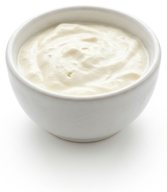 Cream
Use about 15 g cream per egg yolk for richness in curries or sauces. Does not bind or set like yolk.
 Full-fat natural yoghurt
Use about 15–20 g per yolk for moisture in marinades or fillings. Adds tang and will not enrich or set like yolk.


 Coriander microgreen
Use the same weight; use raw as a garnish, with no cooking.
 Micro coriander cress
Use the same weight; identical raw garnish use.
 Coriander leaf
Use the same weight, chopped fine; it is stronger, so use 75% if used raw as a garnish.


- Black peppercorn
Use the same weight and crush or grind as the recipe needs; whole peppercorn is the same spice.
- Ground black pepper
Use the same weight; add nearer the end if the recipe calls for whole pepper, as ground loses aroma faster.
 Ground white pepper
Use about 75–80% of the weight; it is milder and earthier, with less bite.


 Broccoli
Use the same weight; cut into similar florets and cook 2–3 minutes less. It is greener and slightly stronger in flavour.
 Cauliflower floret
Use the same weight and break into even florets. This is essentially the same vegetable, so cooking and flavour change little.
 Cabbage
Use the same weight; cut into wedges and cook 3–5 minutes less. It becomes much softer and sweeter, so the dish loses cauliflower's bite.


 White vinegar
Use 70% of the weight, make up the rest with water, and add a little granulated sugar if the liquor was sweet. Sharper and thinner.
 White wine vinegar
Use at 70% of the weight with water. Milder and fruitier than pickling liquor.
 Malt vinegar
Use at 60% of the weight with water; stronger and maltier, so reduce any other vinegar in the dish.


 Split green mung beans
Use the same weight; slightly earthier and greener, with similar cooking time.
 Split mung beans
Use the same weight; essentially the same dal, so adjust only the colour and slight flavour.
 Red lentils
Use the same weight; cooks faster and softer, and turns pink, so reduce cooking time.


 Ground ginger
Use 50% of the weight. Mimics turmeric's warm, earthy, rhizome background, but provides none of the golden-yellow colour.
 Saffron
Steep a tiny pinch (0.1 g per 2 g turmeric) in 2 tbsp warm water; use to match the rich golden hue. Contributes an aristocratic, honeyed floral flavour rather than earthy bitterness.


 Peanut oil
Use 1:1 by weight. Handles high-heat frying identically and introduces a very subtle, pleasant nuttiness.
 Ghee
Use 1:1 by weight. Yields a much richer, authentic aroma and a glossy, heavier mouthfeel.
 Mustard oil
Use 1:1 by weight. Heat until smoking, then cool slightly before cooking to temper its intensely pungent, sharp mustard kick.






 Ground cumin
Use 70% of the weight; add with ground spices or sauce bases rather than hot oil tempering, where it scorches quickly and turns bitter.
 Black cumin seeds
Use equal weight for oil tempering. Delivers an earthy profile with an additional musky, smoky, and slightly bitter edge.
 Fennel seed
Use 60% of the weight for tempering; offers comparable warm aroma, but leans sweet and liquorice-like rather than savoury and earthy.



 Garlic paste
Use equal weight. Fry gently in oil or ghee with the ginger; incorporates smoothly into curries without visible minced bits.
 Garlic powder
Use 15% to 20% of the weight (about 1 g for every 5 to 6 g fresh cloves). Whisk into sauces; gives a savoury, toasted garlic flavour without raw pungency.
 Shallot
Use 1.5 times the weight, very finely minced. Sauté until golden; provides savoury allium sweetness, though it lacks garlic's pungent sulphur bite.


 Chilli powder
Use 10 to 15% of the weight (about 1/4 teaspoon per chilli); imparts dry pungent heat and reddens the dish without the grassy crunch.
 Dried red chilli
Use 1 dried pod per fresh green chilli; snap in half and temper in hot oil for a deeper, toastier heat.


 Ginger paste
Use equal weight. Sauté in hot fat until the raw allium smell disappears; slightly wetter, but provides identical warmth and pungency.
- Ground ginger
Use 20% to 25% of the weight (1 g for every 4 to 5 g fresh). Stir into the gravy; adds peppery heat and warmth, though it misses the crisp, zesty kick of raw root.

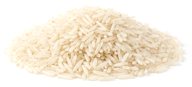
 Plain boiled rice
Use 2.5 times the weight if substituting pre-cooked rice. Fold in gently at the end of the recipe; grains will be shorter and less fragrant.


 Chicken stock
Use the same volume. It gives a fuller, less fishy base; simmer with a few prawn shells if you have them.
 Vegetable stock
Use the same volume for a neutral version; add 1 tsp soy sauce per 250 ml to hint at fish.
 Water
Use the same volume with a pinch of salt. The dish will be thinner, so reduce other liquid slightly.


Similar dishes
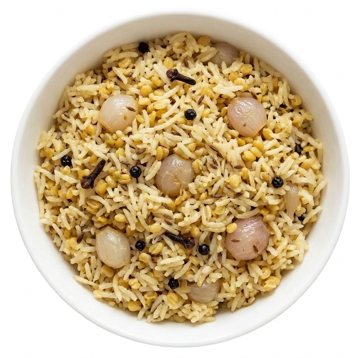
- Same: Khilwan Khichari shares basmati rice, moong dal, cumin seed, bay leaf and black peppercorn with this dish.
- Different: It is a dry, ghee-rich rice-and-lentil dish with baby onions and cloves, while this dish is creamy from milk and butter and includes smoked haddock, raw egg yolk, turmeric, garlic, ginger, green chilli, pickled cauliflower, coriander cress and fish stock.

- Same: Venu Pongal shares with this dish a soft rice and yellow moong dal base seasoned with cumin, turmeric, black pepper and salt.
- Different: Venu Pongal lacks this dish’s smoked haddock, milk, fish stock, egg yolk, pickled cauliflower, onion, garlic, green chilli, coriander cress and bay leaf, and it uses ghee with cashews, curry leaf and asafoetida instead of butter and vegetable oil.
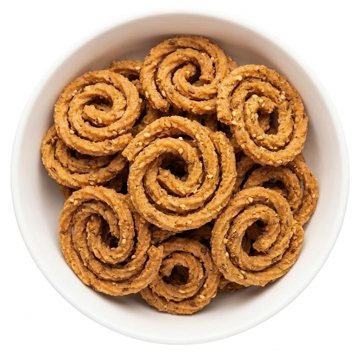
- Same: Mangupullu shares basmati rice, moong dal and cumin seed with this dish.
- Different: Mangupullu uses gram flour, sesame seed, ghee and vegetable oil and is deep-fried into crisp rings; this dish uses smoked haddock, milk, butter, egg yolk, turmeric, fish stock and pickled cauliflower and is cooked soft and creamy.

- Same: Pesaru Punukulu shares basmati rice, mung/moong legumes, onion, green chilli, coriander and vegetable oil with this dish.
- Different: Pesaru Punukulu is a coarsely ground, deep-fried fritter batter with curry leaf, while this dish is a soft rice-and-dal dish with smoked haddock, milk, butter, egg yolk, turmeric, cumin and pickled cauliflower.