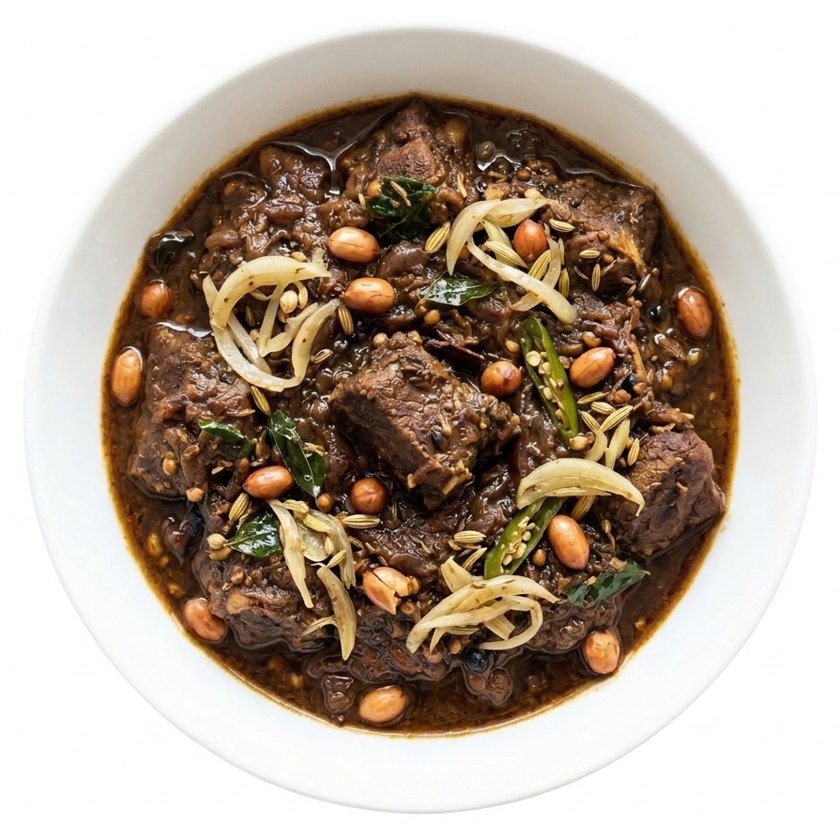
Gana’s Pork Cheek Coorg
Pork cheeks are slow-cooked in a tangy onion marinade with roasted whole spices, vinegar and tamarind-date chutney, then served with pickled fennel and peanuts. The dish is a semi-dry, savoury curry with warm spice notes and a sharp-sweet finish.
Spice mixture
24 gRoasted and ground, then stirred into the pork at the end (step 7)Marinade spices
124 gMixed into the onion marinade (step 3)Everything else

Method
- Put 200 g fennel bulb in 199 g pickling liquor and leave at room temperature for 1–2 hours, then refrigerate until needed.
- Dry-roast 1.3 g cinnamon stick, 4.8 g star anise, 2.1 g clove, 5.1 g coriander seeds, 2.9 g black peppercorn, 0.7 g green cardamom pod, 2.1 g cumin seed, 3.3 g mustard seed, 1.9 g fenugreek seed and half of the 80 g curry leaf in a frying pan over low heat for 3–4 minutes until aromatic and just coloured; alternatively roast at 180°C (350°F) for about 10 minutes.
- Cool the roasted spices, then grind them to a powder.
- Mix 900 g red onion puréed, 24 g green chilli slit, 90 g ginger garlic paste, 18 g ground turmeric, 15.6 g kashmiri chilli powder and the remaining curry leaves in a bowl.
- Coat 960 g pork cheek completely in the marinade, cover and refrigerate for at least 4 hours, preferably overnight.
- Heat 27 g vegetable oil in a deep heavy saucepan, add the pork with all its marinade, cover and cook over low heat for about 2 hours until the onion liquid has cooked away.
- Lower the heat to minimum and cook for another 2 hours, adding a little hot water only if the mixture becomes too dry; the meat should flake apart and the curry should stay semi-dry.
- Stir in the spice mixture, 60 g malt vinegar, 72 g tamarind and date chutney and sea salt to taste.
- Serve hot with the pickled fennel and 100 g roasted unsalted peanut.
Don't have something?


 Pork with fat
Use the same weight, cut into chunks, and braise 20–30 minutes longer until collagen softens.
 Pork
Use the same weight, add a little oil, and cook longer and slower; leaner and less gelatinous.
 Pork rib
Use the same weight of meat, bone removed; braise longer and skim the fat.


 Peanut oil
Use 1:1 by weight. Handles high-heat frying identically and introduces a very subtle, pleasant nuttiness.
 Ghee
Use 1:1 by weight. Yields a much richer, authentic aroma and a glossy, heavier mouthfeel.
 Mustard oil
Use 1:1 by weight. Heat until smoking, then cool slightly before cooking to temper its intensely pungent, sharp mustard kick.


 White malt vinegar
Use the same weight; sharper and clearer; reduce salt slightly.
 White vinegar
Use 90% of the weight, diluted with 10% water; harsher, so taste.
 Lime juice
Use the same weight; fresher sourness but no malt flavour; reduce salt.


 Tamarind chutney or mint chutney
Use the same weight of the tamarind chutney part and stir in crushed jaggery to taste; mint chutney will be herby.
 Mango chutney
Use the same weight; sweeter and fruitier, with less tamarind tang.
 Tamarind and coriander chutney
Use the same weight; more herby and tart, so add a little jaggery.


 Peanut
Dry-roast raw peanuts until spotted and fragrant; use the same weight.
 Shelled peanut
Roast and rub off skins; use the same weight.
 Roasted cashew nut
Use the same weight for a milder crunch; less earthy, so adjust salt.


 Celery
Use the same weight, sliced; add 2 g fennel seed per 100 g to mimic the aniseed note. Texture is stringier and less sweet.
 Onion
Use the same weight, sliced; add 2 g fennel powder per 100 g. It is sweeter and softer, with no crunchy bulb texture.
 Fennel seed
Use only 2–3 g per 100 g of missing bulb, tied in a cloth or ground; it gives the flavour but not the vegetable bulk.


- White vinegar
Use 70% of the weight, make up the rest with water, and add a little granulated sugar if the liquor was sweet. Sharper and thinner.
 White wine vinegar
Use at 70% of the weight with water. Milder and fruitier than pickling liquor.
- Malt vinegar
Use at 60% of the weight with water; stronger and maltier, so reduce any other vinegar in the dish.


 Ceylon cinnamon
True cinnamon: thinner, papery quills, milder and sweeter. Use about 1.5 times the weight, and taste.
 Ground cinnamon (cassia)
Use about a third of the weight (0.5 g ground for a 2.5 cm piece), stirred in with the ground spices rather than fried whole, since the powder burns quickly.
 Cassia buds
Use 60-70% of the weight; stronger and more peppery, so taste before adding more.


 Aniseed
Use equal weight or 1 g lightly crushed aniseed per whole star anise star. Delivers the same sweet liquorice profile, though slightly less woody.
- Fennel seed
Use equal weight, bruised in a mortar. Lends a gentler, sweeter liquorice note to gravies and biryanis.


 Ground cloves
Use 1 g ground for 4 g whole (or 1 small pinch per 2 to 3 whole cloves). Add with spice powders; disperses intense warmth quickly, so use with restraint.
 Allspice berries
Use 100% of the weight whole in tempering. Imparts a warm, clove-like aromatic profile combined with hints of nutmeg and cinnamon.
 Black cardamom pod
Use 1 pod for 3 to 4 cloves in whole tempering. Shares a camphor-like warmth and medicinal depth, though it introduces a distinct smoky undertone.


 Ground coriander
Use 75% of the weight; stir in along with wet masala or tomato purée rather than frying in hot oil, as the fine powder burns instantly.
 Cumin seed
Use 50% of the weight for tempering in hot oil. Lacks the floral, sweet citrus flavour of coriander, introducing warm, pungent earthiness instead.
- Fennel seed
Use 50% of the weight in tempering; provides pleasant aromatic sweetness, though noticeably aniseedy rather than citrusy.


 Coarsely ground black pepper
Use 75% of the weight. Add midway through simmering; spreads heat evenly through the dish instead of delivering isolated bursts.
 Ground black pepper
Use 50% of the weight. Stir in near the end of cooking; significantly darkens light gravies and provides an immediate, sharp bite.


 Green cardamom seed
Use 35 to 40% of the total pod weight; lightly bruise the seeds before frying in oil to release their essential oils.
 Ground green cardamom
Use 20 to 25% of the pod weight (about 1 generous pinch per pod); stir in toward the end of cooking so the delicate floral notes do not dissipate.
 White cardamom pod
Use 1:1 by pod count or weight; crack gently before using, though it is slightly less intensely floral.


 Ground cumin
Use 70% of the weight; add with ground spices or sauce bases rather than hot oil tempering, where it scorches quickly and turns bitter.
 Black cumin seeds
Use equal weight for oil tempering. Delivers an earthy profile with an additional musky, smoky, and slightly bitter edge.
- Fennel seed
Use 60% of the weight for tempering; offers comparable warm aroma, but leans sweet and liquorice-like rather than savoury and earthy.


 Black mustard seed
Use the same weight. The seeds are smaller and hotter; fry in hot oil until they pop, about 20–30 seconds, and reduce the heat if they darken too fast. The dish will be a little sharper.
 Yellow mustard seeds
Use the same weight. They are milder and larger; fry a few seconds longer until they pop. The finished dish will have less pungency.
 Ground mustard seed
Use 70% of the weight of whole seed, added with the other ground spices rather than fried whole. You lose the popping texture and the heat comes through more evenly.


- Mustard seed
Use 50% of the weight, crush or grind. Sharper heat and less maple-bitter; fry briefly in oil before adding.
 Caraway seeds
Use the same weight, crush lightly. Similar bitter-seed note but more aniseed; reduce other sweet spices slightly.
 Ajwain seeds
Use 25–30% of the weight, crush. Much stronger thyme-like flavour; do not overdo.


 Bay leaf
Fry 1 bay leaf for every 5 curry leaves in hot oil; imparts a warm, woodsy background note, but misses the citrus-sulphury punch entirely.
- Lime juice
Add a small squeeze (about 5 ml per sprig of curry leaves) right before serving; provides sharp citrus top notes without the toasty, herbal aroma.

- Onion
Use the same weight; cook a little longer. Milder and less sweet when raw.
 Shallot
Use the same weight; sweeter and softer, so reduce cooking time slightly.
 Spring onion
Use only the white parts, weight for weight, for raw or quick-cooked dishes; green parts are too grassy for long cooking.


 Chilli powder
Use 10 to 15% of the weight (about 1/4 teaspoon per chilli); imparts dry pungent heat and reddens the dish without the grassy crunch.
 Dried red chilli
Use 1 dried pod per fresh green chilli; snap in half and temper in hot oil for a deeper, toastier heat.


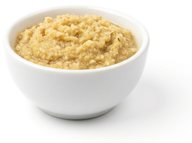
- Ginger and garlic paste
Use the same weight; the difference is only the order of the names.
 Garlic paste
Mix with an equal weight of ginger paste and use the same total weight.
 Garlic
For 20 g paste use about 10 g crushed garlic and 10 g grated ginger root with a splash of water. Add a little extra water if the dish looks dry.


 Ground ginger
Use 50% of the weight. Mimics turmeric's warm, earthy, rhizome background, but provides none of the golden-yellow colour.
 Saffron
Steep a tiny pinch (0.1 g per 2 g turmeric) in 2 tbsp warm water; use to match the rich golden hue. Contributes an aristocratic, honeyed floral flavour rather than earthy bitterness.


 Dried kashmiri chilli
Grind deseeded dried pods to an equal weight of powder; gives identical vivid red colour and gentle warmth.
 Red chilli powder
Use 25% of the weight mixed with sweet paprika for colour; straight red chilli powder is substantially hotter and will make the dish fiery.
- Chilli powder
Use one-third of the weight; the sauce will be less intensely red and notably sharper in heat.
Similar dishes

- Same: Sorpatel shares with this dish a slow-cooked pork curry base, vinegar souring, and whole spices such as cinnamon, cumin, black peppercorn, clove, green cardamom, turmeric and Kashmiri chilli.
- Different: Sorpatel uses pork and liver with olive oil, onion, garlic, dried Kashmiri chilli and chilli powder, while this dish uses pork cheeks, vegetable oil, red onion, ginger garlic paste, curry leaf, mustard seed, fenugreek, coriander seed, star anise, peanuts, fennel pickle, malt vinegar and tamarind-date chutney.
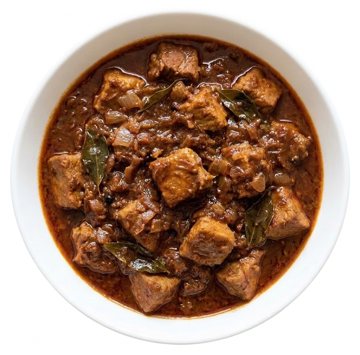
- Same: Vindaloo shares pork, vegetable oil, onion, curry leaf, vinegar, tamarind souring, and whole spices such as cumin, clove, cinnamon, black peppercorn, and star anise with this dish.
- Different: Vindaloo uses dried red chilli, jaggery, poppy seed, separate ginger and garlic, tamarind extract, and white malt vinegar, while it lacks this dish’s pork cheeks, peanuts, pickled fennel, pickling liquor, ginger garlic paste, turmeric, Kashmiri chilli powder, coriander seed, mustard seed, fenugreek seed, and green cardamom.

- Same: Aloogadda Vepudu shares curry leaves, onion, mustard seed, cumin seed, coriander seed, black peppercorn, green cardamom, clove, cinnamon and turmeric with this dish, and both are spice-led curries with a dry or semi-dry finish.
- Different: Aloogadda Vepudu uses potato as the main ingredient, ghee plus vegetable oil as the fat, and lemon juice as the souring agent, while this dish uses pork cheek, vegetable oil only, malt vinegar and tamarind-date chutney; it also lacks this dish’s star anise, fenugreek, ginger garlic paste, peanuts, fennel and pickling liquor, and it is a dry potato curry with a roasted spice paste and fried onion-curry leaf topping rather than a slow-cooked pork cheek curry.

- Same: Dhansaak shares with this dish the whole spices cinnamon, green cardamom, coriander seeds, cumin, mustard seed, fenugreek, black peppercorn, clove, and turmeric, plus red onion and a slow-cooked spice base.
- Different: Dhansaak is a lentil-and-vegetable stew with aubergine, sweetcorn, tomato, fresh coriander and mint, ginger, garlic, jalapeño, dried red chilli, and olive oil, while this dish is pork cheeks cooked with vinegar, tamarind-date chutney, peanuts, curry leaf, pickled fennel, and Kashmiri chilli powder.