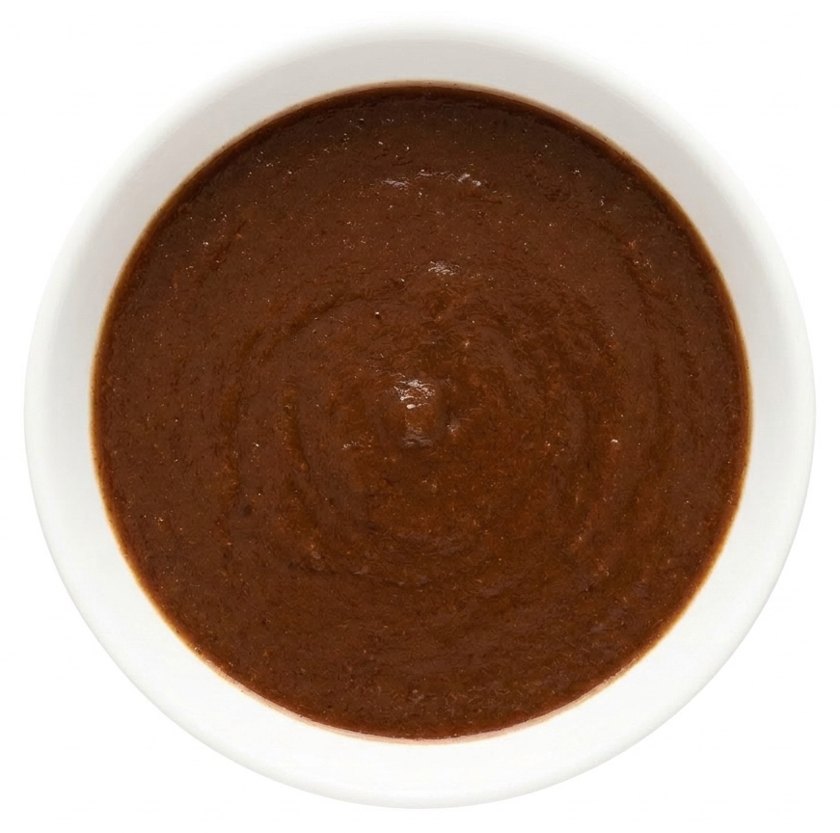
Tamarind & Date Chutney
A thick, sweet-sour chutney made from tamarind, dates and jaggery, warmed with cinnamon, pepper, bay and Kashmiri chilli. It tastes tangy and fruity with a gentle spice.
Chutney spices
22 gStirred into the tamarind mixture before simmering (step 2)Everything else
Method
- Combine 500 g tamarind paste, 298 g water, 72 g date purée or fresh date and 200 g jaggery or caster sugar in a large heavy pan.
- Stir in the chutney spices.
- Cook over low heat at a gentle simmer for about 1 hour, stirring occasionally, until thick and even.
- Take the pan off the heat and let the chutney cool completely.
- If you used fresh dates, blend the cooled chutney until smooth.
- Pack into sterilised jars and keep in the fridge for up to 2 weeks; freeze for longer storage.
Don't have something?


 Tamarind pulp
Use 120–150% of the weight and strain; pulp is less concentrated, so simmer a little longer to thicken.
 Tamarind extract
Use 150–200% of the weight and reduce gently; extract is already diluted.
 Lime juice
Use 60–70% of the weight with a pinch of jaggery; sharper, so add near the end off the heat.


 Ceylon cinnamon
True cinnamon: thinner, papery quills, milder and sweeter. Use about 1.5 times the weight, and taste.
 Ground cinnamon (cassia)
Use about a third of the weight (0.5 g ground for a 2.5 cm piece), stirred in with the ground spices rather than fried whole, since the powder burns quickly.
 Cassia buds
Use 60-70% of the weight; stronger and more peppery, so taste before adding more.


 Coarsely ground black pepper
Use 75% of the weight. Add midway through simmering; spreads heat evenly through the dish instead of delivering isolated bursts.
 Ground black pepper
Use 50% of the weight. Stir in near the end of cooking; significantly darkens light gravies and provides an immediate, sharp bite.


 Bay leaf
Use the same number or weight. Ordinary bay is milder and lacks the cinnamon-clove note; add early and remove before serving.
- Cassia bark (Chinese cinnamon)
Use about 1 g cassia for every 2 g Indian bay leaf. It gives a warm cinnamon note but not a true laurel flavour; remove before serving.
- Cinnamon stick
Use a small 1 cm piece for 2 leaves. It adds warm sweetness but not bay flavour; remove before serving.


 Stock
Use the same weight in savoury dishes; it adds body, so adjust salt.
 Milk
Use the same weight only in doughs or creamy dishes; it makes the result richer.
 Coconut water
Use the same weight in curries or rice; it adds sweetness and a faint coconut taste.


 Dried kashmiri chilli
Grind deseeded dried pods to an equal weight of powder; gives identical vivid red colour and gentle warmth.
 Red chilli powder
Use 25% of the weight mixed with sweet paprika for colour; straight red chilli powder is substantially hotter and will make the dish fiery.
 Chilli powder
Use one-third of the weight; the sauce will be less intensely red and notably sharper in heat.


 Soft date
Use the same weight, pit and blend with a splash of hot water for purée; closest sweetness.
- Date
Use the same weight, soak in hot water until soft, then pit and blend; adjust water for consistency.
 Dried fig
Use the same weight, simmer with water until soft and blend; sweeter and seedier, with a figgy flavour.


 Light brown soft sugar
Use the same weight. It has mild molasses and is close to caster sugar with a little colour; taste and adjust.
- Dark brown sugar
Use 90% of the weight. It has stronger molasses, which suits dishes where jaggery was intended; dissolve fully.
 Honey
Use 75% of the weight. Reduce other liquid by about 20% and add off the heat; it brings its own floral flavour.


Similar dishes
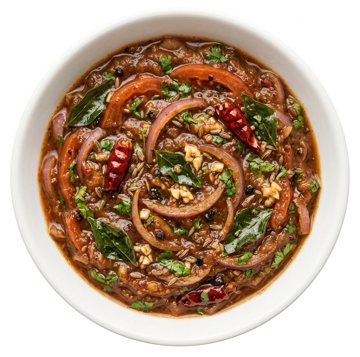
- Same: Awadh Imliwali Pyaz shares tamarind paste as the souring agent, Kashmiri chilli powder and black peppercorn with this dish, and both are sweet-sour chutneys.
- Different: Awadh Imliwali Pyaz adds sliced red onion, tomato, garlic, cumin seed, ground coriander, dried mild red chilli and curry leaves and is finished with a vegetable-oil tempering, while this dish uses dates, jaggery, cinnamon, bay leaf and water and has no onion, tomato, garlic or tempering.

- Same: Imli Ki Chutney shares with this dish a tamarind-and-jaggery sweet-sour base, Kashmiri chilli, and no listed added fat.
- Different: Imli Ki Chutney adds banana and raisins and uses cumin and black salt, while this dish uses dates, cinnamon, black peppercorn and bay and has much more tamarind paste (500 g vs 72 g).

- Same: Tamarind Chutney shares tamarind paste, a sweetener, and chilli powder with this dish.
- Different: Tamarind Chutney uses light brown sugar, ground ginger, cumin seed, and salt, while this dish uses dates, jaggery or caster sugar, cinnamon, black pepper, bay, Kashmiri chilli, and added water and is thick rather than loose.

- Same: Tamarind Rice shares tamarind paste, jaggery or sugar, and Kashmiri chilli powder with this dish, so both have a sour-sweet tamarind base.
- Different: Tamarind Rice has basmati rice, vegetable oil, black mustard seed, asafoetida, dried red chilli, roasted peanuts, curry leaf and salt, while this dish is a thick chutney with dates, cinnamon, black peppercorn and bay leaf and no rice or peanuts.