Indian cooking
Indian cooking / Dishes / Aloogadda Vepudu
Aloogadda Vepudu (Spicy Potatoes)

Aloogadda Vepudu

Spicy Potatoes
Vegetarian●●●Origin Hyderabad/Andhra PradeshPrep 1 hourCook 15–20 minutes

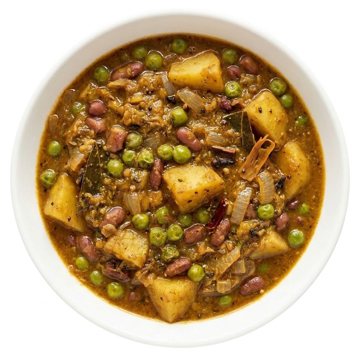
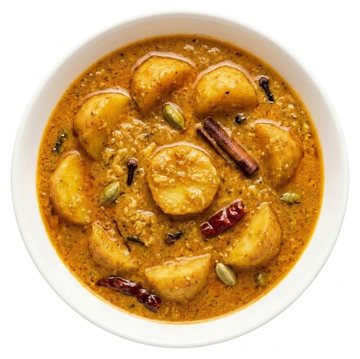
A spicy Andhra-style dry potato curry coated in a deeply aromatic, freshly roasted spice paste. Crisp fried onions and curry leaves are folded over the top for rich texture and herbal warmth.

Spices for the masala paste

17 gToasted and blended with lemon juice (step 2)
01
5 g1 tablespoon
spice
02
2.1 g1 teaspoon
spice
03
0.5–0.6 g10–12 peppercorns
spice
06
0.2 g3 cloves
spice
07
1.3 g1 piece
spice
08
3 g1 teaspoon
spice
Toast the whole spices individually in a dry pan until fragrant, then blend with the turmeric and lemon juice into a sieved paste.

Whole spices for the ghee

2.7 gFried in ghee (step 3)
01
1.6 g½ teaspoon
spice
02
1.1 g½ teaspoon
spice
Keep whole: they go into the hot ghee together.

Everything else

01
Potato · Aloocut into 2.5-cm /1-inch pieces
350 g
vegetable
02
26 g2 tablespoons
oil/fat
03
to taste
salt
04
10 g2 teaspoons
souring agent
05
9 g2 teaspoons
oil/fat
06
150 g1 onion
vegetable
07
3.8–5 g15–20 leaves
herb

Method

  1. Place 350 g potato in a heavy saucepan, submerge in water, and season with salt to taste. Bring to a boil, cook for 12–15 minutes until fork-tender, then drain and set aside.
  2. Warm a dry skillet over very low heat. Toast the whole spices from the spices for the masala paste one after another until fragrant, roasting the coriander seeds for about 3 minutes. Transfer the toasted spices to a blender, add the turmeric from the mix and 10.2 g lemon juice, blend until finely ground, and rub through a sieve.
  3. Melt 26.4 g ghee in a large heavy pan over medium heat. Add the whole spices for the ghee and stir-fry for roughly 1 minute until the seeds crackle.
  4. Tumble in the cooked potatoes, season with salt to taste, and stir-fry for 2 minutes. Stir in the masala and cook for another 2 minutes, then remove from the heat and adjust salt if needed.
  5. Heat 9 g vegetable oil in a small frying pan over medium heat. Fry 150 g onion for 5–7 minutes until golden brown, then mix in 3.8–5 g curry leaf. Stir briefly and scatter the tempering over the potatoes.

Don't have something?

Potato
  • Eggplant

    Use equal weight. Cut into large chunks; cooks down much faster (10-12 minutes) and softens into the sauce rather than staying starchy and firm.

  • Paneer

    Use 80% of the weight. Cube and add in the last 5-10 minutes of cooking; adds rich dairy protein instead of starchy bulk.

  • Dried chickpea

    Use 45% dry weight. Soak overnight and boil until fully soft before stirring into the sauce to simmer for 10 minutes.

Ghee
  • Unsalted butter

    Use 120% of the weight; melt gently over low heat to avoid burning the milk solids, which will yield a softer, creamier richness rather than a nutty aroma.

  • Vegetable oil

    Use 85% of the weight; holds high cooking temperatures without smoking, but the final dish will lack traditional dairy depth.

  • Mustard oil

    Use equal weight; heat to smoking point and cool slightly before cooking, bearing in mind it introduces an assertive, pungent edge.

Mustard seed
  • Black mustard seed

    Use the same weight. The seeds are smaller and hotter; fry in hot oil until they pop, about 20–30 seconds, and reduce the heat if they darken too fast. The dish will be a little sharper.

  • Yellow mustard seeds

    Use the same weight. They are milder and larger; fry a few seconds longer until they pop. The finished dish will have less pungency.

  • Ground mustard seed

    Use 70% of the weight of whole seed, added with the other ground spices rather than fried whole. You lose the popping texture and the heat comes through more evenly.

Cumin seed
  • Ground cumin

    Use 70% of the weight; add with ground spices or sauce bases rather than hot oil tempering, where it scorches quickly and turns bitter.

  • Black cumin seeds

    Use equal weight for oil tempering. Delivers an earthy profile with an additional musky, smoky, and slightly bitter edge.

  • Fennel seed

    Use 60% of the weight for tempering; offers comparable warm aroma, but leans sweet and liquorice-like rather than savoury and earthy.

Coriander seeds
  • Ground coriander

    Use 75% of the weight; stir in along with wet masala or tomato purée rather than frying in hot oil, as the fine powder burns instantly.

  • Cumin seed

    Use 50% of the weight for tempering in hot oil. Lacks the floral, sweet citrus flavour of coriander, introducing warm, pungent earthiness instead.

  • Fennel seed

    Use 50% of the weight in tempering; provides pleasant aromatic sweetness, though noticeably aniseedy rather than citrusy.

Black peppercorn
  • Coarsely ground black pepper

    Use 75% of the weight. Add midway through simmering; spreads heat evenly through the dish instead of delivering isolated bursts.

  • Ground black pepper

    Use 50% of the weight. Stir in near the end of cooking; significantly darkens light gravies and provides an immediate, sharp bite.

Dried red chilli
  • Dried kashmiri chilli

    Use equal weight whole. Fry in hot oil or ghee as tempered spice; gives a richer red colour with slightly milder heat.

  • Red chilli powder

    Use 50% to 70% of the weight. Stir into the oil with ground spices; distributes heat evenly throughout the dish without whole chilli skins.

Green cardamom pod
  • Green cardamom seed

    Use 35 to 40% of the total pod weight; lightly bruise the seeds before frying in oil to release their essential oils.

  • Ground green cardamom

    Use 20 to 25% of the pod weight (about 1 generous pinch per pod); stir in toward the end of cooking so the delicate floral notes do not dissipate.

  • White cardamom pod

    Use 1:1 by pod count or weight; crack gently before using, though it is slightly less intensely floral.

Clove
  • Ground cloves

    Use 1 g ground for 4 g whole (or 1 small pinch per 2 to 3 whole cloves). Add with spice powders; disperses intense warmth quickly, so use with restraint.

  • Allspice berries

    Use 100% of the weight whole in tempering. Imparts a warm, clove-like aromatic profile combined with hints of nutmeg and cinnamon.

  • Black cardamom pod

    Use 1 pod for 3 to 4 cloves in whole tempering. Shares a camphor-like warmth and medicinal depth, though it introduces a distinct smoky undertone.

Cassia bark
  • Ceylon cinnamon

    True cinnamon: thinner, papery quills, milder and sweeter. Use about 1.5 times the weight, and taste.

  • Ground cinnamon (cassia)

    Use about a third of the weight (0.5 g ground for a 2.5 cm piece), stirred in with the ground spices rather than fried whole, since the powder burns quickly.

  • Cassia buds

    Use 60-70% of the weight; stronger and more peppery, so taste before adding more.

Ground turmeric
  • Ground ginger

    Use 50% of the weight. Mimics turmeric's warm, earthy, rhizome background, but provides none of the golden-yellow colour.

  • Saffron

    Steep a tiny pinch (0.1 g per 2 g turmeric) in 2 tbsp warm water; use to match the rich golden hue. Contributes an aristocratic, honeyed floral flavour rather than earthy bitterness.

Lemon juice
  • Lime juice

    Use equal volume or weight; delivers almost identical sharp acidity with a faintly more aromatic, bitter-edged profile.

  • Dried mango powder

    Use 25% of the weight (about 1 g amchoor for 4 g juice); provides clean fruity tartness without thinning the sauce.

  • White vinegar

    Use 75% of the volume; gives direct sourness without any citrus floral fragrance.

Vegetable oil
  • Peanut oil

    Use 1:1 by weight. Handles high-heat frying identically and introduces a very subtle, pleasant nuttiness.

  • Ghee

    Use 1:1 by weight. Yields a much richer, authentic aroma and a glossy, heavier mouthfeel.

  • Mustard oil

    Use 1:1 by weight. Heat until smoking, then cool slightly before cooking to temper its intensely pungent, sharp mustard kick.

Onion
  • Shallot

    Use equal weight, finely sliced. Shallots soften and brown faster, giving a slightly sweeter and more delicate base to curries.

  • Cabbage

    Use 80% of the weight, finely shredded and browned slowly with a pinch of asafoetida. Replicates the bulk and natural sweetness in gravies without allium.


Curry leaf
  • Bay leaf

    Fry 1 bay leaf for every 5 curry leaves in hot oil; imparts a warm, woodsy background note, but misses the citrus-sulphury punch entirely.

  • Lime juice

    Add a small squeeze (about 5 ml per sprig of curry leaves) right before serving; provides sharp citrus top notes without the toasty, herbal aroma.

Similar dishes

Kath Kaha
Mixed Vegetable Curry
Kath Kaha has a sweeter, creamier profile from the coconut and peas, lacking the ghee richness, sharp peppery bite, and intense herbal aroma of this dish.
  • Same: Both dishes feature potatoes seasoned with mustard, cumin, coriander seeds, cloves, cinnamon, dried red chillies, and turmeric, both balanced with fresh lemon juice.
  • Different: Kath Kaha is a simmered gravy made entirely with vegetable oil, fresh coconut, peas, bay leaf, mace, and asafoetida, whereas this dish is a dry fry made with ghee, black pepper, cardamom, and curry leaves.
Aloo Masala
Curried Spice Potatoes
Aloo Masala is milder, creamier, and savory, lacking the sharp lemon tang, pungent black pepper heat, and rich ghee aroma of this dish.
  • Same: Aloo Masala also features potatoes cooked with onions, curry leaves, mustard seeds, turmeric, cinnamon, cloves, and cardamom.
  • Different: Instead of a dry fry cooked in ghee with lemon juice, coriander, and cumin, Aloo Masala is cooked solely in vegetable oil and uses chickpea flour, urad dal, poppy seeds, and green chillies to create a saucy curry.
Uralaikizhan Sagu
Potato Curry with Coconut
Uralaikizhan Sagu is milder, creamier, and slightly sweet from the coconut milk, rather than sharply spiced and tangy like this dish.
  • Same: Uralaikizhan Sagu also centers on potatoes cooked with onions, mustard seeds, cumin, coriander, cinnamon, and curry leaves.
  • Different: Instead of a dry fry cooked in ghee and finished with lemon juice, Uralaikizhan Sagu is a simmered curry made with coconut milk, tomatoes, ginger, green chillies, fennel, and roasted lentils in vegetable oil.
Aloo Dum
Potato Curry
Aloo Dum tastes creamy, mild, and sweetly tangy from yogurt and sugar, while this dish tastes spicy, dry, lemony, and aromatic from roasted spices and curry leaves.
  • Same: Aloo Dum shares potatoes, turmeric, dried red chilli, and whole cardamom, clove, and cinnamon with this dish.
  • Different: Aloo Dum is a rich yogurt-and-khoya gravy with sugar, ginger paste, asafoetida, bay leaf, milk, and a lot of ghee, while this dish is a dry Andhra-style fry with roasted coriander-cumin-pepper paste, mustard and cumin seeds, onion, curry leaves, lemon juice, and vegetable oil.