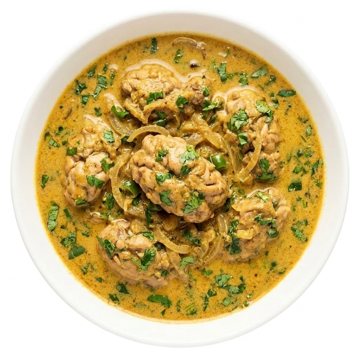
Trim any side bones and excess fat from 750 g chops, prick all over with a fork, then rinse and dry thoroughly with paper towels. Season lightly with salt, rub all over with the marinade spices and pastes and 125 g vinegar, cover, and rest for 30 minutes.
Preheat the oven to 200°C (400°F). Brush the marinated chops lightly with coconut oil and lay them in a large roasting pan. Add 2 tablespoons coconut oil, the whole braising spices, 0.3 g salt, and enough water to submerge the meat. Place in the oven until the braising liquid comes to a boil, then drop the heat to 150°C (300°F) and braise for 1½ hours.
Transfer the braised chops to a plate and brush them with coconut oil. Strain the cooking liquid through a fine sieve into a bowl, reserving 375 ml for the sauce (top up with water if needed).
Peel and finely grate 400 g coconut. Set a dry skillet over low heat and toast the grated coconut and the spices for the coconut paste separately for about 1 minute each until fragrant. Tip them into a blender, pour in 254 g coconut milk, and pulse to a coarse paste.
Prepare the ground spices for the sauce by stirring them with 2 tablespoons of water in a small bowl.
Heat 3 tablespoons coconut oil in a deep pan or wok over medium heat. Fry half of the 2.5–3.8 g curry leaves for several seconds, then tip in 250 g thinly sliced onion and sauté for 2 minutes until soft and translucent. Stir in 12 g grated ginger and 36 g crushed garlic, frying for 3 minutes until the onions turn golden brown.
Add the blended coconut paste to the pan and stir-fry for 1 to 2 minutes until lightly browned and oil begins to separate. Pour in the wet ground spices for the sauce and cook for 1 to 2 minutes until the excess moisture cooks off.
Add 250 g chopped tomato and 46.8 g tamarind extract, cooking for roughly 5 minutes until oil beads at the surface.
Add the chops, the remaining curry leaves, and a pinch of salt to the pan. Pour in the 375 ml of reserved braising liquid and bring to a simmer. Turn the heat to low and gently cook, stirring carefully from time to time, until the chops are meltingly tender and coated in a thick sauce. Adjust the seasoning with salt before serving.
Use 1 g ground for 4 g whole (or 1 small pinch per 2 to 3 whole cloves). Add with spice powders; disperses intense warmth quickly, so use with restraint.
Allspice berries
Use 100% of the weight whole in tempering. Imparts a warm, clove-like aromatic profile combined with hints of nutmeg and cinnamon.
Use about a third of the weight (0.5 g ground for a 2.5 cm piece), stirred in with the ground spices rather than fried whole, since the powder burns quickly.
Use equal weight; simmer gently over low heat to prevent curdling. Imparts a comparable rich texture, though it adds dairy richness without any coconut fragrance.
Use 50% of the weight and stir in near the end of cooking. Adds warmth and depth since it contains ground coriander, but introduces stronger spices like clove and cinnamon.
Steep a tiny pinch (0.1 g per 2 g turmeric) in 2 tbsp warm water; use to match the rich golden hue. Contributes an aristocratic, honeyed floral flavour rather than earthy bitterness.
Use 80% of the weight, finely shredded and browned slowly with a pinch of asafoetida. Replicates the bulk and natural sweetness in gravies without allium.
Use 15% to 20% of the weight (about 1 g for every 5 to 6 g fresh cloves). Whisk into sauces; gives a savoury, toasted garlic flavour without raw pungency.
Use 40% to 50% of the fresh tomato weight mixed with a splash of water. Imparts a deeper red colour, thicker sauce, and slightly sweeter cooked flavour.




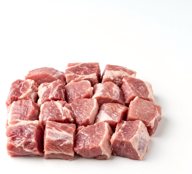 Pork
 Lamb shoulder


 Vegetable oil
 Groundnut oil
 Ghee


 Red chilli powder
 Kashmiri chilli powder
 Cayenne pepper


 Garlic
 Garlic powder


 Fresh ginger
 Ginger
 Ground ginger


 Coconut vinegar
 White wine vinegar
 Lime juice


 Green cardamom seed
 Ground green cardamom
 White cardamom pod


 Ground cloves
 Allspice berries
 Black cardamom pod


 Ceylon cinnamon
 Ground cinnamon (cassia)
 Cassia buds


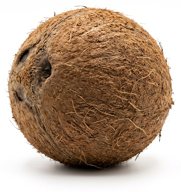
 Fresh coconut
 Desiccated coconut
 Dried coconut


 Dried kashmiri chilli


 Coarsely ground black pepper
 Ground black pepper


 Ground coriander
 Cumin seed
 Fennel seed


 Ground cumin
 Black cumin seeds


 Single cream
 Cashew paste
 Whole milk

 Garam masala


 Saffron






 Shallot


 Tomato purée
 Plain yogurt


 Tamarind
 Dried mango powder
 Lemon juice