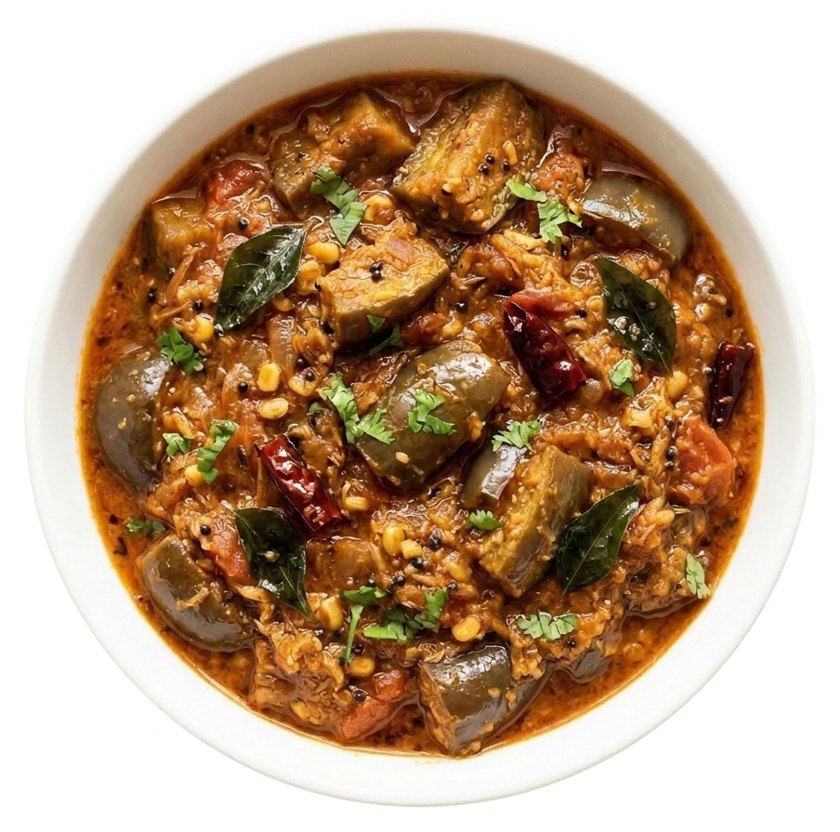
Andhra Vankaya Thakkali
An Andhra-style aubergine dish in a thick tomato and coconut gravy, scented with curry leaves, garlic and dried chilli. It tastes nutty, spicy and savoury, with soft aubergine pieces.
Coconut spice powder
5 gToasted and ground before the gravy (steps 1–2)Whole spices for the oil
8 gAdded to the hot oil at the start (step 3)Ground spices for the sauce
4.1 gStirred in with the coconut spice powder after the tomatoes (step 6)Everything else

Method
- Put 5.1 g coriander seeds and 80 g coconut in a dry frying pan over medium heat. Toast for 12–14 minutes, stirring, until fragrant and pale brown.
- Tip the toasted mixture out and let it cool. Grind it with 9 g garlic to a coarse powder; this is the coconut spice powder.
- Heat 137 g vegetable oil in a large heavy saucepan over medium heat. Add the whole spices for the oil: 3.5 g black mustard seed, 4 g white urad dal, 2.1 g cumin seed and 2 g dried red chilli. Fry for a few seconds.
- Add half the 3.8 g curry leaf and 100 g onion. Cook for 4 minutes, until the onion begins to soften.
- Add 230 g tomato and fry for 4 minutes, until softened.
- Stir in the ground spices for the sauce (2.6 g kashmiri chilli powder and 1.5 g ground turmeric) and the coconut spice powder. Fry for 4 minutes, until glossy and the oil pools at the edges.
- Add 500 g aubergine and stir well. Cook for 2 minutes.
- Season with salt to taste. Lower the heat, cover and cook for 12–15 minutes, until the aubergine is soft; stir once halfway so the mixture does not catch.
- Finish with coriander leaf to taste and the remaining curry leaf.
Don't have something?


 Peanut oil
Use 1:1 by weight. Handles high-heat frying identically and introduces a very subtle, pleasant nuttiness.
 Ghee
Use 1:1 by weight. Yields a much richer, authentic aroma and a glossy, heavier mouthfeel.
 Mustard oil
Use 1:1 by weight. Heat until smoking, then cool slightly before cooking to temper its intensely pungent, sharp mustard kick.


 Mustard seeds
Use equal weight. Pop in hot fat until they crackle and turn greyish; yields an almost identical nutty, pungent finish.
 Yellow mustard seeds
Use equal weight. Fry over medium heat; delivers a milder, sweeter pop and turns bitter quickly if the oil is excessively hot.


 Black gram
Use the same weight; usually the same split skinned dal, so no real change.
 Whole black gram
Use the same weight; soak longer and cook until soft. More intact and slightly less creamy.
 Split mung beans
Use the same weight; cooks faster but gives less sticky, creamy body to the dish.


 Ground cumin
Use 70% of the weight; add with ground spices or sauce bases rather than hot oil tempering, where it scorches quickly and turns bitter.
 Black cumin seeds
Use equal weight for oil tempering. Delivers an earthy profile with an additional musky, smoky, and slightly bitter edge.
 Fennel seed
Use 60% of the weight for tempering; offers comparable warm aroma, but leans sweet and liquorice-like rather than savoury and earthy.


 Dried kashmiri chilli
Use equal weight whole. Fry in hot oil or ghee as tempered spice; gives a richer red colour with slightly milder heat.
 Red chilli powder
Use 50% to 70% of the weight. Stir into the oil with ground spices; distributes heat evenly throughout the dish without whole chilli skins.


 Bay leaf
Fry 1 bay leaf for every 5 curry leaves in hot oil; imparts a warm, woodsy background note, but misses the citrus-sulphury punch entirely.
 Lime juice
Add a small squeeze (about 5 ml per sprig of curry leaves) right before serving; provides sharp citrus top notes without the toasty, herbal aroma.





 Tomato purée
Use 40% to 50% of the fresh tomato weight mixed with a splash of water. Imparts a deeper red colour, thicker sauce, and slightly sweeter cooked flavour.
 Plain yogurt
Use 60% of the weight, whisked smooth and added on low heat. Provides rich body and sourness, though the gravy becomes paler and creamier.


- Dried kashmiri chilli
Grind deseeded dried pods to an equal weight of powder; gives identical vivid red colour and gentle warmth.
- Red chilli powder
Use 25% of the weight mixed with sweet paprika for colour; straight red chilli powder is substantially hotter and will make the dish fiery.
 Chilli powder
Use one-third of the weight; the sauce will be less intensely red and notably sharper in heat.


 Ground ginger
Use 50% of the weight. Mimics turmeric's warm, earthy, rhizome background, but provides none of the golden-yellow colour.
 Saffron
Steep a tiny pinch (0.1 g per 2 g turmeric) in 2 tbsp warm water; use to match the rich golden hue. Contributes an aristocratic, honeyed floral flavour rather than earthy bitterness.


 Baby aubergine
Use the same weight; halve or quarter and cook 2–3 minutes longer. They hold their shape better in the sauce.
 Small aubergine
Use the same weight; slice or cube to the recipe's size. Similar flesh, slightly firmer.
 Round aubergine
Use the same weight; cube and salt for 10 minutes if the recipe does. It absorbs oil a little more.


 Ground coriander
Use 75% of the weight; stir in along with wet masala or tomato purée rather than frying in hot oil, as the fine powder burns instantly.
- Cumin seed
Use 50% of the weight for tempering in hot oil. Lacks the floral, sweet citrus flavour of coriander, introducing warm, pungent earthiness instead.
- Fennel seed
Use 50% of the weight in tempering; provides pleasant aromatic sweetness, though noticeably aniseedy rather than citrusy.
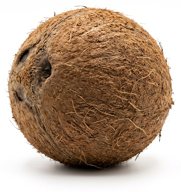
 Fresh coconut
Use equal weight freshly grated or diced. Delivers the identical sweet, milky taste and juicy texture.
 Desiccated coconut
Use 60% of the weight and soak in hot water or milk for 15 minutes before using. The finished dish will be slightly sweeter and less fibrous.
 Dried coconut
Finely grate and use 50% of the weight, soaked in hot water for 20 minutes. Yields a firmer chew and a denser, oilier coconut aroma.



 Garlic paste
Use equal weight. Fry gently in oil or ghee with the ginger; incorporates smoothly into curries without visible minced bits.
 Garlic powder
Use 15% to 20% of the weight (about 1 g for every 5 to 6 g fresh cloves). Whisk into sauces; gives a savoury, toasted garlic flavour without raw pungency.
 Shallot
Use 1.5 times the weight, very finely minced. Sauté until golden; provides savoury allium sweetness, though it lacks garlic's pungent sulphur bite.


Similar dishes

- Same: Andhra Vankaya Pulusu and this dish are both Andhra aubergine dishes built on coconut, onion, garlic, curry leaves, mustard seed, chilli powder and turmeric.
- Different: Andhra Vankaya Pulusu uses tamarind paste, Greek yoghurt, sugar, cinnamon and water instead of this dish's tomato, and it has less oil and no urad dal or cumin seed.

- Same: Kutchi Bhagare Baingan shares with this dish aubergine, onion, tomato, coconut, curry leaves, dried red chilli, Kashmiri chilli powder, turmeric, vegetable oil, coriander leaf and salt.
- Different: Kutchi Bhagare Baingan uses baby aubergines and a tamarind souring agent plus a poppy seed, sesame and coconut paste, while this dish uses larger aubergine pieces, a coconut and coriander seed paste, and a mustard seed, urad dal and cumin tempering.

- Same: Hyderabad Baby Aubergine with Coconut & Curry Leaf shares aubergine, coconut, curry leaves, mustard seed, cumin, coriander seed, Kashmiri chilli powder, turmeric, onion and vegetable oil with this dish.
- Different: It uses baby aubergines, coconut milk, desiccated coconut, peanuts, white sesame, ginger-garlic paste, green chilli, fried onion, tamarind-date chutney and 80 g curry leaf, while this dish uses tomato, urad dal, dried red chilli, fresh garlic and 137 g oil and has no tamarind.

- Same: Goan Brinjal Pickle shares aubergine, vegetable oil, garlic, curry leaves, black mustard seed, cumin seed, turmeric and Kashmiri chilli powder with this dish.
- Different: Goan Brinjal Pickle adds malt vinegar and jaggery and uses more garlic and dried Kashmiri chilli, while this dish uses tomato, coconut, onion, urad dal and coriander seeds in a thick gravy rather than a matured pickle.