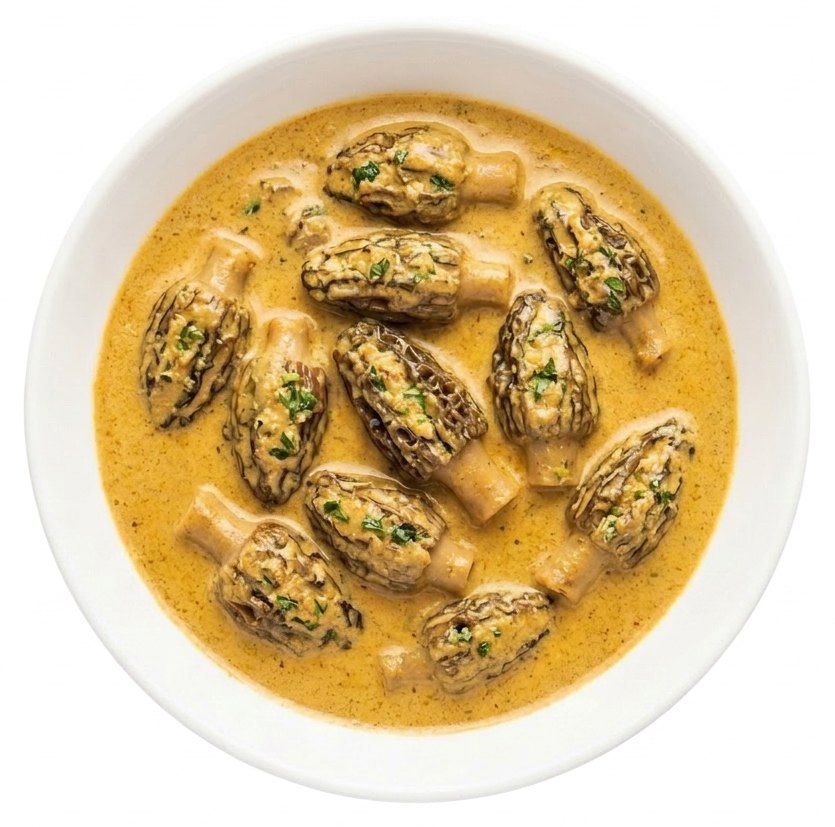
Bharwan Guchhi
Earthy morel mushrooms are filled with a rich mixture of khoya, herbs, and lemon juice, then simmered in a creamy, saffron-infused cashew and yoghurt gravy.
Whole spices for the oil
0.5 gFried in the hot oil (step 4)Saffron
0.3 gSteeped in milk (step 2)Ginger and garlic paste
21 gStirred into the fried spring onions (step 5)Garam masala
2.6 gStirred into the simmered gravy (step 7)Everything else

Method
- Submerge 8 morels in warm water for 10 minutes to soften. Drain, transfer to a pot of boiling water, and boil for 15 minutes. Drain thoroughly and set aside.
- Pour 45.9 g milk over the saffron in a small bowl and leave it to steep.
- Warm 4.5–9 g vegetable oil in a skillet over medium heat. Fry 50 g chopped spring onions for 3–4 minutes until richly browned. In a mixing bowl, combine the browned onions with 2 tbsp khoya, 3 tbsp chopped mint, 4 g chopped coriander leaf, and 30.6 g lemon juice. Gently pack this mixture into the hollows of the boiled morels.
- Heat 114 g vegetable oil or ghee in a wide, heavy-bottomed pan over medium heat. Add the whole spices for the oil and fry for 1–2 minutes until fragrant and darkened, then lift them out with a slotted spoon and discard.
- In the same flavoured fat over medium heat, fry 25 g finely chopped spring onions for 1–2 minutes until soft and translucent. Add the ginger and garlic paste and cook for 2 minutes, stirring steadily until the moisture evaporates and the paste lightly browns.
- Blend in 2 tsp green chilli paste and 31.2 g cashew paste, frying for 1–2 minutes until evenly combined and slightly darkened. Reduce the heat to low, stir in 250 g whisked yoghurt, and season with salt to taste. Simmer gently, stirring constantly, until the mixture thickens into a smooth sauce.
- Stir in the garam masala and the saffron milk until fully integrated. Arrange the stuffed morels in the pan, pour in 125 ml water, and simmer gently for 10 minutes, spooning the gravy over the morels until they are thoroughly glazed.
Don't have something?


 Fresh mushroom
Use the same weight, sliced; no soaking needed and cooks faster. Lacks the honeycomb texture but gives earthiness.
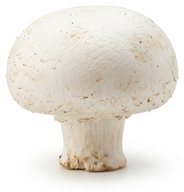 Button mushroom
Use the same weight, quartered. Firmer and milder; cooks faster than soaked morels.
 Mushroom
Use the same weight, sliced and sautéed first. Generic mushroom flavour; much less intense than morel.


 Peanut oil
Use equal weight; handles high tempering heat well and keeps flavours neutral.
 Butter
Use equal weight; cook over gentle heat to prevent browning the milk solids too quickly.


 Ground cloves
Use 1 g ground for 4 g whole (or 1 small pinch per 2 to 3 whole cloves). Add with spice powders; disperses intense warmth quickly, so use with restraint.
 Allspice berries
Use 100% of the weight whole in tempering. Imparts a warm, clove-like aromatic profile combined with hints of nutmeg and cinnamon.
 Black cardamom pod
Use 1 pod for 3 to 4 cloves in whole tempering. Shares a camphor-like warmth and medicinal depth, though it introduces a distinct smoky undertone.


 Green cardamom seed
Use 35 to 40% of the total pod weight; lightly bruise the seeds before frying in oil to release their essential oils.
 Ground green cardamom
Use 20 to 25% of the pod weight (about 1 generous pinch per pod); stir in toward the end of cooking so the delicate floral notes do not dissipate.
 White cardamom pod
Use 1:1 by pod count or weight; crack gently before using, though it is slightly less intensely floral.


- Peanut oil
Use 1:1 by weight. Handles high-heat frying identically and introduces a very subtle, pleasant nuttiness.
 Ghee
Use 1:1 by weight. Yields a much richer, authentic aroma and a glossy, heavier mouthfeel.
 Mustard oil
Use 1:1 by weight. Heat until smoking, then cool slightly before cooking to temper its intensely pungent, sharp mustard kick.


 Spring onion green
Use the same weight; use only the green parts, so the dish loses some of the white onion base.
 Onion
Use 60% of the weight, finely sliced; stronger and sharper, so cook it down more.
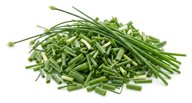 Chive
Use the same weight; milder and best added late or as a garnish, not as a cooked base.


 Whole milk
Use 4 times the weight of milk; simmer and stir continuously in a wide heavy pan until reduced to a dense, fudgy paste.
 Paneer
Use equal weight of finely crumbled or grated paneer mixed with 15% single cream; gives similar body but a less caramelised, milk-solid flavour.
 Single cream
Simmer gently until heavily reduced, or stir in directly at 70% weight; produces rich gravies without the granular bite of khoya.


 Dried mint
Use about 30% of the weight of fresh mint. Rub between your palms to crush before stirring in; the flavour will be more intensely herbal and less bright.
 Coriander leaf
Use equal weight, finely chopped. Adds fresh citrusy green notes, but lacks the cooling menthol lift.


 Lime juice
Use equal volume or weight; delivers almost identical sharp acidity with a faintly more aromatic, bitter-edged profile.
 Dried mango powder
Use 25% of the weight (about 1 g amchoor for 4 g juice); provides clean fruity tartness without thinning the sauce.
 White vinegar
Use 75% of the volume; gives direct sourness without any citrus floral fragrance.


 Ground turmeric
Use 15% of the saffron's weight. Replicates the bright yellow colour well, but lacks the floral, earthy depth; use sparingly to avoid bitterness.
 Screwpine water or rosewater
Use a few drops combined with a tiny pinch of ground turmeric to mimic both the regal floral aroma and the golden hue.



- Whole milk
Use equal weight; provides the standard rich dairy fat and body expected in creamy Indian bases.
- Single cream
Dilute 3 parts cream with 1 part water to match the weight; yields a richer, glossier gravy that resists curdling.
 Plain yogurt
Whisk thoroughly and use equal weight; adds extra body and a mild pleasant acidity, best added off the heat.


 Fresh ginger
Use equal weight; peel and grate very finely on a microplane or pound to a fine paste in a mortar.
 Ginger
Use equal weight; mince finely and crush with the flat of a knife before frying.
 Ground ginger
Use 20% of the weight; add directly with the dry spice powders, though it yields an earthier, less pungent profile.


 Garlic
Use equal weight; crush or finely grate to a smooth pulp to replicate the same fresh, pungent moisture in your base gravy.
 Garlic powder
Use 20 to 25% of the weight; mix with a teaspoon of water before adding to oil so it does not burn, noting it lacks the fresh bite.

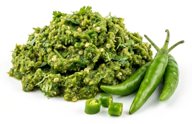
 Green chilli
Use the same weight, deseed if wanted, and grind with 1 tbsp water; fresher and brighter.
 Chilli paste
Use the same weight; may be red and hotter, so adjust.
 Red chilli paste
Use 75–80% of the weight; changes colour and heat.


 Cashew nut
Use 100% of the weight. Soak raw cashews in boiling water for 20 minutes, then blend with just enough water to form a silky, thick paste.
 Almond
Use 100% of the weight. Blanch, peel skins completely, and blend with warm water until velvety; gravies will be marginally less sweet.
- Single cream
Use 80% of the weight. Stir in near the end of cooking over low heat; provides luxurious gloss and fat without the nut solids.


 Greek yoghurt
Use the same weight straight from the pot. It is thick and slightly tangier; stir well before use.
 Full-fat natural yoghurt
Use about 175% of the weight and strain through muslin for 3–4 hours to yield the same weight of thick yoghurt.
 Hung yoghurt
Use the same weight. It is essentially the same ingredient; adjust salt or sugar to taste.


 Ground cumin
Use 50% of the weight mixed with equal parts ground coriander and a pinch of ground cinnamon, ground cloves, and ground green cardamom. Sprinkle near the end for a warming finish.
 Lentil stew spice mix
Use 75% of the weight. Simmer briefly in the gravy; imparts roasted warmth and complexity, though it adds a slight tang and earthy lentil undertone.


Similar dishes

- Same: Both recipes cook morel mushrooms in a saffron-scented yoghurt gravy seasoned with garlic, cloves, and green cardamom.
- Different: Kan Guchhi leaves the morels unstuffed and seasons the gravy with fried onion paste, black cardamom, cinnamon, black cumin, and Kashmiri chilli, omitting this dish's khoya filling, cashew paste, milk, and fresh herbs.
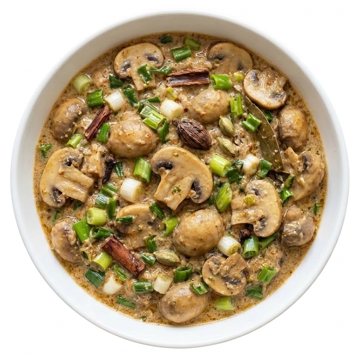
- Same: Both dishes simmer mushrooms in a spiced yogurt gravy seasoned with ginger, garlic, cloves, and green cardamom.
- Different: Instead of stuffing morels with khoya and finishing them in a saffron and cashew sauce, Khumb Hara Pyaz cooks halved mushrooms with spring onions, boiled onion paste, cinnamon, and fresh green chillies.

- Same: Both dishes feature mushrooms prepared with ginger paste, garlic paste, garam masala, and yoghurt.
- Different: Tandoori Achari Khumb uses whole mushrooms coated in mustard oil, nigella seeds, and chickpea flour to be grilled over high heat, rather than stuffing morels with khoya and simmering them in a saffron, milk, and cashew gravy.

- Same: Both dishes feature mushrooms stuffed with a rich khoya and herb filling that are finished in a spiced gravy.
- Different: Bharwan Khumb uses standard mushroom caps that are baked first and simmers them in an onion and pomegranate gravy, lacking the morels, cashew paste, milk, and saffron found in this dish.