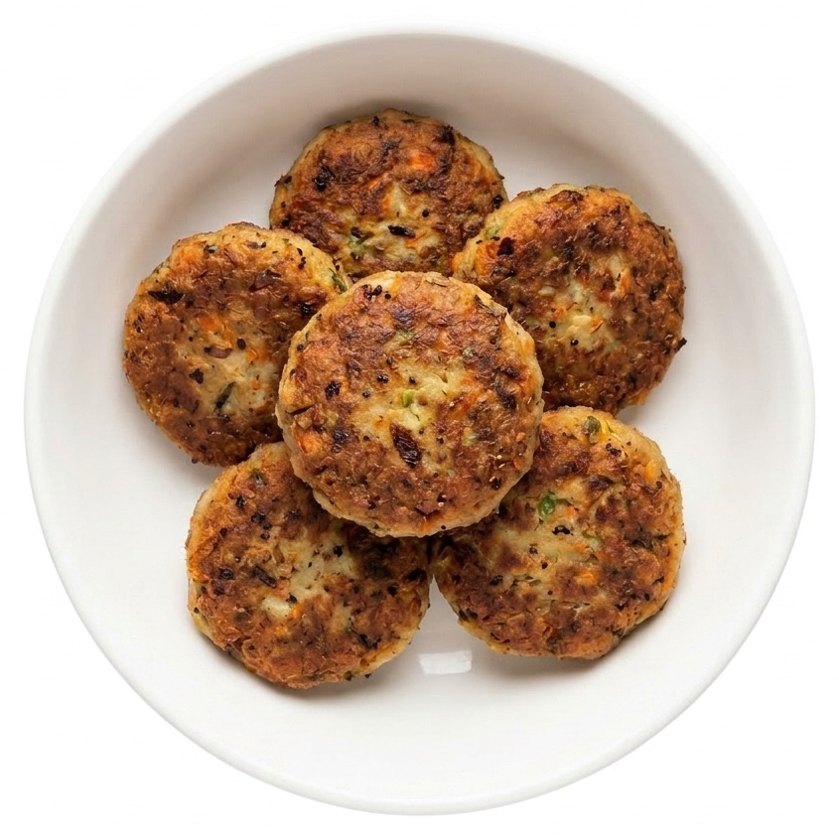
Subz ke Shami
These delicately spiced vegetable patties combine mashed potato, carrots, beans, and cauliflower enriched with fragrant nutty pastes and browned onions, shallow-fried until crisp on the outside and tender within.
Coriander seeds
1.7 gFried with the first batch of onions (step 3)Tempering cumin
2.6 gBloomed in the warm ghee (step 4)Ginger-garlic paste
10 gCooked with the softened onions (step 4)Ground spices
13 gStirred into the spiced onion base (step 4)Everything else
Method
- Boil 100 g unpeeled potato in water for 20 minutes until completely tender, then drain, leave to cool, peel, and mash smooth. Simmer 100 g beans in boiling water for 5 minutes, 150 g carrots for 15 minutes, and 50 g cauliflower pieces for 5 minutes until tender. Drain all vegetables well, then finely dice the carrots and grate the cauliflower.
- Warm 13.5–27 g vegetable oil in a skillet over medium heat. Add the mashed potato, diced carrots, beans, and grated cauliflower, sautéing briefly until lightly cooked through, then take off the heat.
- Melt 46.2 g ghee in a separate pan over medium heat. Toss in the coriander seeds along with half of the 100 g sliced onion, frying until golden and crisp. Transfer the onions and seeds to paper towels, leave to cool, then crush finely by hand.
- Place the pan with the remaining ghee back over medium heat, add the tempering cumin, and let it crackle. Add the remaining sliced onion and fry for roughly 5 minutes until soft and translucent. Stir in the ginger-garlic paste and cook for 5 minutes until light golden, then mix in the ground spices, 31.2 g cashew paste, and 1 tablespoon chironji kernel paste.
- Tip the warm spice paste and the crushed fried onions into the pan of sautéed vegetables. Mix thoroughly, then divide into 16 portions. Moisten your hands with water and shape each portion into a flat round patty roughly 2.5 cm (1 inch) thick.
- Set a griddle or skillet over medium heat with a light coating of ghee. Fry the patties in batches for about 3 minutes per side until evenly browned and crisp, turning once, then lift out onto paper towels to drain.
Don't have something?

 Eggplant
Use equal weight. Cut into large chunks; cooks down much faster (10-12 minutes) and softens into the sauce rather than staying starchy and firm.
 Paneer
Use 80% of the weight. Cube and add in the last 5-10 minutes of cooking; adds rich dairy protein instead of starchy bulk.
 Dried chickpea
Use 45% dry weight. Soak overnight and boil until fully soft before stirring into the sauce to simmer for 10 minutes.


 Green bean
Use the same weight, top and tail, and cook the same way. Closest match.
 French bean
Use the same weight and trim; cooking time is the same.
 Cluster bean
Use the same weight, cut into similar lengths, and cook 2 minutes longer until tender.


 Turnip
Use the same weight; peel and cut as for carrot. It is less sweet and slightly peppery, so add a pinch of sugar and expect a softer, more earthy result.
- Potato
Use the same weight; cut into similar pieces and add 5–10 minutes' extra cooking. It gives bulk but no carrot sweetness or colour.
 Courgette
Use the same weight; cut a little larger and add near the end. It releases water, so reduce other liquid slightly and expect a softer texture.


 Broccoli
Use the same weight; cut into similar florets and cook 2–3 minutes less. It is greener and slightly stronger in flavour.
 Cauliflower floret
Use the same weight and break into even florets. This is essentially the same vegetable, so cooking and flavour change little.
 Cabbage
Use the same weight; cut into wedges and cook 3–5 minutes less. It becomes much softer and sweeter, so the dish loses cauliflower's bite.


 Peanut oil
Use 1:1 by weight. Handles high-heat frying identically and introduces a very subtle, pleasant nuttiness.
 Ghee
Use 1:1 by weight. Yields a much richer, authentic aroma and a glossy, heavier mouthfeel.
 Mustard oil
Use 1:1 by weight. Heat until smoking, then cool slightly before cooking to temper its intensely pungent, sharp mustard kick.


 Unsalted butter
Use 120% of the weight; melt gently over low heat to avoid burning the milk solids, which will yield a softer, creamier richness rather than a nutty aroma.
- Vegetable oil
Use 85% of the weight; holds high cooking temperatures without smoking, but the final dish will lack traditional dairy depth.
- Mustard oil
Use equal weight; heat to smoking point and cool slightly before cooking, bearing in mind it introduces an assertive, pungent edge.


 Ground coriander
Use 75% of the weight; stir in along with wet masala or tomato purée rather than frying in hot oil, as the fine powder burns instantly.
 Cumin seed
Use 50% of the weight for tempering in hot oil. Lacks the floral, sweet citrus flavour of coriander, introducing warm, pungent earthiness instead.
 Fennel seed
Use 50% of the weight in tempering; provides pleasant aromatic sweetness, though noticeably aniseedy rather than citrusy.






- Cumin seed
Dry-roast briefly and grind finely; use equal weight (1:1). Imparts an even punchier, nuttier, toasty aroma than pre-ground cumin.
- Ground coriander
Use equal weight (1:1). Adds mild, lemony sweetness rather than cumin's smoky, earthy bite; curries will taste lighter and less savoury.
 Black cumin seeds
Grind finely; use 60% to 75% of the weight. Produces a darker, more complex, smoky-herbal flavour suited to rich gravies.


 Fresh ginger
Use equal weight; peel and grate very finely on a microplane or pound to a fine paste in a mortar.
 Ginger
Use equal weight; mince finely and crush with the flat of a knife before frying.
 Ground ginger
Use 20% of the weight; add directly with the dry spice powders, though it yields an earthier, less pungent profile.


 Garlic
Use equal weight; crush or finely grate to a smooth pulp to replicate the same fresh, pungent moisture in your base gravy.
 Garlic powder
Use 20 to 25% of the weight; mix with a teaspoon of water before adding to oil so it does not burn, noting it lacks the fresh bite.


 Lemon juice
Use 15 g (1 tbsp) for every 5 g of amchoor. Stir in at the very end off the heat; adds liquid and fresh citrus aroma rather than dry fruity tang.
 Tamarind extract
Use 75% of the weight, dissolved in a splash of warm water. Simmer briefly; darkens the gravy and provides a deeper, caramelised sourness.


 Cashew nut
Use 100% of the weight. Soak raw cashews in boiling water for 20 minutes, then blend with just enough water to form a silky, thick paste.
 Almond
Use 100% of the weight. Blanch, peel skins completely, and blend with warm water until velvety; gravies will be marginally less sweet.
 Single cream
Use 80% of the weight. Stir in near the end of cooking over low heat; provides luxurious gloss and fat without the nut solids.


- Cashew paste
Use the same weight; it is creamier and milder, so the gravy will be less nutty-bitter.
 Almond paste
Use the same weight; slightly grainy and sweeter, so taste before adding more.
 Blanched almond paste
Use the same weight; milder and paler, giving a softer flavour.


 Red chilli powder
Use 100% of the weight. Provides direct, sharp heat and red colour in equal measure.
 Kashmiri chilli powder
Use 150% to 200% of the weight if matching colour, but add a pinch of black pepper or hot chilli if you need equivalent fiery heat.
 Cayenne pepper
Use 75% to 100% of the weight. Offers a sharp, clean heat with slightly less earthy depth and less crimson colour.


 Black peppercorn
Use 1:1 by weight; pulverise in a spice mill or mortar to a fine powder for immediate, punchy heat.
 Coarsely ground black pepper
Use equal weight; offers the same bite, though it gives a visibly speckled finish and firmer crunch.


- Coriander seeds
Dry-roast lightly in a pan and grind to a fine powder; use equal weight (1:1). Offers a noticeably fresher, brighter citrus note.
- Ground cumin
Use 50% to 75% of the weight. Lacks the floral, citrusy profile of coriander and turns the gravy heavier, earthier, and darker.
 Garam masala
Use 50% of the weight and stir in near the end of cooking. Adds warmth and depth since it contains ground coriander, but introduces stronger spices like clove and cinnamon.


 Green cardamom seed
Grind freshly extracted inner black seeds finely; use equal weight (1:1). Greatly superior aroma with potent eucalyptus and citrus notes.
 Green cardamom pod
Lightly crack whole pods and simmer them in the gravy; use 150% of the weight of ground cardamom. Fish out the pods before serving.
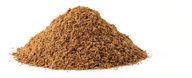 Ground nutmeg
Use 50% of the weight. Delivers warm, sweet aroma, but lacks cardamom's cooling, citrusy top notes.


Similar dishes
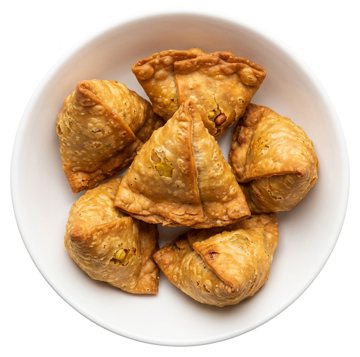
- Same: Both dishes rely on a spiced potato and onion base seasoned with ginger, garlic, cumin, coriander, and chilli powder.
- Different: Singhara encases a potato and pea filling in a flaky pastry wrapper cooked in vegetable oil, whereas this dish consists of shallow-fried patties made with ghee, cashew paste, and amchoor.
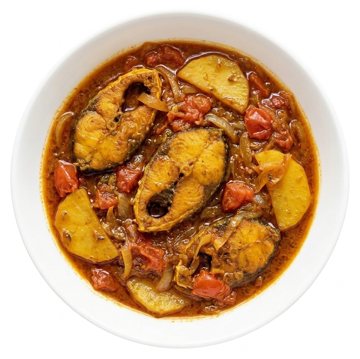
- Same: Both dishes use potatoes and onions seasoned with ginger paste, garlic paste, chilli powder, ground cumin, and ground coriander.
- Different: Year Chapa is a fish and potato curry simmered in a rich tomato sauce using vegetable oil and turmeric, whereas this dish consists of shallow-fried vegetable patties enriched with ghee, cashew paste, amchoor, cardamom, and black pepper.
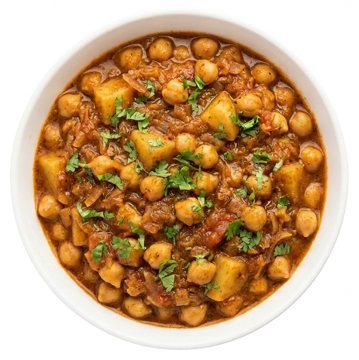
- Same: Channa Masala shares potatoes, onions, ginger and garlic paste, ground cumin, ground coriander, and chilli powder with this dish.
- Different: Instead of shallow-fried patties bound with cashew paste and ghee, Channa Masala is a simmered curry built with tomatoes and turmeric that leaves out amchoor, cardamom, and black pepper.
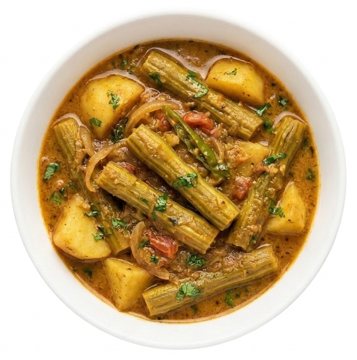
- Same: Munakkaigguru shares a base of potatoes and onions seasoned with ginger paste, garlic paste, chilli powder, ground coriander, and ground cumin.
- Different: Instead of forming patties bound with cashew paste and shallow-frying them in ghee, Munakkaigguru simmers drumsticks and potatoes into a curry made with coconut milk, tomatoes, green chillies, turmeric, and lime juice rather than amchoor.