
Channa Masala
A classic North Indian curry combining tender potatoes and chickpeas in a lightly spiced tomato-onion gravy.
Curry aromatics and spices
15 gFried with the onion and tomato (step 2)Everything else


Method
- Place 300 g potato in a saucepan of boiling water and cook for about 10 minutes until tender. Drain, allow to cool enough to handle, then peel the skin and chop into bite-sized cubes.
- Warm 1 tablespoon oil or ghee in a skillet over medium heat. Add 150 g onion, 120 g tomato, and the curry aromatics and spices, frying together for 2 minutes.
- Add the cubed potatoes, 450 g chickpeas, 5.8 g salt, and 125 ml of lukewarm water to the pan. Cook for 5 minutes until the curry is piping hot.
- Scatter fresh coriander leaf over the top to garnish.
Don't have something?

 Eggplant
Use equal weight. Cut into large chunks; cooks down much faster (10-12 minutes) and softens into the sauce rather than staying starchy and firm.
 Paneer
Use 80% of the weight. Cube and add in the last 5-10 minutes of cooking; adds rich dairy protein instead of starchy bulk.
 Dried chickpea
Use 45% dry weight. Soak overnight and boil until fully soft before stirring into the sauce to simmer for 10 minutes.


 Ghee
Use the same weight. Richer flavour and aroma; keep heat moderate so it does not burn.
 Oil
Use the same weight. Neutral result; the dish will be less rich.
 Vegetable oil
Use the same weight. Everyday neutral choice; no ghee aroma.






 Tomato purée
Use 40% to 50% of the fresh tomato weight mixed with a splash of water. Imparts a deeper red colour, thicker sauce, and slightly sweeter cooked flavour.
 Plain yogurt
Use 60% of the weight, whisked smooth and added on low heat. Provides rich body and sourness, though the gravy becomes paler and creamier.


 Fresh ginger
Use equal weight; peel and grate very finely on a microplane or pound to a fine paste in a mortar.
 Ginger
Use equal weight; mince finely and crush with the flat of a knife before frying.
 Ground ginger
Use 20% of the weight; add directly with the dry spice powders, though it yields an earthier, less pungent profile.


 Garlic
Use equal weight; crush or finely grate to a smooth pulp to replicate the same fresh, pungent moisture in your base gravy.
 Garlic powder
Use 20 to 25% of the weight; mix with a teaspoon of water before adding to oil so it does not burn, noting it lacks the fresh bite.


 Cumin seed
Dry-roast briefly and grind finely; use equal weight (1:1). Imparts an even punchier, nuttier, toasty aroma than pre-ground cumin.
 Ground coriander
Use equal weight (1:1). Adds mild, lemony sweetness rather than cumin's smoky, earthy bite; curries will taste lighter and less savoury.
 Black cumin seeds
Grind finely; use 60% to 75% of the weight. Produces a darker, more complex, smoky-herbal flavour suited to rich gravies.


 Coriander seeds
Dry-roast lightly in a pan and grind to a fine powder; use equal weight (1:1). Offers a noticeably fresher, brighter citrus note.
- Ground cumin
Use 50% to 75% of the weight. Lacks the floral, citrusy profile of coriander and turns the gravy heavier, earthier, and darker.
 Garam masala
Use 50% of the weight and stir in near the end of cooking. Adds warmth and depth since it contains ground coriander, but introduces stronger spices like clove and cinnamon.


- Ground ginger
Use 50% of the weight. Mimics turmeric's warm, earthy, rhizome background, but provides none of the golden-yellow colour.
 Saffron
Steep a tiny pinch (0.1 g per 2 g turmeric) in 2 tbsp warm water; use to match the rich golden hue. Contributes an aristocratic, honeyed floral flavour rather than earthy bitterness.


 Red chilli powder
Use 100% of the weight. Provides direct, sharp heat and red colour in equal measure.
 Kashmiri chilli powder
Use 150% to 200% of the weight if matching colour, but add a pinch of black pepper or hot chilli if you need equivalent fiery heat.
 Cayenne pepper
Use 75% to 100% of the weight. Offers a sharp, clean heat with slightly less earthy depth and less crimson colour.


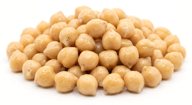
- Dried chickpea
Use 40–45% of the weight (100 g dried for 240 g drained tinned), soak overnight with a pinch of bicarbonate of soda, then boil 45–60 minutes until soft.
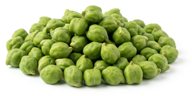 Green chickpea
Same weight, fresh or frozen; boil 10–15 minutes, they stay firmer and sweeter and need a little more salt.


Similar dishes
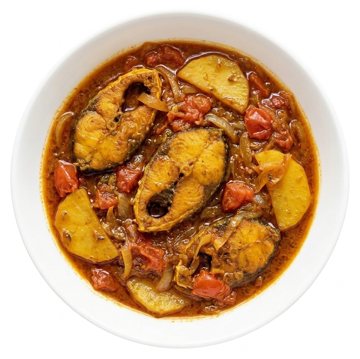
- Same: Year Chapa shares a base of potatoes simmered in an onion and tomato sauce with ginger, garlic, turmeric, cumin, coriander, and chilli powder.
- Different: Year Chapa incorporates deep-fried fish instead of chickpeas, requires 54 g of vegetable oil, and lacks fresh coriander leaf.
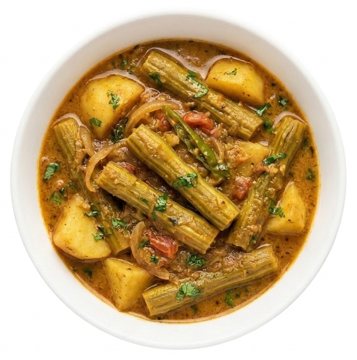
- Same: Munakkaigguru shares a base of potatoes, onions, tomatoes, ginger-garlic paste, and ground spices including cumin, coriander, turmeric, and chilli powder with this dish.
- Different: Munakkaigguru incorporates drumsticks, vegetable oil, coconut milk, green chillies, and fresh lime juice, while omitting the chickpeas of this dish.

- Same: Aloo Chholey shares a base of potatoes and chickpeas seasoned with ground cumin, ground coriander, and chilli powder.
- Different: Aloo Chholey is prepared as a dry snack tossed with amchoor and lemon juice rather than simmered in an onion, tomato, ginger, garlic, and turmeric gravy.

- Same: Both are North Indian potato curries built on an onion-tomato gravy with ginger, garlic, cumin, coriander, turmeric, chilli powder and coriander leaf.
- Different: Aloo Vadiyan adds urad dal vadi and yogurt, uses cumin seed and fenugreek, and has far more potato and ghee, while this dish uses canned chickpeas with potato and no yogurt or lentil dumplings.