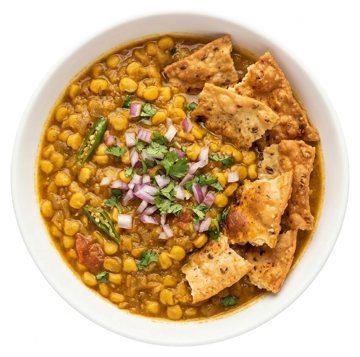
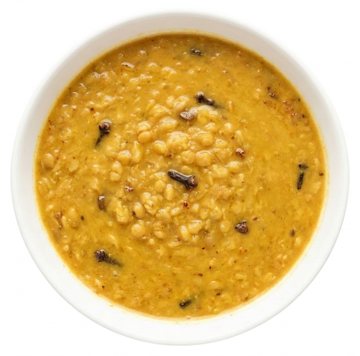
Dal Dhokli is a one-pot Indian dish of soft gram-flour dough strips simmered in a tangy toor dal. The curry is lightly spiced, with a sweet-sour note from tamarind and jaggery and a fragrant tempering.
Turmeric for the dal
0.3 gAdded to the dal with the water and salt (step 1)
Put 200 g toor dal in a small saucepan with 1091 g of the 1391 g water, 0.3 g ground turmeric and 0.3 g salt. Bring to a boil.
Lower the heat and simmer for 45–50 minutes until the dal is fully cooked. Cool slightly.
Mash the dal coarsely with a potato masher or hand blender; do not make it smooth. Set aside.
Mix 125 g wholemeal flour, 12 g gram flour, the dhokli spices, 27 g of the 54 g vegetable oil and salt to taste in a bowl.
Add up to 100 g water from the measured 1391 g, a little at a time, and knead to a smooth dough. Cover and set aside.
Heat 27 g vegetable oil in a heavy saucepan over medium heat. Add the whole spices for the oil and fry, letting the mustard seeds splutter first, then adding the cumin after 10 seconds and the clove and cassia after 30 seconds.
Add 150 g onion and fry for 6–7 minutes until softened and light brown.
Add 4 g green bird’s eye chilli and 3 g curry leaf; stir for a few seconds.
Add 6 g ginger and fry for 30 seconds, stirring.
Add the ground spices for the sauce and stir for a few seconds.
Stir in the cooked dal. Add 12 g tamarind paste and 21.6 g jaggery and mix well. Season with salt, bring to a boil and simmer gently for 7–8 minutes.
Knead the dough again and divide it into 4 pieces. Dab each with the remaining 27 g vegetable oil and roll out to a 15 cm round. Cut into strips about 2.5 cm wide.
Add 200 g warm water to the dal and simmer for 1 minute. Add the dhokli strips one at a time, stirring gently so they do not stick.
Cook for 12–15 minutes, stirring a few times; add a little more water only if the dal is too thick.
Turn off the heat. Ladle into bowls and top with coriander leaves to taste, 150 g red onion and 50 g lemon juice.
Steep a tiny pinch (0.1 g per 2 g turmeric) in 2 tbsp warm water; use to match the rich golden hue. Contributes an aristocratic, honeyed floral flavour rather than earthy bitterness.
Use 1 g ground for 4 g whole (or 1 small pinch per 2 to 3 whole cloves). Add with spice powders; disperses intense warmth quickly, so use with restraint.
Allspice berries
Use 100% of the weight whole in tempering. Imparts a warm, clove-like aromatic profile combined with hints of nutmeg and cinnamon.
Use about a third of the weight (0.5 g ground for a 2.5 cm piece), stirred in with the ground spices rather than fried whole, since the powder burns quickly.
Use 80% of the weight, finely shredded and browned slowly with a pinch of asafoetida. Replicates the bulk and natural sweetness in gravies without allium.
Use 20% to 25% of the weight (1 g for every 4 to 5 g fresh). Stir into the gravy; adds peppery heat and warmth, though it misses the crisp, zesty kick of raw root.
Use 80% of the weight. Granulated sugar is sweeter by weight, but gives a cleaner, one-dimensional sweetness that lacks jaggery's caramel, molasses depth.
Soak and blend into a paste; use 100% to 120% of the weight. Adds rich, natural, fruity sweetness with complex, dark molasses notes that thicken the gravy.
Use about 75–80% of the weight, e.g. 80 g for 100 g gram flour, and add a pinch of turmeric for colour. Less nutty and less crisp; good only for thickening or simple batters.




 Red lentils
 Chana dal
 Split mung beans


 Stock
 Milk
 Coconut water


 Ground ginger
 Saffron


 Peanut oil
 Ghee
 Mustard oil


 Garlic powder
 Garlic paste


 Mustard seeds
 Yellow mustard seeds


 Ground cumin
 Black cumin seeds
 Fennel seed


 Ground cloves
 Allspice berries
 Black cardamom pod


 Ceylon cinnamon
 Ground cinnamon (cassia)
 Cassia buds






 Green chilli
 Fresh green chilli


 Bay leaf
 Lime juice


 Ginger paste


 Dried kashmiri chilli
 Red chilli powder
 Chilli powder


 Tamarind pulp
 Tamarind extract


 Granulated sugar
 Raisin


 Whole wheat flour
 Plain flour
 Flour


 Chickpea flour
 Rice flour


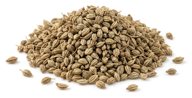 Carom seed


 Coriander (cilantro) or basil
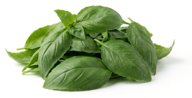 Basil leaves
 Coriander paste


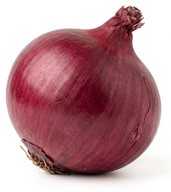
 Shallot
 Spring onion


 Lime
 Lemon juice
 Dried mango powder