
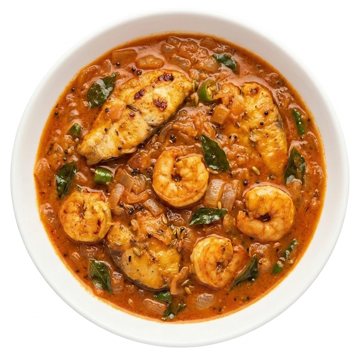
Macher Jhol with Pickled Fennel
A seafood stew with hake, red mullet, langoustines and clams in a tangy tomato-mustard sauce, finished with quick-pickled fennel. It tastes sharp, mustardy and gently spicy, with sweet seafood and an aniseed crunch.
Whole cumin for the oil
13 gAdded to the hot mustard oil at the start of the sauce (step 2)Ground spices for the sauce
218 gStirred into the onions with the green chilli (step 4)Everything else

Method
- Put 200 g thinly sliced fennel bulb in a bowl, pour over 199 g pickling liquor and leave to steep for 1–2 hours. Chill until needed.
- Warm 60 g of the 183 g mustard oil in a large saucepan over medium heat. Add the whole cumin for the oil and stir until aromatic.
- Add 600 g brown onion and cook for 10 minutes over medium heat, stirring often, until soft and translucent.
- Stir in the ground spices for the sauce (200 g mustard paste and 12 g of the 18 g ground turmeric) and 18 g green chilli, split lengthways. Cook for 2 minutes, stirring.
- Add 1000 g tomato, blitzed to a purée, and 50 g lime juice. Lower the heat and simmer for about 5 minutes, until the tomato has reduced by half and the sauce is thick.
- Pour in 994 g fish stock gradually until the sauce is looser, then stir in 30 g finely chopped fresh coriander and 8 g sea salt. Keep at a low simmer.
- Rub 600 g hake fillet and 240 g red mullet fillet with the remaining 123 g mustard oil, 3 g sea salt and the remaining 6 g ground turmeric. Heat a frying pan over medium-high heat and fry the fillets skin-side down until the skin crisps; they will finish cooking in the sauce.
- Bring 99.4 g dry white wine to a boil in a saucepan over high heat. Add 320 g palourde clam, cover and cook for 3–4 minutes, until opened. Discard any that stay shut.
- Put 320 g langoustine into the simmering sauce, then add the fried fish skin-side up and the clams.
- Scatter the pickled fennel and 30 g coriander cress over the top.
Don't have something?


 Cod fillet
Use the same weight. Cod is firmer, so cook 2 minutes longer and stir less.
 Haddock
Use the same weight. It is slightly firmer and flakier; cook for about the same time and handle gently.
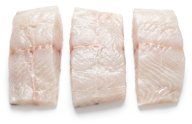 Firm white fish fillet
Use the same weight. Cook until it just flakes, checking early because thickness varies.


 Mackerel fillet
Use the same weight. It is oilier and stronger in flavour, so reduce the cooking time by 1–2 minutes and use less added oil.
 Sea bream
Use the same weight. It is milder and firmer, so cook for about the same time and adjust salt at the end.
- Firm white fish fillet
Use the same weight. It is much milder, so add a little extra pepper or chilli if the dish needs punch; cook 1–2 minutes less.


 Large prawn
Use the same weight, peeled and deveined; cook 2-3 minutes less so they stay sweet and tender.
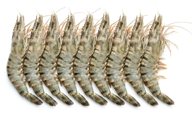 Tiger prawn
Use the same weight; meatier but similar, and they need the same quick cooking.
 Crayfish tail
Use the same weight; smaller, so cook 1-2 minutes only and add near the end.


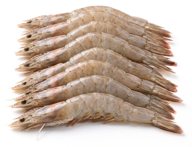 Prawn
Use the same weight, shelled; add in the last 2-3 minutes until pink. Texture is firmer and less briny.
 Small prawn
Use the same weight; they cook very quickly, so add at the end and do not simmer long.
- Firm white fish fillet
Use the same weight, cut into chunks; add 3-4 minutes before serving. Less briny, so taste and add salt.


 White wine vinegar
For 100 ml wine use 25 ml white wine vinegar plus 75 ml water; simmer 2 minutes to soften the sharpness.
 Lemon juice
For 100 ml wine use 1 tbsp lemon juice made up to 100 ml with water; add off the heat. Sharper and less complex.
 Vegetable stock
Use the same volume; add 1 tsp vinegar or lemon juice for acidity. Lighter, without wine's fermented depth.


 Coriander microgreen
Use the same weight; use raw as a garnish, with no cooking.
 Micro coriander cress
Use the same weight; identical raw garnish use.
 Coriander leaf
Use the same weight, chopped fine; it is stronger, so use 75% if used raw as a garnish.


 Celery
Use the same weight, sliced; add 2 g fennel seed per 100 g to mimic the aniseed note. Texture is stringier and less sweet.
 Onion
Use the same weight, sliced; add 2 g fennel powder per 100 g. It is sweeter and softer, with no crunchy bulb texture.
 Fennel seed
Use only 2–3 g per 100 g of missing bulb, tied in a cloth or ground; it gives the flavour but not the vegetable bulk.


 White vinegar
Use 70% of the weight, make up the rest with water, and add a little granulated sugar if the liquor was sweet. Sharper and thinner.
- White wine vinegar
Use at 70% of the weight with water. Milder and fruitier than pickling liquor.
 Malt vinegar
Use at 60% of the weight with water; stronger and maltier, so reduce any other vinegar in the dish.


 Peanut oil
Use equal weight. It handles high-heat cooking well, but lacks the signature pungent, nasal heat of mustard oil.
 Vegetable oil
Use equal weight. Neutral in flavour, so your curry will lack the characteristic Bengali or North Indian pungent punch.


 Ground cumin
Use 70% of the weight; add with ground spices or sauce bases rather than hot oil tempering, where it scorches quickly and turns bitter.
 Black cumin seeds
Use equal weight for oil tempering. Delivers an earthy profile with an additional musky, smoky, and slightly bitter edge.
- Fennel seed
Use 60% of the weight for tempering; offers comparable warm aroma, but leans sweet and liquorice-like rather than savoury and earthy.





 Ground ginger
Use 50% of the weight. Mimics turmeric's warm, earthy, rhizome background, but provides none of the golden-yellow colour.
 Saffron
Steep a tiny pinch (0.1 g per 2 g turmeric) in 2 tbsp warm water; use to match the rich golden hue. Contributes an aristocratic, honeyed floral flavour rather than earthy bitterness.


 Lemon
Use the same weight; sharper and less floral, so reduce any extra souring slightly.
- Lemon juice
Use about 30 g juice per lime (2 tbsp), strain pips; add at the end for fresh sourness.
 Dried mango powder
Use 1 g amchoor for about 15 g lime juice; add early with spices; gives dry mango sourness, not citrus aroma.


 Mustard powder
Use half the weight and mix with an equal weight of water; let stand 5 minutes. 1 g powder plus 1 g water makes about 2 g paste.
 Mustard seed
Use half the weight; soak in water 30 minutes and grind to a paste, adding water as needed. 1 g seed makes about 2 g paste.
 Wholegrain mustard
Use the same weight; it contains vinegar and sugar, so reduce other vinegar or lemon and salt slightly. Milder and chunkier.


 Chilli powder
Use 10 to 15% of the weight (about 1/4 teaspoon per chilli); imparts dry pungent heat and reddens the dish without the grassy crunch.
 Dried red chilli
Use 1 dried pod per fresh green chilli; snap in half and temper in hot oil for a deeper, toastier heat.


 Tomato purée
Use 40% to 50% of the fresh tomato weight mixed with a splash of water. Imparts a deeper red colour, thicker sauce, and slightly sweeter cooked flavour.
 Plain yogurt
Use 60% of the weight, whisked smooth and added on low heat. Provides rich body and sourness, though the gravy becomes paler and creamier.


 Chicken stock
Use the same volume. It gives a fuller, less fishy base; simmer with a few prawn shells if you have them.
- Vegetable stock
Use the same volume for a neutral version; add 1 tsp soy sauce per 250 ml to hint at fish.
 Water
Use the same volume with a pinch of salt. The dish will be thinner, so reduce other liquid slightly.


- Coriander leaf
Use equal weight, chopped fresh and stirred in off the heat or used as garnish. Matches the citrus-herbal profile identically.
 Mint
Use 40% to 50% of the weight; chop finely and add at the very end. Adds fresh herbal brightness, but shifts the aroma toward cool menthol.

Similar dishes
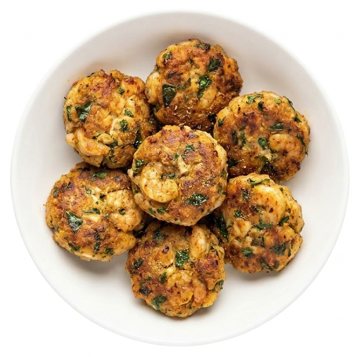
- Same: Bengali Prawn Cakes shares seafood, turmeric, chilli and coriander with this dish.
- Different: It is a shallow-fried patty of minced prawn and cod with chickpea flour, garam masala and curry leaf, while this dish is a tomato-mustard seafood stew with clams, langoustines, fennel and pickling liquor.
- Same: Erha Meen Mulkitathu shares a tomato-based seafood sauce with this dish and uses turmeric, green chilli, onion, fennel and mustard seed.
- Different: Erha Meen Mulkitathu uses prawns and sole, tamarind extract, lemon juice, coconut, curry leaf, fenugreek, ginger-garlic paste and vegetable oil, and it shallow-fries the seafood before simmering, while this dish uses hake, red mullet, langoustines and clams with mustard oil, mustard paste, white wine, fish stock and pickled fennel.

- Same: It shares langoustines, pickling liquor, turmeric, green chilli, coriander and lime with this dish. Both use a pickled component and a turmeric-forward spice profile.
- Different: It uses only grilled langoustines, while this dish is a stew with hake, red mullet, clams and langoustines. It has butter, garlic and fresh turmeric root but lacks this dish's tomato, fish stock, mustard oil, mustard paste, cumin, fennel, onion and clams.

- Same: Poshto Maachh shares fish, mustard oil, turmeric, cumin and green chilli with this dish.
- Different: Poshto Maachh uses flat fish fillet and poppy seeds with curry leaves, dried red chilli and sugar, but it lacks this dish's mixed seafood, tomato, lime, mustard paste, fennel, pickling liquor and fish stock; it is a coated poppy-seed curry rather than a tangy seafood stew with quick-pickled fennel.