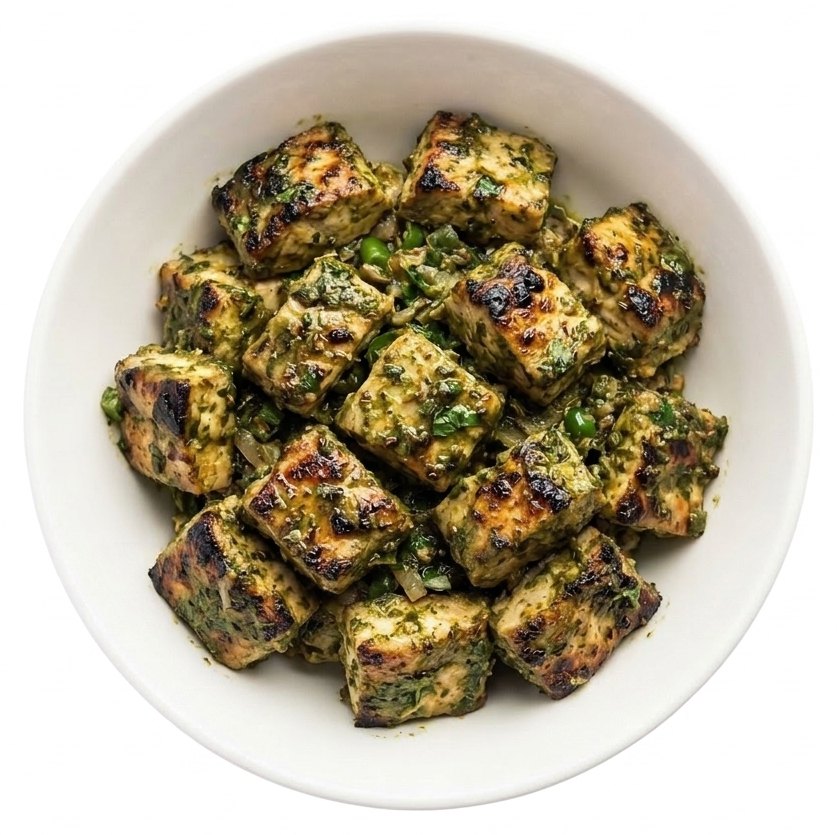
Hara Mahi Tikka
Succulent cubes of fish are coated in an aromatic green herb and yoghurt marinade, then grilled until tender with lightly charred edges. A final baste of melted butter adds richness and enhances the smoky flavour.
Marinade spices
15 gWhisked into the yoghurt marinade (step 2)Everything else

Method
- Combine 29.7 g green chilli, 100 g coriander leaf, 18 g mint, 0.5 g curry leaf, 2 tbsp pomegranate seeds, and 150 g onion in a food processor and blend until completely smooth. Transfer to a bowl.
- Whisk 300 g hung yoghurt in a large bowl. Mix in the green herb paste, the marinade spices, 3 g fresh ginger, 20.4 g lemon juice, 40.5 g vegetable oil, the remaining marinade ingredients, and salt to taste. Add 1000 g fish cubes, tossing until evenly coated. Cover and chill in the refrigerator for 2 hours.
- Heat a charcoal grill, tandoor, or conventional grill (broiler) to medium. Thread the marinated fish onto metal skewers leaving 2.5 cm (1 inch) of space between each piece, then brush over any remaining marinade.
- Roast the skewers over or under the heat for 6 to 8 minutes, turning as needed, until the fish is just cooked through.
- Suspend the skewers over a baking tray for 2 to 3 minutes so any excess juices can run off. Place them on a heatproof platter, baste generously with melted butter to taste, and return to the heat for a final 2 to 4 minutes.
Don't have something?


 Chilli powder
Use 10 to 15% of the weight (about 1/4 teaspoon per chilli); imparts dry pungent heat and reddens the dish without the grassy crunch.
 Dried red chilli
Use 1 dried pod per fresh green chilli; snap in half and temper in hot oil for a deeper, toastier heat.


 Dried mint
Use about 30% of the weight of fresh mint. Rub between your palms to crush before stirring in; the flavour will be more intensely herbal and less bright.
- Coriander leaf
Use equal weight, finely chopped. Adds fresh citrusy green notes, but lacks the cooling menthol lift.


 Bay leaf
Fry 1 bay leaf for every 5 curry leaves in hot oil; imparts a warm, woodsy background note, but misses the citrus-sulphury punch entirely.
 Lime juice
Add a small squeeze (about 5 ml per sprig of curry leaves) right before serving; provides sharp citrus top notes without the toasty, herbal aroma.


 Pomegranate
Use the same weight of seeds from fresh fruit; about one fruit gives 100 g seeds. Deseed carefully.
 Dried pomegranate seeds
Use 20% of the weight, soak and crush; they add sourness, not fresh garnish.
 Green grape
Use the same weight, halved; good for garnish but less crunchy and less sour.






 Greek yoghurt
Use the same weight straight from the pot. It is thick and slightly tangier; stir well before use.
 Full-fat natural yoghurt
Use about 175% of the weight and strain through muslin for 3–4 hours to yield the same weight of thick yoghurt.
 Hung yoghurt
Use the same weight. It is essentially the same ingredient; adjust salt or sugar to taste.


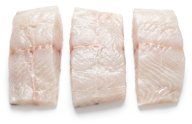 Firm white fish fillet
Use the same weight, cut to the same thickness. Cooking time is almost identical; check after 5 minutes.
 Firm fish fillet
Use the same weight. If thicker, add 2–3 minutes simmering; do not stir roughly.
 Boneless fish
Use the same weight, cut into fillet-like pieces. Check carefully for bones; cooking time is similar.


 Unsalted butter
Use 100% of the weight. If the original recipe relies on salted table butter, add a pinch of salt to balance.
 Ghee
Use 80% to 85% of the weight. Ghee is pure butterfat with moisture removed; it yields a deeper, nuttier flavour and handles high heat better.
 Vegetable oil
Use 80% of the weight for frying or tempering. The dish loses sweet dairy richness but remains glossy and light.


 Ginger paste
Use equal weight. Sauté in hot fat until the raw allium smell disappears; slightly wetter, but provides identical warmth and pungency.
 Ground ginger
Use 20% to 25% of the weight (1 g for every 4 to 5 g fresh). Stir into the gravy; adds peppery heat and warmth, though it misses the crisp, zesty kick of raw root.


 Garlic
Use equal weight; crush or finely grate to a smooth pulp to replicate the same fresh, pungent moisture in your base gravy.
 Garlic powder
Use 20 to 25% of the weight; mix with a teaspoon of water before adding to oil so it does not burn, noting it lacks the fresh bite.


 Peanut
For 100 g paste, grind 70–80 g roasted peanuts with a little water until smooth; add water gradually.
 Cashew paste
Use the same weight; it is creamier and milder, so reduce any added cream or sugar slightly.
 Almond paste
Use the same weight; it is sweeter and thicker, so loosen with a little water or stock.



- Ground Ceylon cinnamon
Milder and sweeter than ground cassia: use about 1.5 times the weight.
 Cassia bark (Chinese cinnamon)
Grind the same weight of cassia bark in a spice mill until powdery, or simmer a piece whole and lift it out before serving.
 Ground mace
Use 40 to 50% of the weight; offers a delicate, sweet, woodsy fragrance that complements rich curries without dominating.


- Ground cinnamon (cassia)
Use about 70% of the weight and add a pinch of ground clove (about 20% of the allspice weight); the result is more cinnamon-forward.
 Ground clove
Use only about 20% of the weight; it is much stronger and can dominate the dish.
 Ground nutmeg
Use about 50% of the weight; it gives warmth but lacks allspice's peppery edge.


 Coarsely ground black pepper
Use 75% of the weight. Add midway through simmering; spreads heat evenly through the dish instead of delivering isolated bursts.
 Ground black pepper
Use 50% of the weight. Stir in near the end of cooking; significantly darkens light gravies and provides an immediate, sharp bite.


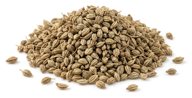 Carom seed
Use the same weight; this is the same spice.
 Cumin seed
Use 75% of the weight, toasted; different, less medicinal flavour.
 Fennel seed
Use 50% of the weight, crushed; sweeter and milder.


 Cornstarch
Use the same weight. It is the same ingredient under another name and thickens or crisps in the same way.
 Rice flour
For coating and frying, use the same weight; it gives a crisper, slightly gritty crust. For thickening, use 1.5 times the weight and simmer a little longer.
 Plain flour
For coating, use the same weight. For thickening, use twice the weight and cook out for 2–3 minutes; it gives a softer, less glossy sauce.


 Chickpea flour
Use the same weight. Gram flour is chickpea flour, so this is an exact swap with the same nutty flavour and binding.
- Plain flour
Use about 75–80% of the weight, e.g. 80 g for 100 g gram flour, and add a pinch of turmeric for colour. Less nutty and less crisp; good only for thickening or simple batters.
- Rice flour
Use the same weight for crispness, but it does not bind like gram flour; mix with a little plain flour if making pakora batter.


- Lime juice
Use equal volume or weight; delivers almost identical sharp acidity with a faintly more aromatic, bitter-edged profile.
 Dried mango powder
Use 25% of the weight (about 1 g amchoor for 4 g juice); provides clean fruity tartness without thinning the sauce.
 White vinegar
Use 75% of the volume; gives direct sourness without any citrus floral fragrance.


 Peanut oil
Use 1:1 by weight. Handles high-heat frying identically and introduces a very subtle, pleasant nuttiness.
- Ghee
Use 1:1 by weight. Yields a much richer, authentic aroma and a glossy, heavier mouthfeel.
 Mustard oil
Use 1:1 by weight. Heat until smoking, then cool slightly before cooking to temper its intensely pungent, sharp mustard kick.


Similar dishes

- Same: Bhuni Salmon Machchi also marinates fish using lemon juice, ajwain seeds, green chillies, garlic, and ginger.
- Different: Instead of grilling cubes of fish with a mint and coriander paste and butter, it bakes salmon seasoned with mustard oil, fenugreek, and garam masala, then tops it with a prawn tartar.

- Same: Aa and this dish are both fish dishes made with fish fillet, onion, green chilli, garlic, and salt.
- Different: Aa is a brothy stew poached with fermented fish, while this dish is a grilled fish in a yoghurt, coriander, mint, peanut, and green-chilli marinade with cinnamon, allspice, black peppercorn, ajwain, cornflour, gram flour, lemon juice, oil, and a butter baste.

- Same: Musallam Bharwan Machhali also pairs fish with fresh mint, coriander leaf, onion, ginger, and garlic.
- Different: Instead of grilling marinated fish cubes using lemon juice, butter, green chillies, curry leaves, cinnamon, black pepper, and ajwain, it gently cooks a whole fish stuffed with a large quantity of onions, chilli powder, and ghee.

- Same: Hariyali Macchi also features grilled fish marinated in a vibrant green paste of coriander, mint, green chillies, ginger, garlic, and lemon juice.
- Different: It cooks monkfish on skewers using spinach, chaat masala, cumin, and turmeric, but omits this dish's onion, curry leaves, ajwain, cinnamon, and butter baste.