
Orissan Shantula
A mild Orissan vegetable curry with soft aubergine, potato and carrot in a milky gravy, finished with fresh coriander and green chilli.
Whole mustard seeds for the oil
7 gAdded to the hot oil before the onion (step 5)Ground spices for the vegetables
4.1 gStirred in with the potato and carrot (step 9)Everything else

Method
- Heat 30 g of the 67.5 g vegetable oil in a heavy pan over medium heat.
- Add 300 g cubed aubergine and fry for 2–3 minutes, turning until golden all over.
- Lift the aubergine out and set aside.
- Add the remaining 37.5 g vegetable oil to the pan.
- Add 7 g black mustard seed and wait until they pop.
- Add 100 g finely chopped onion and cook for 7–10 minutes until soft.
- Stir in 12 g garlic paste and 10 g ginger paste and cook for 1 minute.
- Add 150 g cubed potato and 400 g cubed carrot.
- Add the ground spices for the vegetables and stir-fry for 2 minutes.
- Pour in 99.4 g water and add salt to taste; bring to the boil.
- Cover and simmer for 8 minutes, stirring once halfway.
- Add the reserved aubergine and 207 g whole milk.
- Cover and simmer for 5 minutes.
- Take the pan off the heat and press a few potato pieces with the back of a spoon to thicken the gravy.
- Fold in 2 g finely chopped coriander leaf and 4 g slit green bird’s eye chilli.
Don't have something?


 Peanut oil
Use 1:1 by weight. Handles high-heat frying identically and introduces a very subtle, pleasant nuttiness.
 Ghee
Use 1:1 by weight. Yields a much richer, authentic aroma and a glossy, heavier mouthfeel.
 Mustard oil
Use 1:1 by weight. Heat until smoking, then cool slightly before cooking to temper its intensely pungent, sharp mustard kick.


 Baby aubergine
Use the same weight; halve or quarter and cook 2–3 minutes longer. They hold their shape better in the sauce.
 Small aubergine
Use the same weight; slice or cube to the recipe's size. Similar flesh, slightly firmer.
 Round aubergine
Use the same weight; cube and salt for 10 minutes if the recipe does. It absorbs oil a little more.


 Mustard seeds
Use equal weight. Pop in hot fat until they crackle and turn greyish; yields an almost identical nutty, pungent finish.
 Yellow mustard seeds
Use equal weight. Fry over medium heat; delivers a milder, sweeter pop and turns bitter quickly if the oil is excessively hot.






 Garlic paste
Use equal weight. Fry gently in oil or ghee with the ginger; incorporates smoothly into curries without visible minced bits.
 Garlic powder
Use 15% to 20% of the weight (about 1 g for every 5 to 6 g fresh cloves). Whisk into sauces; gives a savoury, toasted garlic flavour without raw pungency.
 Shallot
Use 1.5 times the weight, very finely minced. Sauté until golden; provides savoury allium sweetness, though it lacks garlic's pungent sulphur bite.


 Ginger paste
Use equal weight. Sauté in hot fat until the raw allium smell disappears; slightly wetter, but provides identical warmth and pungency.
 Ground ginger
Use 20% to 25% of the weight (1 g for every 4 to 5 g fresh). Stir into the gravy; adds peppery heat and warmth, though it misses the crisp, zesty kick of raw root.



 Eggplant
Use equal weight. Cut into large chunks; cooks down much faster (10-12 minutes) and softens into the sauce rather than staying starchy and firm.
 Paneer
Use 80% of the weight. Cube and add in the last 5-10 minutes of cooking; adds rich dairy protein instead of starchy bulk.
 Dried chickpea
Use 45% dry weight. Soak overnight and boil until fully soft before stirring into the sauce to simmer for 10 minutes.


 Turnip
Use the same weight; peel and cut as for carrot. It is less sweet and slightly peppery, so add a pinch of sugar and expect a softer, more earthy result.
- Potato
Use the same weight; cut into similar pieces and add 5–10 minutes' extra cooking. It gives bulk but no carrot sweetness or colour.
 Courgette
Use the same weight; cut a little larger and add near the end. It releases water, so reduce other liquid slightly and expect a softer texture.


 Cumin seed
Dry-roast briefly and grind finely; use equal weight (1:1). Imparts an even punchier, nuttier, toasty aroma than pre-ground cumin.
 Ground coriander
Use equal weight (1:1). Adds mild, lemony sweetness rather than cumin's smoky, earthy bite; curries will taste lighter and less savoury.
 Black cumin seeds
Grind finely; use 60% to 75% of the weight. Produces a darker, more complex, smoky-herbal flavour suited to rich gravies.


- Ground ginger
Use 50% of the weight. Mimics turmeric's warm, earthy, rhizome background, but provides none of the golden-yellow colour.
 Saffron
Steep a tiny pinch (0.1 g per 2 g turmeric) in 2 tbsp warm water; use to match the rich golden hue. Contributes an aristocratic, honeyed floral flavour rather than earthy bitterness.


 Stock
Use the same weight in savoury dishes; it adds body, so adjust salt.
 Milk
Use the same weight only in doughs or creamy dishes; it makes the result richer.
 Coconut water
Use the same weight in curries or rice; it adds sweetness and a faint coconut taste.



- Milk
Use 100% of the weight. If using semi-skimmed milk, stir in 10 g butter per 200 g milk to match the richness of whole milk.
 Single cream
Use 60% cream diluted with 40% water by weight to match the fat content of whole milk. Gravies will taste richer and reduce faster.


- Bird's eye green chilli
Use the same weight; heat and flavour are very close.
 Green chilli
Use 1.5 to 2 times the weight; deseed for less heat. Larger chillies are more watery.
 Fresh green chilli
Use 1.5 to 2 times the weight; chop finely and adjust heat by tasting.

Similar dishes

- Same: Ringan Batata Nu Shaak shares aubergine, potato, black mustard seed, turmeric, green bird’s-eye chilli, coriander and vegetable oil with this dish.
- Different: Ringan Batata Nu Shaak adds cumin seed, asafoetida, dried mild red chilli, Kashmiri chilli powder, ground coriander, tomato and jaggery, and it uses water rather than this dish’s milk, onion and garlic, with no carrot.

- Same: Aloo Baigan Sookha shares vegetable oil, aubergine, potato, salt and cumin with this dish, and neither uses a souring agent.
- Different: Aloo Baigan Sookha is dry-cooked with cumin seed and dried red chilli, while this dish is a milky curry with black mustard seed, turmeric, onion, garlic, ginger, carrot, water, milk, coriander leaf and green bird’s eye chilli.
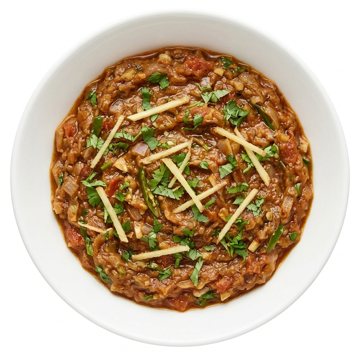
- Same: Baingan Ka Bharta shares aubergine, onion, garlic, ginger, green chilli, turmeric, coriander and vegetable oil with this dish.
- Different: It adds tomato, tomato purée and lemon juice and lacks this dish's potato, carrot, milk, black mustard seed and cumin, and it is a smoky mashed aubergine dish rather than a milky vegetable curry.

- Same: Goan Brinjal Pickle and this dish both use aubergine, vegetable oil, black mustard seed, turmeric, garlic and salt.
- Different: Goan Brinjal Pickle is a matured pickle with malt vinegar, jaggery, dried Kashmiri chilli, curry leaf and cumin seed, while this dish is a milky curry with onion, ginger, potato, carrot, fresh green chilli and coriander.