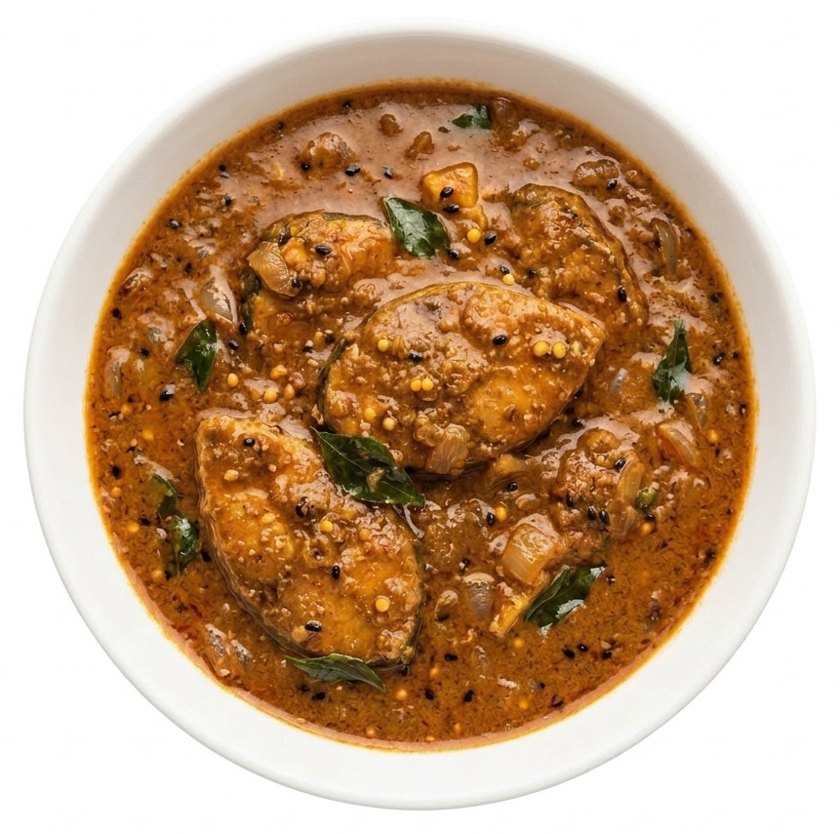
Mahi Kaliya
A fragrant, tangy Hyderabadi fish curry enriched with a ground paste of toasted seeds and coconut, balanced by tart tamarind.
Spices to roast and grind
35 gToasted in a dry pan and ground before cooking (step 1)Tempering seeds
4.6 gFried in hot oil with curry leaves (step 2)Ground turmeric
1.5 gStirred in with the onions and tamarind (step 3)Chilli powder
2.6 gStirred into the cooked onion base (step 5)Bay leaves
1 gAdded to the sauce base before the fish (step 6)Everything else


Method
- Individually dry roast the spices to roast and grind, 1 tablespoon chironji kernels, and 30 g dried coconut in a skillet over medium heat for about 1 minute each until fragrant. Leave to cool, then blitz in a spice grinder to a fine powder and set aside.
- Heat 114 g vegetable oil in a wide frying pan over medium heat. Add 2 g curry leaf and the tempering seeds, frying for about 1 minute until the seeds splutter.
- Stir in 1 teaspoon of the 15.6 g tamarind extract, the ground turmeric, and 450 g onion. Cook for 5 to 7 minutes until the onions are lightly browned.
- Add 3 g fresh ginger and 1.5 teaspoon garlic, frying for 1 minute until fragrant.
- Drop the heat to low, mix in the ground spice blend and the chilli powder, and cook gently for 2 to 3 minutes.
- Season with salt to taste, then stir in the bay leaves and the remaining tamarind extract.
- Arrange 1000 g fish in the pan and pour in 250 ml water. Cover and simmer for 7 to 8 minutes until the fish is just cooked through.
- Gently lift the fish out of the pan and keep warm on a serving dish. Raise the heat and boil the sauce for about 5 minutes until thickened. Remove and discard the bay leaves, stir in 100 g coriander leaf, and pour the curry sauce over the fish.
Don't have something?

 Coriander seeds
Dry-roast lightly in a pan and grind to a fine powder; use equal weight (1:1). Offers a noticeably fresher, brighter citrus note.
 Ground cumin
Use 50% to 75% of the weight. Lacks the floral, citrusy profile of coriander and turns the gravy heavier, earthier, and darker.
 Garam masala
Use 50% of the weight and stir in near the end of cooking. Adds warmth and depth since it contains ground coriander, but introduces stronger spices like clove and cinnamon.


 Cumin seed
Dry-roast briefly and grind finely; use equal weight (1:1). Imparts an even punchier, nuttier, toasty aroma than pre-ground cumin.
- Ground coriander
Use equal weight (1:1). Adds mild, lemony sweetness rather than cumin's smoky, earthy bite; curries will taste lighter and less savoury.
 Black cumin seeds
Grind finely; use 60% to 75% of the weight. Produces a darker, more complex, smoky-herbal flavour suited to rich gravies.


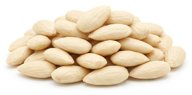 Blanched almond
Use the same weight, soak 20 minutes and use whole or grind; slightly sweeter and less bitter.
 Cashew nut
Use the same weight, soak 20 minutes; creamier and milder than chironji.
 Pistachio
Use the same weight, blanch and peel; stronger in flavour, so use slightly less if you want subtlety.


- Cashew nut
Use equal weight. Soak in warm water for 20 minutes and grind to a smooth paste; produces an even creamier, slightly richer gravy than poppy seeds.
 White sesame seed
Use equal weight. Soak and grind finely; provides similar thickening and body with a slightly nuttier, faintly bitter edge.
 Almond
Use equal weight. Blanch, peel, and grind finely with a splash of water; lends a velvety body and gentle sweetness to gravies.


- White sesame seed
Use the same weight. Toast lightly before use; white seeds are milder and give a cleaner look.
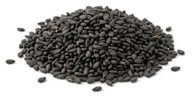 Black sesame seed
Use the same weight. They are stronger and more bitter; toast briefly and use slightly less if the dish is delicate.
 Peanut
Use the same weight, crushed or chopped. It gives crunch but not the same nutty sesame aroma.


 Desiccated coconut
Use equal weight; texture is much finer, so roast very cautiously over low heat if the recipe requires browning for spice pastes.
 Fresh coconut
Finely slice or grate and use 140% of the weight to offset the extra water, or dry-roast in a bare pan until moisture evaporates completely.


 Peanut oil
Use 1:1 by weight. Handles high-heat frying identically and introduces a very subtle, pleasant nuttiness.
 Ghee
Use 1:1 by weight. Yields a much richer, authentic aroma and a glossy, heavier mouthfeel.
 Mustard oil
Use 1:1 by weight. Heat until smoking, then cool slightly before cooking to temper its intensely pungent, sharp mustard kick.


 Bay leaf
Fry 1 bay leaf for every 5 curry leaves in hot oil; imparts a warm, woodsy background note, but misses the citrus-sulphury punch entirely.
 Lime juice
Add a small squeeze (about 5 ml per sprig of curry leaves) right before serving; provides sharp citrus top notes without the toasty, herbal aroma.


 Black mustard seed
Use the same weight. The seeds are smaller and hotter; fry in hot oil until they pop, about 20–30 seconds, and reduce the heat if they darken too fast. The dish will be a little sharper.
 Yellow mustard seeds
Use the same weight. They are milder and larger; fry a few seconds longer until they pop. The finished dish will have less pungency.
 Ground mustard seed
Use 70% of the weight of whole seed, added with the other ground spices rather than fried whole. You lose the popping texture and the heat comes through more evenly.


- Black cumin seeds
Use equal weight. Imparts an earthy, slightly bitter note in temperings, though it lacks nigella's oniony sharpness.
- Black sesame seeds
Use equal weight. Gives a similar speckled appearance and light crunch on breads, but provides a nutty rather than herbaceous, onion-like flavour.

 Tamarind
Use 180% of the weight of compressed tamarind; soak in three times its weight of boiling water for 15 minutes, knead, and strain out the thick pulp.
 Dried mango powder
Use 35% of the weight dissolved in two tablespoons of warm water. Provides sharp tang, though the resulting sauce will be lighter in colour.
 Lemon juice
Use equal weight, added right at the end of cooking. Adds sharp acidity without the deep brown hue or pulpy thickness.


 Ground ginger
Use 50% of the weight. Mimics turmeric's warm, earthy, rhizome background, but provides none of the golden-yellow colour.
 Saffron
Steep a tiny pinch (0.1 g per 2 g turmeric) in 2 tbsp warm water; use to match the rich golden hue. Contributes an aristocratic, honeyed floral flavour rather than earthy bitterness.






 Ginger paste
Use equal weight. Sauté in hot fat until the raw allium smell disappears; slightly wetter, but provides identical warmth and pungency.
- Ground ginger
Use 20% to 25% of the weight (1 g for every 4 to 5 g fresh). Stir into the gravy; adds peppery heat and warmth, though it misses the crisp, zesty kick of raw root.


 Garlic paste
Use equal weight. Fry gently in oil or ghee with the ginger; incorporates smoothly into curries without visible minced bits.
 Garlic powder
Use 15% to 20% of the weight (about 1 g for every 5 to 6 g fresh cloves). Whisk into sauces; gives a savoury, toasted garlic flavour without raw pungency.
 Shallot
Use 1.5 times the weight, very finely minced. Sauté until golden; provides savoury allium sweetness, though it lacks garlic's pungent sulphur bite.


 Red chilli powder
Use 100% of the weight. Provides direct, sharp heat and red colour in equal measure.
 Kashmiri chilli powder
Use 150% to 200% of the weight if matching colour, but add a pinch of black pepper or hot chilli if you need equivalent fiery heat.
 Cayenne pepper
Use 75% to 100% of the weight. Offers a sharp, clean heat with slightly less earthy depth and less crimson colour.


 Cinnamon stick
Use a 2 cm piece (about 1 g) for every 1 to 2 bay leaves. Fry in whole-spice temperings; provides the cassia-like warmth typical of Indian tejpatta.
 Ground cinnamon (cassia)
Use 0.5 g per leaf. Stir into the sauce during simmering; gives the same warm woodiness but darkens the colour slightly.


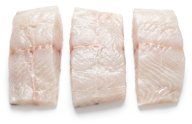 Firm white fish fillet
Use the same weight; remove any skin and cut into even pieces. Cook gently for the same short time.
 Skinless boneless fish fillet
Use the same weight; check for bones and simmer 5–8 minutes until just opaque. It may be softer, so stir less.
 Firm white fish
Use the same weight; clean, skin and cut into chunks. Cooking time is similar, but check for bones.


Similar dishes

- Same: Madras Fish Curry shares with this dish a foundation of fish cooked in vegetable oil with coconut, tamarind, poppy seeds, curry leaves, onions, and standard spices like cumin, coriander, and mustard seeds.
- Different: Madras Fish Curry incorporates fresh coconut, a large amount of tomatoes, fenugreek, vinegar, and lime juice, but omits the sesame seeds, nigella seeds, bay leaf, and dried coconut used in this dish.

- Same: Meen Dakhani shares a base of tamarind, onions, vegetable oil, curry leaves, mustard seeds, and fresh coriander with this dish.
- Different: Unlike this dish, it omits the coconut, sesame seeds, poppy seeds, nigella seeds, and ground coriander, using fresh green chillies and significantly less oil instead.

- Same: Chapa Pulussu shares an onion base cooked in vegetable oil and seasoned with sesame seeds, mustard seeds, curry leaves, ground coriander, turmeric, garlic, and fresh coriander leaves.
- Different: Chapa Pulussu uses tomatoes for tartness and whole dried red chillies with much less oil, omitting the tamarind extract, cumin, dried coconut, poppy seeds, nigella seeds, ginger, and bay leaves used in this dish.

- Same: Both dishes base their sauces on fish cooked with dried coconut, sesame seeds, poppy seeds, cumin, onions, ginger, and garlic.
- Different: Shai Dum ki Machhali is baked rather than simmered, adds fresh green chillies and mint, and lacks this dish's tamarind, curry leaves, mustard seeds, and nigella seeds.