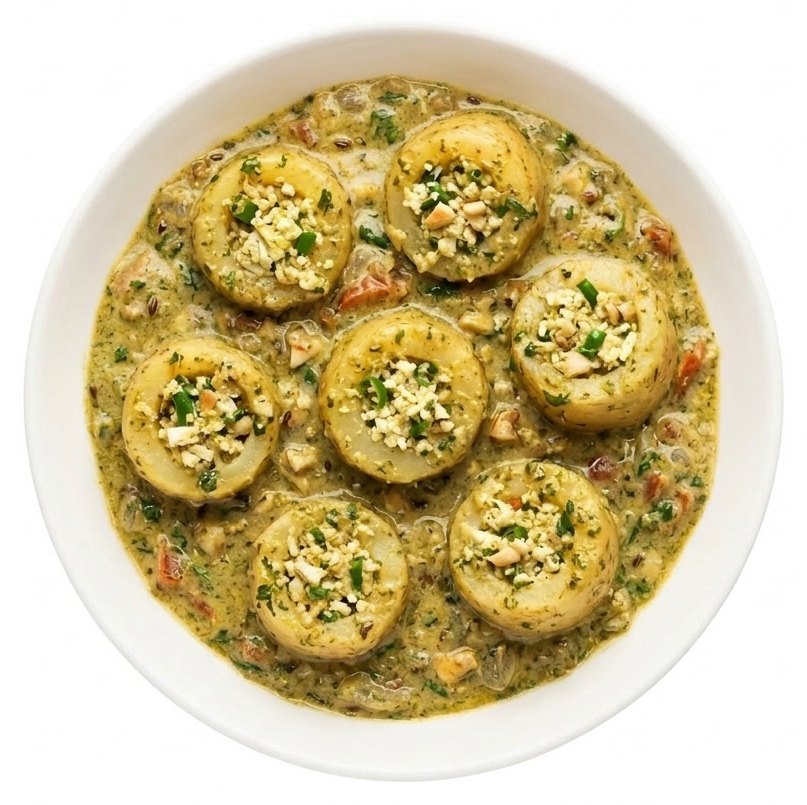
Aloo Chutneywale
Tender hollowed potato barrels filled with spiced paneer and nuts, simmered in a luscious yogurt and cashew sauce with a fresh green chutney.
Tempering spices
3.7 gFried in the hot ghee (step 4)Ginger and garlic paste
42 gSautéed with the onion and cashew pastes (step 4)Ground spices for the sauce
13 gStirred into the reduced paste base (step 4)Everything else

Method
- Pour enough oil for deep-frying into a deep pan and bring to 180°C (350°F). Deep-fry 750 g potato in batches for 1 to 2 minutes until lightly coloured and about three-quarters cooked through, then transfer with a slotted spoon onto paper towels to drain. Once cool, hollow out the core of each barrel, retaining a 5 mm (¼ in) outer shell.
- Mix 125 g paneer, 24 g green chilli, 2.5 g ginger, 10 cashew nut, and salt to taste in a bowl. Pack the filling firmly inside the carved potato barrels.
- Blend 150 g coriander leaf and 3 tablespoon peeled and roughly chopped raw mango to a coarse paste in a food processor. Add 75 g mint and process until completely smooth.
- Heat 100 g ghee in a heavy-based pan over medium heat, add the tempering spices, and let them sizzle for around 1 minute. Add the ginger and garlic paste alongside 150 g boiled onion paste and 50 g cashew paste, cooking for 1 to 2 minutes until dry. Mix in the ground spices for the sauce, 0.3 g salt, and 100 g tomato, then fry for 2 to 3 minutes until the liquid cooks off.
- Take the pan off the heat and thoroughly whisk in 310 g yogurt. Return to low heat, add the filled potatoes, and simmer gently for several minutes until thoroughly heated through.
Don't have something?


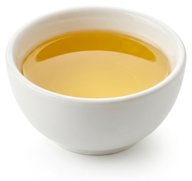
 Peanut oil
Use the same weight; this is effectively the same oil.
 Vegetable oil
Use the same weight. Neutral and less nutty; good for high heat.
 Corn or vegetable oil
Use the same weight. Neutral; the dish loses the faint peanut aroma.



 Eggplant
Use equal weight. Cut into large chunks; cooks down much faster (10-12 minutes) and softens into the sauce rather than staying starchy and firm.
 Paneer
Use 80% of the weight. Cube and add in the last 5-10 minutes of cooking; adds rich dairy protein instead of starchy bulk.
 Dried chickpea
Use 45% dry weight. Soak overnight and boil until fully soft before stirring into the sauce to simmer for 10 minutes.


 Extra-firm tofu
Use equal weight, pressed well to remove excess moisture and cut into cubes. Pan-fry lightly before adding; absorbs sauces similarly, though it lacks dairy sweetness.
 Halloumi
Use equal weight, soaked in warm water for 20 minutes to leach out excess salt. Holds shape during frying, but has a denser, saltier chew.


 Chilli powder
Use 10 to 15% of the weight (about 1/4 teaspoon per chilli); imparts dry pungent heat and reddens the dish without the grassy crunch.
 Dried red chilli
Use 1 dried pod per fresh green chilli; snap in half and temper in hot oil for a deeper, toastier heat.


 Fresh ginger
Use equal weight; scrape off the skin and grate or finely julienne according to the recipe.
 Ginger paste
Use equal weight; stir straight into the sizzling aromatics, taking care as the extra moisture may spit.
 Ground ginger
Use 15 to 20% of the weight; add alongside ground spices, noting it imparts warm, dry heat rather than zesty freshness.


 Almond
Use 100% of the weight. Soak in boiling water and slip off skins before frying or grinding; gives a lighter, slightly less sweet richness to curries.
 Poppy seed
Use 60% of the weight for gravies. Soak in warm water and grind into a fine paste to thicken royal kormas without adding heavy oiliness.
 Shelled peanut
Use 100% of the weight. Roast, skin, and grind; creates a thicker, earthier texture typical of Maharashtrian and western Indian curries.


 Raw green mango
Use the same weight; peel and grate or slice. It gives the same sourness and texture.
 Green mango
Use the same weight; peel and prepare as the recipe says. Check sourness before adding extra lime.
 Dried mango powder
For sourness only, use about 1–2 tsp (3–6 g) for 100 g mango and add with the spices. It gives no texture.


 Dried mint
Use about 30% of the weight of fresh mint. Rub between your palms to crush before stirring in; the flavour will be more intensely herbal and less bright.
- Coriander leaf
Use equal weight, finely chopped. Adds fresh citrusy green notes, but lacks the cooling menthol lift.


 Unsalted butter
Use 120% of the weight; melt gently over low heat to avoid burning the milk solids, which will yield a softer, creamier richness rather than a nutty aroma.
- Vegetable oil
Use 85% of the weight; holds high cooking temperatures without smoking, but the final dish will lack traditional dairy depth.
 Mustard oil
Use equal weight; heat to smoking point and cool slightly before cooking, bearing in mind it introduces an assertive, pungent edge.


 Ground cumin
Use 70% of the weight; add with ground spices or sauce bases rather than hot oil tempering, where it scorches quickly and turns bitter.
 Black cumin seeds
Use equal weight for oil tempering. Delivers an earthy profile with an additional musky, smoky, and slightly bitter edge.
 Fennel seed
Use 60% of the weight for tempering; offers comparable warm aroma, but leans sweet and liquorice-like rather than savoury and earthy.


 Onion paste
Use the same weight, then simmer in a little water for 5–8 minutes and cool; raw paste is sharper and stronger.
 Fried onion paste
Use about 75% of the weight; it is sweeter, darker and stronger, so reduce salt and sugar slightly.
 Boiled onion
Use the same weight, boil until soft and blend; it is the same thing made fresh.


- Fresh ginger
Use equal weight; peel and grate very finely on a microplane or pound to a fine paste in a mortar.
- Ginger
Use equal weight; mince finely and crush with the flat of a knife before frying.
- Ground ginger
Use 20% of the weight; add directly with the dry spice powders, though it yields an earthier, less pungent profile.


 Garlic
Use equal weight; crush or finely grate to a smooth pulp to replicate the same fresh, pungent moisture in your base gravy.
 Garlic powder
Use 20 to 25% of the weight; mix with a teaspoon of water before adding to oil so it does not burn, noting it lacks the fresh bite.


- Cashew nut
Use 100% of the weight. Soak raw cashews in boiling water for 20 minutes, then blend with just enough water to form a silky, thick paste.
- Almond
Use 100% of the weight. Blanch, peel skins completely, and blend with warm water until velvety; gravies will be marginally less sweet.
 Single cream
Use 80% of the weight. Stir in near the end of cooking over low heat; provides luxurious gloss and fat without the nut solids.

 Red chilli powder
Use 100% of the weight. Provides direct, sharp heat and red colour in equal measure.
 Kashmiri chilli powder
Use 150% to 200% of the weight if matching colour, but add a pinch of black pepper or hot chilli if you need equivalent fiery heat.
 Cayenne pepper
Use 75% to 100% of the weight. Offers a sharp, clean heat with slightly less earthy depth and less crimson colour.


- Ground cumin
Use 50% of the weight mixed with equal parts ground coriander and a pinch of ground cinnamon, ground cloves, and ground green cardamom. Sprinkle near the end for a warming finish.
 Lentil stew spice mix
Use 75% of the weight. Simmer briefly in the gravy; imparts roasted warmth and complexity, though it adds a slight tang and earthy lentil undertone.


 Tomato purée
Use 40% to 50% of the fresh tomato weight mixed with a splash of water. Imparts a deeper red colour, thicker sauce, and slightly sweeter cooked flavour.
 Plain yogurt
Use 60% of the weight, whisked smooth and added on low heat. Provides rich body and sourness, though the gravy becomes paler and creamier.


- Plain yogurt
Use 100% of the weight. Whisk thoroughly until smooth before stirring into warm gravies to prevent curdling.
- Single cream
Use 90% of the weight combined with 10% lemon juice to replicate the lactic tang and rich body in marinades and curries.
Similar dishes

- Same: Both dishes cook potatoes in ghee with a sauce soured by yogurt and tomatoes and seasoned with cumin seeds and chilli powder.
- Different: Aloo Vadiyan features lentil dumplings alongside plain potatoes seasoned with turmeric, ground coriander, and fenugreek, rather than stuffing the potatoes with paneer and nuts or adding cashew paste and a mint-coriander chutney.
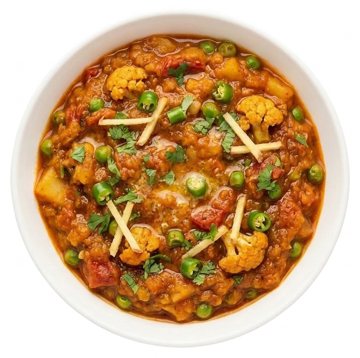
- Same: Pao Bhaji also centers on potatoes cooked with tomatoes, onions, garlic, ginger, green chillies, and garam masala.
- Different: Instead of stuffing whole potatoes and simmering them in a yogurt, mint, and cashew gravy, Pao Bhaji mashes the potatoes into a loose stew cooked with butter, turmeric, and lemon juice.

- Same: Both dishes use potatoes as their base ingredient, spiced with cumin seeds, green chillies, chilli powder, and fresh coriander leaf.
- Different: Aloo ke Kebab shapes the potatoes into patties bound with chickpea flour and shallow-fries them in vegetable oil with lemon juice, lacking this dish's paneer stuffing, mint chutney, and simmered yogurt-cashew gravy cooked in ghee.

- Same: Aloo Tamatar ka Chokha shares potato, green chilli, ginger, cumin seed, chilli powder, tomato, coriander and salt with this dish.
- Different: Aloo Tamatar ka Chokha lacks paneer, cashew, yogurt, mint, unripe mango, ghee, onion paste, garlic paste and garam masala, and it uses mustard oil and vegetable oil instead of groundnut oil and ghee; it is a mashed, charred-tomato rustic preparation, not hollowed potato barrels stuffed with paneer and nuts and simmered in a yogurt-cashew sauce.