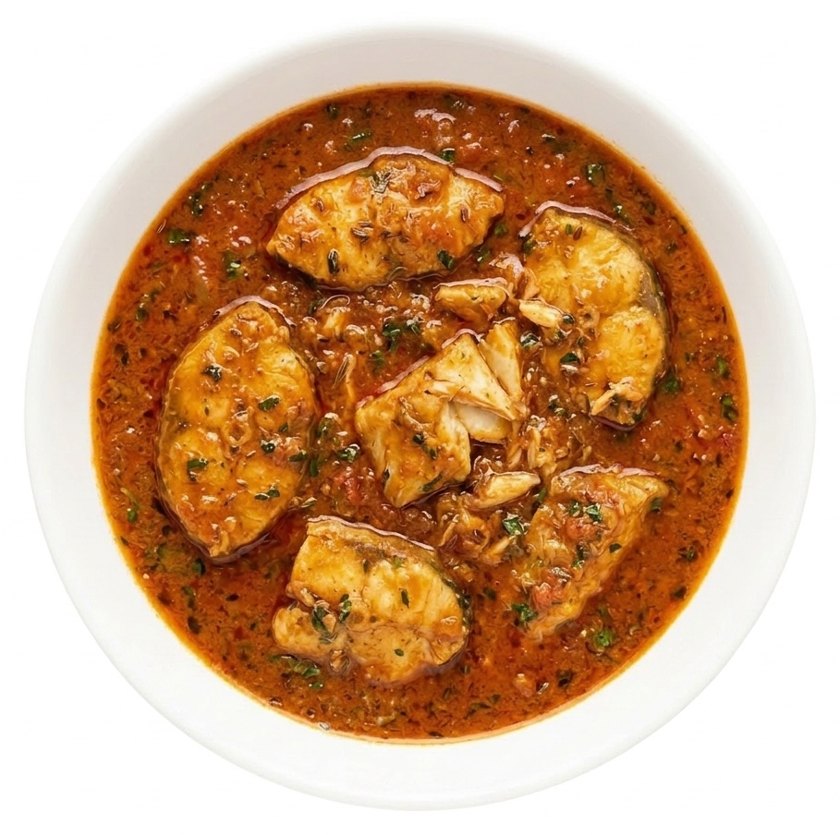
Punjabi Machhli
A Punjabi fish curry in which cod or monkfish steaks are briefly sealed and then simmered in an onion-tomato gravy scented with cumin, chilli and kasoori methi. It tastes tangy, gently spicy and aromatic.
Marinade turmeric
3 gCoated onto the fish with mustard oil (step 1)Cumin seeds for the oil
2.1 gAdded to the hot oil after the fish is sealed (step 5)Ground spices for the gravy
8 gStirred in after the tomato purée (step 9)Finishing spice
3 gCrushed over the pan at the end (step 13)Everything else


Method
- Coat 650 g cod or monkfish steaks with 3 g ground turmeric (the marinade turmeric) and 13.5 g mustard oil. Leave for 10 minutes.
- Blend 15 g garlic, 20 g fresh ginger root and a little water to a paste. Set aside.
- Heat 40.5 g vegetable oil in a large saucepan over medium heat.
- Fry the fish steaks for 2–3 minutes, turning once, just to seal them; they should not cook through. Lift out and set aside.
- Add 2.1 g cumin seed (the cumin seeds for the oil) to the hot oil and let them sizzle.
- Stir in 150 g white onion paste and fry for 5 minutes, until it thickens and darkens.
- Add the garlic-ginger paste and fry for 2 minutes.
- Add 180 g tomato purée and cook for 5 minutes, stirring to stop it spitting.
- Stir in 2.6 g kashmiri chilli powder and 5.4 g ground coriander (the ground spices for the gravy) and fry for 1 minute.
- Pour in 199 g water and add 4 g green bird’s eye chilli, split lengthways. Season with salt.
- Let it come to a boil, then slide in the fish steaks.
- Lower the heat, cover and simmer for 6–7 minutes, until the fish is cooked through.
- Crush 3 g dried fenugreek leaf (the finishing spice) over the pan and add 2 g coriander leaf, finely chopped.
- Stir once, take off the heat and serve.
Don't have something?


 Firm white fish fillet
Use the same weight, cut into steaks or cubes. Cooking time is the same; skin can be left on if you like.
 Firm fish fillet
Use the same weight. Check for bones; simmer 2–3 minutes more if the pieces are thick.
 Firm white river fish fillet
Use the same weight. River fish may need 2–3 minutes extra; keep the simmer gentle.


 Ground ginger
Use 50% of the weight. Mimics turmeric's warm, earthy, rhizome background, but provides none of the golden-yellow colour.
 Saffron
Steep a tiny pinch (0.1 g per 2 g turmeric) in 2 tbsp warm water; use to match the rich golden hue. Contributes an aristocratic, honeyed floral flavour rather than earthy bitterness.


 Peanut oil
Use equal weight. It handles high-heat cooking well, but lacks the signature pungent, nasal heat of mustard oil.
 Vegetable oil
Use equal weight. Neutral in flavour, so your curry will lack the characteristic Bengali or North Indian pungent punch.


 Garlic paste
Use equal weight. Fry gently in oil or ghee with the ginger; incorporates smoothly into curries without visible minced bits.
 Garlic powder
Use 15% to 20% of the weight (about 1 g for every 5 to 6 g fresh cloves). Whisk into sauces; gives a savoury, toasted garlic flavour without raw pungency.
 Shallot
Use 1.5 times the weight, very finely minced. Sauté until golden; provides savoury allium sweetness, though it lacks garlic's pungent sulphur bite.


 Ginger paste
Use equal weight. Sauté in hot fat until the raw allium smell disappears; slightly wetter, but provides identical warmth and pungency.
- Ground ginger
Use 20% to 25% of the weight (1 g for every 4 to 5 g fresh). Stir into the gravy; adds peppery heat and warmth, though it misses the crisp, zesty kick of raw root.


- Peanut oil
Use 1:1 by weight. Handles high-heat frying identically and introduces a very subtle, pleasant nuttiness.
 Ghee
Use 1:1 by weight. Yields a much richer, authentic aroma and a glossy, heavier mouthfeel.
- Mustard oil
Use 1:1 by weight. Heat until smoking, then cool slightly before cooking to temper its intensely pungent, sharp mustard kick.


 Ground cumin
Use 70% of the weight; add with ground spices or sauce bases rather than hot oil tempering, where it scorches quickly and turns bitter.
 Black cumin seeds
Use equal weight for oil tempering. Delivers an earthy profile with an additional musky, smoky, and slightly bitter edge.
 Fennel seed
Use 60% of the weight for tempering; offers comparable warm aroma, but leans sweet and liquorice-like rather than savoury and earthy.


 Brown onion
Use the same weight; it is the closest everyday match, with a slightly deeper sweetness when fried.
 Red onion
Use the same weight; it is sharper and will tint the dish pink, so cook a little longer for sweetness.
- Shallot
Use the same weight; it is milder and sweeter, so reduce frying time slightly to avoid burning.


 Tomato purée
Use 40% to 50% of the fresh tomato weight mixed with a splash of water. Imparts a deeper red colour, thicker sauce, and slightly sweeter cooked flavour.
 Plain yogurt
Use 60% of the weight, whisked smooth and added on low heat. Provides rich body and sourness, though the gravy becomes paler and creamier.


 Dried kashmiri chilli
Grind deseeded dried pods to an equal weight of powder; gives identical vivid red colour and gentle warmth.
 Red chilli powder
Use 25% of the weight mixed with sweet paprika for colour; straight red chilli powder is substantially hotter and will make the dish fiery.
 Chilli powder
Use one-third of the weight; the sauce will be less intensely red and notably sharper in heat.


 Coriander seeds
Dry-roast lightly in a pan and grind to a fine powder; use equal weight (1:1). Offers a noticeably fresher, brighter citrus note.
- Ground cumin
Use 50% to 75% of the weight. Lacks the floral, citrusy profile of coriander and turns the gravy heavier, earthier, and darker.
 Garam masala
Use 50% of the weight and stir in near the end of cooking. Adds warmth and depth since it contains ground coriander, but introduces stronger spices like clove and cinnamon.


 Stock
Use the same weight in savoury dishes; it adds body, so adjust salt.
 Milk
Use the same weight only in doughs or creamy dishes; it makes the result richer.
 Coconut water
Use the same weight in curries or rice; it adds sweetness and a faint coconut taste.


- Bird's eye green chilli
Use the same weight; heat and flavour are very close.
 Green chilli
Use 1.5 to 2 times the weight; deseed for less heat. Larger chillies are more watery.
 Fresh green chilli
Use 1.5 to 2 times the weight; chop finely and adjust heat by tasting.


 Dried fenugreek leaves
Use the same weight, crush between your palms before adding. This is effectively the same ingredient.
 Fresh fenugreek leaves
Use about 4 times the weight, add later in cooking. Milder and leafier; less of the dried maple-hay aroma.
 Ground dried fenugreek leaf
Use the same weight and stir in early. Same flavour but no visible leaf specks.


Similar dishes
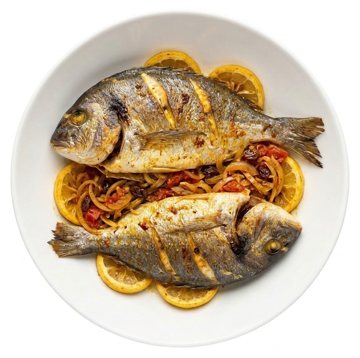
- Same: Bharleli Paplet shares with this dish onion, tomato, garlic, ginger, turmeric, Kashmiri chilli powder, ground coriander, vegetable oil and salt.
- Different: Bharleli Paplet uses a whole sea bream stuffed with a raisin-and-lemon filling and roasted for crisp skin, while this dish uses cod or monkfish steaks simmered in a watery onion-tomato gravy with mustard oil, cumin seed, green bird’s eye chilli and kasoori methi.

- Same: Parsi Fish Patia and this dish are both cod curries with turmeric, Kashmiri chilli, ground coriander, garlic, onion, tomato and vegetable oil.
- Different: Parsi Fish Patia adds lime, malt vinegar, tomato purée and jaggery and uses ground cumin, while this dish uses mustard oil, ginger, cumin seed, bird’s eye chilli and kasoori methi.

- Same: It shares turmeric, Kashmiri chilli powder, ground coriander, onion, garlic and ginger with this dish, and both are tangy, spicy and aromatic fish dishes.
- Different: It uses a whole sea bream, coconut oil, lemon, curry leaf, black pepper and tamarind paste, wraps the fish in banana leaf and roasts it, while this dish uses fish steaks, mustard and vegetable oil, cumin, tomato, green chilli and kasoori methi and simmers them in an onion-tomato gravy.

- Same: Tandoori Masala Fish shares fish, turmeric, Kashmiri chilli powder, ground coriander, garlic, ginger, coriander leaf, salt and vegetable oil with this dish.
- Different: Tandoori Masala Fish uses whole sea bream in a yoghurt-cashew marinade with lemon juice, chickpea flour, white pepper and smoked butter or ghee and is baked, while this dish uses cod or monkfish steaks simmered in an onion-tomato gravy with cumin seed, green bird’s eye chilli and dried fenugreek leaf.