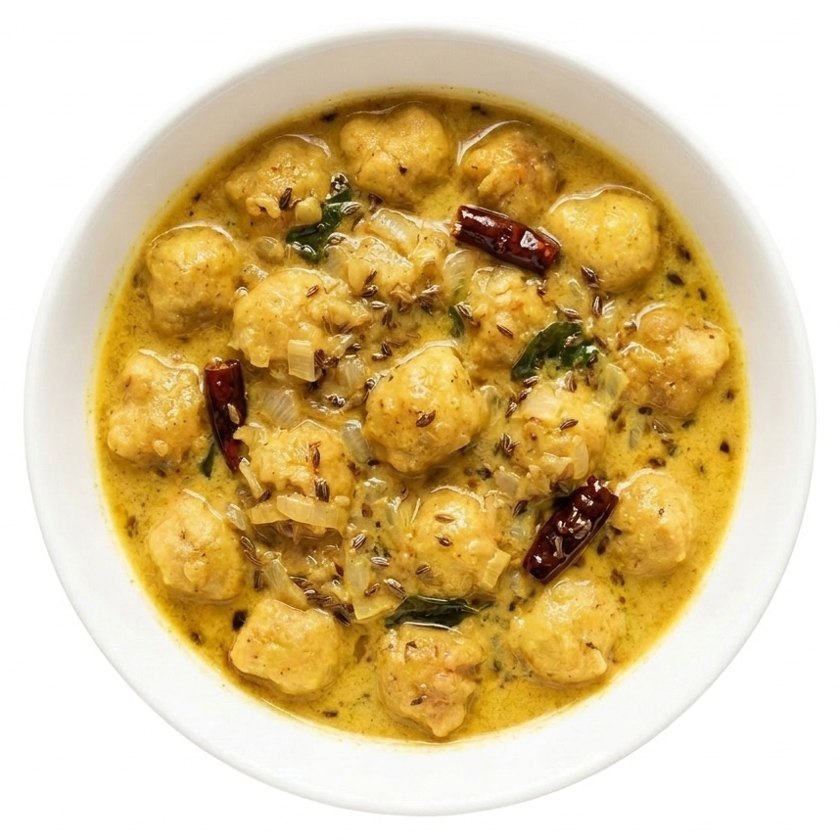
Bihari Bari Kadhi
Bihari bari kadhi is a tangy gram-flour and yoghurt curry with fried gram-flour dumplings. It tastes savoury and lightly sour, with a warm cumin-chilli tempering.
Bari spices
9 gMixed into the dry dumpling flour (step 1)Kadhi turmeric
3 gWhisked into the yoghurt-flour base before the water (step 4)Kadhi aromatics
6 gStirred into the kadhi after the water (step 4)Tadka seeds
6 gFried in the oil at the start of the tempering (step 5)Finishing spice
1.3 gStirred in off the heat (step 7)Everything else

Method
- Put 150 g chickpea flour in a bowl with salt and the bari spices. Add 179 g water and whisk until smooth. Stir in 3 g fruit salt gently; the batter will begin to thicken. Leave for 10 minutes.
- Heat vegetable oil in a kadhai or wok over medium-high heat to about one-third depth. Test with a drop of batter: it should sizzle, rise and brown in 30–60 seconds.
- Scoop the batter with two tablespoons into the hot oil, frying in batches. Cook each batch for 2–3 minutes until golden and crisp outside and cooked through. Lift onto paper towels and keep warm; repeat with the remaining batter.
- For the kadhi, whisk 100 g chickpea flour, 200 g greek yoghurt and the kadhi turmeric (3 g ground turmeric) with 398 g water until smooth. Stir in the kadhi aromatics and set aside.
- For the tadka, heat 40.5 g vegetable oil in a large non-stick saucepan over low heat. Add the tadka seeds and fry until they sizzle. Add 3–3.5 g curry leaf and 100 g white onion and fry for 5–7 minutes.
- Pour in the kadhi and stir well. Add 500 ml water and salt to taste. Simmer over low heat for 5–7 minutes, stirring continuously as it thickens.
- Turn off the heat. Stir in the finishing spice and chopped coriander.
- Just before serving, add the bari to the kadhi.
Don't have something?


 Yellow split pea flour
Use 100% of the weight. Many commercial gram flours are milled from split peas; performs identically in pakora batters and kadhi.
 Cornstarch
For crisping batters or binding cutlets: use 50% to 60% of the weight. Produces a very crisp shell but lacks the earthy, roasted nutty flavour of besan.


 Ground ginger
Use 50% of the weight. Mimics turmeric's warm, earthy, rhizome background, but provides none of the golden-yellow colour.
 Saffron
Steep a tiny pinch (0.1 g per 2 g turmeric) in 2 tbsp warm water; use to match the rich golden hue. Contributes an aristocratic, honeyed floral flavour rather than earthy bitterness.


 Garlic
Use equal weight; crush or finely grate to a smooth pulp to replicate the same fresh, pungent moisture in your base gravy.
 Garlic powder
Use 20 to 25% of the weight; mix with a teaspoon of water before adding to oil so it does not burn, noting it lacks the fresh bite.


 Coriander seeds
Dry-roast lightly in a pan and grind to a fine powder; use equal weight (1:1). Offers a noticeably fresher, brighter citrus note.
 Ground cumin
Use 50% to 75% of the weight. Lacks the floral, citrusy profile of coriander and turns the gravy heavier, earthier, and darker.
 Garam masala
Use 50% of the weight and stir in near the end of cooking. Adds warmth and depth since it contains ground coriander, but introduces stronger spices like clove and cinnamon.


 Mild paprika
Use the same weight for colour and low heat; add a small pinch of hot chilli powder if needed.
 Kashmiri chilli powder
Use the same weight; similar colour, slightly more heat. Taste before adding more.
 Red chilli powder
Use half the weight and make up with mild paprika; red chilli powder is usually hotter.


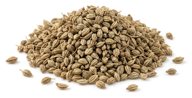
 Carom seeds
Use the same weight; this is the same seed under its other name.
 Carom seed paste
Use the same weight; looser and stronger, so add near the end and taste.
 Cumin seed
Use half the weight, lightly crushed; gives a warm aroma but not carom's thyme-like punch.


 Stock
Use the same weight in savoury dishes; it adds body, so adjust salt.
 Milk
Use the same weight only in doughs or creamy dishes; it makes the result richer.
 Coconut water
Use the same weight in curries or rice; it adds sweetness and a faint coconut taste.


 Baking soda
Mix equal weights with citric acid and use the same total weight as fruit salt.
 Baking powder
Use 1.5 times the weight; it is weaker and contains starch, so the rise is slightly less.
 Bicarbonate of soda
Same as baking soda: mix equal weights with citric acid and use the same total weight as fruit salt.


 Peanut oil
Use 1:1 by weight. Handles high-heat frying identically and introduces a very subtle, pleasant nuttiness.
 Ghee
Use 1:1 by weight. Yields a much richer, authentic aroma and a glossy, heavier mouthfeel.
 Mustard oil
Use 1:1 by weight. Heat until smoking, then cool slightly before cooking to temper its intensely pungent, sharp mustard kick.


 Hung natural yoghurt
Use the same weight and whisk smooth; same thick consistency.
 Full-fat natural yoghurt
Use 1.25 times the weight and strain through muslin for 30 minutes; looser if not strained.
 Hung yogurt
Use the same weight; virtually identical.


- Ground cumin
Use 70% of the weight; add with ground spices or sauce bases rather than hot oil tempering, where it scorches quickly and turns bitter.
 Black cumin seeds
Use equal weight for oil tempering. Delivers an earthy profile with an additional musky, smoky, and slightly bitter edge.
 Fennel seed
Use 60% of the weight for tempering; offers comparable warm aroma, but leans sweet and liquorice-like rather than savoury and earthy.


 Dried kashmiri chilli
Use equal weight whole. Fry in hot oil or ghee as tempered spice; gives a richer red colour with slightly milder heat.
- Red chilli powder
Use 50% to 70% of the weight. Stir into the oil with ground spices; distributes heat evenly throughout the dish without whole chilli skins.


 Bay leaf
Fry 1 bay leaf for every 5 curry leaves in hot oil; imparts a warm, woodsy background note, but misses the citrus-sulphury punch entirely.
 Lime juice
Add a small squeeze (about 5 ml per sprig of curry leaves) right before serving; provides sharp citrus top notes without the toasty, herbal aroma.


 Brown onion
Use the same weight; it is the closest everyday match, with a slightly deeper sweetness when fried.
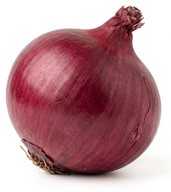 Red onion
Use the same weight; it is sharper and will tint the dish pink, so cook a little longer for sweetness.
 Shallot
Use the same weight; it is milder and sweeter, so reduce frying time slightly to avoid burning.

- Ground cumin
Use 50% of the weight mixed with equal parts ground coriander and a pinch of ground cinnamon, ground cloves, and ground green cardamom. Sprinkle near the end for a warming finish.
 Lentil stew spice mix
Use 75% of the weight. Simmer briefly in the gravy; imparts roasted warmth and complexity, though it adds a slight tang and earthy lentil undertone.


 Coriander leaf
Use equal weight, chopped fresh and stirred in off the heat or used as garnish. Matches the citrus-herbal profile identically.
 Mint
Use 40% to 50% of the weight; chop finely and add at the very end. Adds fresh herbal brightness, but shifts the aroma toward cool menthol.


Similar dishes

- Same: Kadhi Pakoda shares with this dish a chickpea-flour and Greek-yoghurt curry base flavoured with turmeric, garlic, ground coriander, mild chilli, cumin seed, dried red chilli, vegetable oil and salt, with fried chickpea-flour pieces added.
- Different: Kadhi Pakoda uses onion pakodas leavened with baking powder and flavoured with ajwain, Kashmiri chilli and coriander leaves, while this dish uses plain gram-flour dumplings set with fruit salt and carom seed; its kadhi also has mustard seed, asafoetida and ginger but lacks this dish’s curry leaf, garam masala and onion in the gravy.

- Same: Rajasthani Karhi shares with this dish a yoghurt-based curry thickened with chickpea flour and finished with a cumin and dried red chilli tempering.
- Different: Rajasthani Karhi has no fried gram-flour dumplings, onion, curry leaf, carom seed, fruit salt or garam masala, and it uses peanut oil plus ghee or vegetable oil with asafoetida and green chilli, while this dish fries bari dumplings and cooks them in a Greek-yoghurt gravy with onion.

- Same: Rajasthani Gatte Ki Sabzi shares with this dish chickpea-flour dumplings, a greek-yoghurt gravy, turmeric, ground coriander, mild chilli, cumin seed, onion, vegetable oil and coriander.
- Different: Rajasthani Gatte Ki Sabzi adds dried fenugreek leaf, ginger, baking powder, asafoetida and mango powder, and its dumplings are boiled and fried, while this dish uses fruit salt, carom seed, garlic paste, dried red chilli, curry leaf and garam masala and has fried dumplings.

- Same: Baingan Raita shares yogurt, cumin, turmeric, chilli powder, dried red chilli, curry leaf, vegetable oil, salt and coriander with this dish.
- Different: Baingan Raita uses aubergine and black mustard seed and lacks chickpea flour dumplings, carom seed, fruit salt, garlic paste, ground coriander, garam masala and onion; it is a yogurt raita with fried aubergine, while this dish is a gram-flour dumpling curry in a spiced yogurt gravy.