
Balchao
A sharp, fiery Goan prawn relish packed with bold vinegar tang, warm spices, and a touch of sweetness.
Paste spices
31 gBlended into the paste (step 2)Everything else

Method
- Pour enough oil for deep-frying into a kadhai or heavy pan and heat to 180°C (350°F). Fry 1000 g prawns in batches for 2 minutes, lifting them out with a slotted spoon to drain on paper towels.
- Place the paste spices into a blender along with 1 tablespoon garlic, 18 g fresh ginger, 1 teaspoon turmeric, and 150 g vinegar, then purée until completely smooth.
- Warm 150 g oil in a large skillet or handi set over medium heat. Fry 160 g onion for 5 to 7 minutes until golden brown.
- Toss in 120 g tomato and stir for 1 minute, then incorporate the blended paste and fry for 2 minutes.
- Fold the fried prawns into the pan and cook for about 5 minutes until fully done. Stir in 2.5 g curry leaf and 10.5 g granulated sugar, then season to taste with salt.
Don't have something?


 Peanut oil
Use the same weight; this is effectively the same oil.
 Vegetable oil
Use the same weight. Neutral and less nutty; good for high heat.
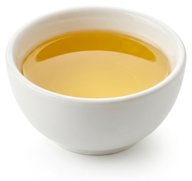 Corn or vegetable oil
Use the same weight. Neutral; the dish loses the faint peanut aroma.






 Tomato purée
Use 40% to 50% of the fresh tomato weight mixed with a splash of water. Imparts a deeper red colour, thicker sauce, and slightly sweeter cooked flavour.
 Plain yogurt
Use 60% of the weight, whisked smooth and added on low heat. Provides rich body and sourness, though the gravy becomes paler and creamier.


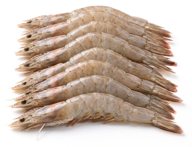 Prawn
Use the same weight; cut large prawns into 2 cm pieces. Add 1–2 minutes earlier than small prawns.
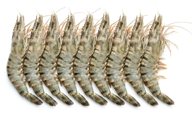 Tiger prawn
Use the same weight; cut into small pieces. They need 1–2 minutes more cooking and release more liquid.
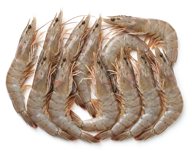 King prawn
Use the same weight; chop roughly. Cook 1–2 minutes longer; do not overcook or they toughen.


 Bay leaf
Fry 1 bay leaf for every 5 curry leaves in hot oil; imparts a warm, woodsy background note, but misses the citrus-sulphury punch entirely.
 Lime juice
Add a small squeeze (about 5 ml per sprig of curry leaves) right before serving; provides sharp citrus top notes without the toasty, herbal aroma.


 Jaggery
Use equal weight; grate or shave finely so it dissolves rapidly, giving a warm, caramel-like sweetness and slightly darker sauce.


 Dried kashmiri chilli
Use equal weight whole. Fry in hot oil or ghee as tempered spice; gives a richer red colour with slightly milder heat.
 Red chilli powder
Use 50% to 70% of the weight. Stir into the oil with ground spices; distributes heat evenly throughout the dish without whole chilli skins.


 Ceylon cinnamon
True cinnamon: thinner, papery quills, milder and sweeter. Use about 1.5 times the weight, and taste.
 Ground cinnamon (cassia)
Use about a third of the weight (0.5 g ground for a 2.5 cm piece), stirred in with the ground spices rather than fried whole, since the powder burns quickly.
 Cassia buds
Use 60-70% of the weight; stronger and more peppery, so taste before adding more.


 Green cardamom seed
Use 35 to 40% of the total pod weight; lightly bruise the seeds before frying in oil to release their essential oils.
 Ground green cardamom
Use 20 to 25% of the pod weight (about 1 generous pinch per pod); stir in toward the end of cooking so the delicate floral notes do not dissipate.
 White cardamom pod
Use 1:1 by pod count or weight; crack gently before using, though it is slightly less intensely floral.


 Ground cloves
Use 1 g ground for 4 g whole (or 1 small pinch per 2 to 3 whole cloves). Add with spice powders; disperses intense warmth quickly, so use with restraint.
 Allspice berries
Use 100% of the weight whole in tempering. Imparts a warm, clove-like aromatic profile combined with hints of nutmeg and cinnamon.
 Black cardamom pod
Use 1 pod for 3 to 4 cloves in whole tempering. Shares a camphor-like warmth and medicinal depth, though it introduces a distinct smoky undertone.


 Coarsely ground black pepper
Use 75% of the weight. Add midway through simmering; spreads heat evenly through the dish instead of delivering isolated bursts.
 Ground black pepper
Use 50% of the weight. Stir in near the end of cooking; significantly darkens light gravies and provides an immediate, sharp bite.


 Ground cumin
Use 70% of the weight; add with ground spices or sauce bases rather than hot oil tempering, where it scorches quickly and turns bitter.
 Black cumin seeds
Use equal weight for oil tempering. Delivers an earthy profile with an additional musky, smoky, and slightly bitter edge.
 Fennel seed
Use 60% of the weight for tempering; offers comparable warm aroma, but leans sweet and liquorice-like rather than savoury and earthy.



 Garlic paste
Use equal weight. Fry gently in oil or ghee with the ginger; incorporates smoothly into curries without visible minced bits.
 Garlic powder
Use 15% to 20% of the weight (about 1 g for every 5 to 6 g fresh cloves). Whisk into sauces; gives a savoury, toasted garlic flavour without raw pungency.
 Shallot
Use 1.5 times the weight, very finely minced. Sauté until golden; provides savoury allium sweetness, though it lacks garlic's pungent sulphur bite.


 Ginger paste
Use equal weight. Sauté in hot fat until the raw allium smell disappears; slightly wetter, but provides identical warmth and pungency.
 Ground ginger
Use 20% to 25% of the weight (1 g for every 4 to 5 g fresh). Stir into the gravy; adds peppery heat and warmth, though it misses the crisp, zesty kick of raw root.


 White malt vinegar
Use the same weight; sharper and clearer; reduce salt slightly.
 White vinegar
Use 90% of the weight, diluted with 10% water; harsher, so taste.
- Lime juice
Use the same weight; fresher sourness but no malt flavour; reduce salt.


Similar dishes

- Same: Both dishes feature prawns cooked with a fiery red paste made from dried red chillies, cumin, cloves, cinnamon, garlic, and ginger with sharp acidity.
- Different: Rechiado Prawns adds turmeric, is dusted with flour, and pan-fried in vegetable oil, while it omits the onions, tomatoes, curry leaves, cardamom, and sugar used in this relish-style dish.
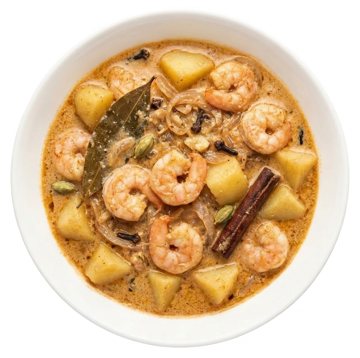
- Same: Both dishes feature prawns cooked with onions, garlic, ginger, sugar, and warm whole spices like cinnamon, cloves, and green cardamom.
- Different: Doi Jhingri incorporates potatoes into a yogurt- and ghee-based gravy, whereas this dish is prepared as a thick relish with tomatoes, vinegar, curry leaves, cumin seeds, and whole dried red chillies.

- Same: Spicy Goan Prawns with Garlic, Chilli & Tamarind shares prawns, dried red chilli, garlic, ginger, cumin, clove, black peppercorn, cinnamon, malt vinegar and sugar with this dish.
- Different: It adds tamarind paste and fish sauce, uses Kashmiri chilli and dark brown sugar, and griddles shell-on tiger prawns, while this dish uses groundnut oil, onion, tomato, curry leaf, green cardamom and small prawns in a cooked relish.

- Same: Bathak Peri-Peri shares with this dish dried red chilli, malt vinegar, onion, ginger, cinnamon, cardamom, clove, black peppercorn, cumin and salt.
- Different: Bathak Peri-Peri uses roasted duck with carrot and tamarind and has no tomato, curry leaf, sugar or groundnut oil, while this dish is a prawn relish cooked in groundnut oil with tomato, curry leaf and sugar.