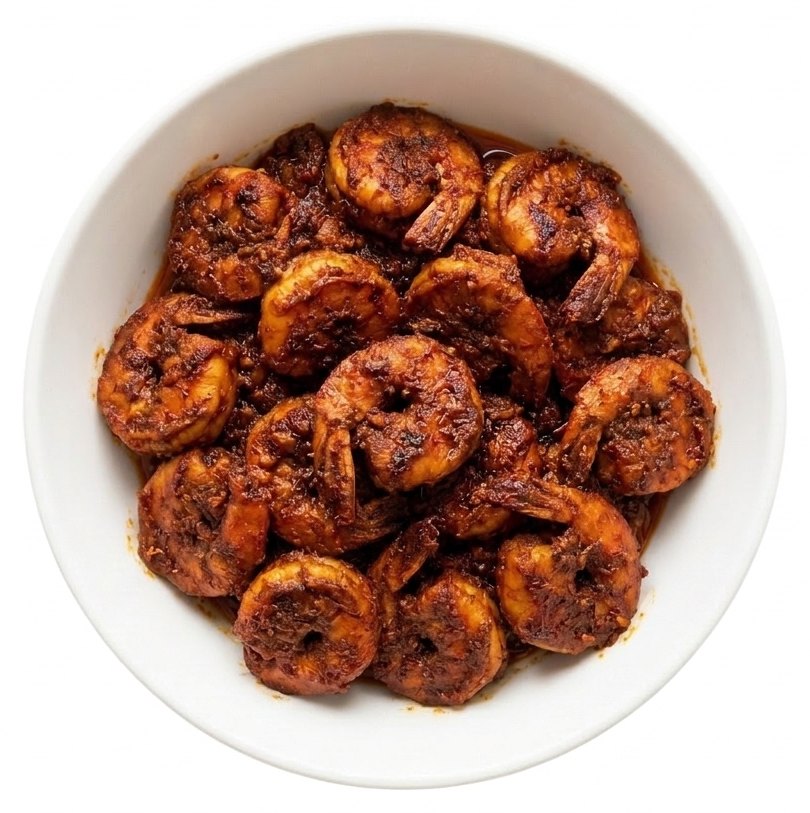
Rechiado Prawns
Succulent prawns are coated in a fiery, tangy red spice paste, lightly dusted with flour, and pan-fried until crisp and golden. They deliver a bold balance of sharp acidity, warmth, and intense chilli heat.
Rechiado masala
29 gBlended into the spice paste (step 1)Everything else

Method
- Add 4.8 g ginger, 60 g garlic, the rechiado masala, 125 g vinegar, and salt to taste to a blender or food processor. Blend thoroughly until a smooth paste forms.
- Place 1000 g prawns into a wide dish or bowl, spoon over the spice paste, and toss until every prawn is thickly coated.
- Heat vegetable oil to taste in a frying pan over medium heat. Lightly dust each seasoned prawn with flour.
- Fry the prawns for 3 to 4 minutes, turning occasionally, until golden brown on the outside and cooked through.
Don't have something?


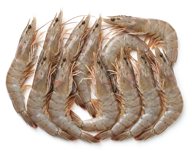 King prawn
Use the same weight; cooking time is the same. Peel and devein as needed.
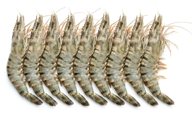 Tiger prawn
Use the same weight; same cooking time, but slit the back if very thick.
 Small prawn
Use the same weight; reduce cooking by 1–2 minutes so they do not toughen.


 Coarsely ground black pepper
Use 75% of the weight. Add midway through simmering; spreads heat evenly through the dish instead of delivering isolated bursts.
 Ground black pepper
Use 50% of the weight. Stir in near the end of cooking; significantly darkens light gravies and provides an immediate, sharp bite.


 Ground cloves
Use 1 g ground for 4 g whole (or 1 small pinch per 2 to 3 whole cloves). Add with spice powders; disperses intense warmth quickly, so use with restraint.
 Allspice berries
Use 100% of the weight whole in tempering. Imparts a warm, clove-like aromatic profile combined with hints of nutmeg and cinnamon.
 Black cardamom pod
Use 1 pod for 3 to 4 cloves in whole tempering. Shares a camphor-like warmth and medicinal depth, though it introduces a distinct smoky undertone.



- Ground Ceylon cinnamon
Milder and sweeter than ground cassia: use about 1.5 times the weight.
 Cassia bark (Chinese cinnamon)
Grind the same weight of cassia bark in a spice mill until powdery, or simmer a piece whole and lift it out before serving.
 Ground mace
Use 40 to 50% of the weight; offers a delicate, sweet, woodsy fragrance that complements rich curries without dominating.


 Fresh ginger
Use equal weight; scrape off the skin and grate or finely julienne according to the recipe.
 Ginger paste
Use equal weight; stir straight into the sizzling aromatics, taking care as the extra moisture may spit.
 Ground ginger
Use 15 to 20% of the weight; add alongside ground spices, noting it imparts warm, dry heat rather than zesty freshness.



 Garlic paste
Use equal weight. Fry gently in oil or ghee with the ginger; incorporates smoothly into curries without visible minced bits.
 Garlic powder
Use 15% to 20% of the weight (about 1 g for every 5 to 6 g fresh cloves). Whisk into sauces; gives a savoury, toasted garlic flavour without raw pungency.
 Shallot
Use 1.5 times the weight, very finely minced. Sauté until golden; provides savoury allium sweetness, though it lacks garlic's pungent sulphur bite.


 Dried kashmiri chilli
Use equal weight whole. Fry in hot oil or ghee as tempered spice; gives a richer red colour with slightly milder heat.
 Red chilli powder
Use 50% to 70% of the weight. Stir into the oil with ground spices; distributes heat evenly throughout the dish without whole chilli skins.


 Ground cumin
Use 70% of the weight; add with ground spices or sauce bases rather than hot oil tempering, where it scorches quickly and turns bitter.
 Black cumin seeds
Use equal weight for oil tempering. Delivers an earthy profile with an additional musky, smoky, and slightly bitter edge.
 Fennel seed
Use 60% of the weight for tempering; offers comparable warm aroma, but leans sweet and liquorice-like rather than savoury and earthy.


- Ground ginger
Use 50% of the weight. Mimics turmeric's warm, earthy, rhizome background, but provides none of the golden-yellow colour.
 Saffron
Steep a tiny pinch (0.1 g per 2 g turmeric) in 2 tbsp warm water; use to match the rich golden hue. Contributes an aristocratic, honeyed floral flavour rather than earthy bitterness.


 White malt vinegar
Use the same weight; sharper and clearer; reduce salt slightly.
 White vinegar
Use 90% of the weight, diluted with 10% water; harsher, so taste.
 Lime juice
Use the same weight; fresher sourness but no malt flavour; reduce salt.


 Peanut oil
Use 1:1 by weight. Handles high-heat frying identically and introduces a very subtle, pleasant nuttiness.
 Ghee
Use 1:1 by weight. Yields a much richer, authentic aroma and a glossy, heavier mouthfeel.
 Mustard oil
Use 1:1 by weight. Heat until smoking, then cool slightly before cooking to temper its intensely pungent, sharp mustard kick.



 Whole wheat flour
Use the same weight, add 10–15% more water and rest the dough for 20 minutes; the result is heavier and nuttier.
 Rice flour
Use the same weight for crisp coatings; for doughs use no more than half rice flour with wheat flour, or it will be crumbly.
 Cornflour
For thickening use half the weight, mixed with cold water; it is not suitable for bread or chapati dough.


Similar dishes

- Same: Spicy Goan Prawns with Garlic, Chilli & Tamarind shares with this dish a red chilli-garlic paste coating prawns, with clove, cumin, black peppercorn, cinnamon, ginger, malt vinegar and salt.
- Different: Spicy Goan Prawns with Garlic, Chilli & Tamarind adds tamarind paste, dark brown sugar and fish sauce, uses Kashmiri chilli, and is griddled in shells, while this dish has no tamarind, sugar or fish sauce and is dusted with plain flour and pan-fried in vegetable oil.

- Same: Both dishes season prawns with dried red chillies, ginger, garlic, cumin, cloves, and cinnamon alongside a sharp vinegar tang.
- Different: Balchao is stewed into a saucy relish using onions, tomatoes, curry leaves, cardamom, and sugar, whereas this dish includes turmeric and coats the prawns in flour to pan-fry them crisp.

- Same: Goan Prawn Balchao shares with this dish prawns, garlic, ginger, cumin, black peppercorn, turmeric, dried red chilli, malt vinegar and vegetable oil in a fiery red masala.
- Different: Goan Prawn Balchao adds onion, curry leaf, jaggery or brown sugar and fish sauce and is cooked as an oily hot-and-sour prawn pickle, while this dish has clove, cinnamon and a plain-flour coating and is pan-fried crisp.

- Same: Parsi Prawns Patia shares prawns, garlic, malt vinegar, turmeric, cumin, black peppercorn, vegetable oil and salt with this dish.
- Different: Parsi Prawns Patia adds onion, tomato, tomato purée, mustard seed, curry leaf, Kashmiri chilli powder, ground coriander, jaggery, lemon and coriander leaves, uses only 30 g malt vinegar versus 127 g here, and lacks clove, cinnamon, ginger and plain flour because it is an onion-thickened gravy rather than a flour-dusted pan-fry.