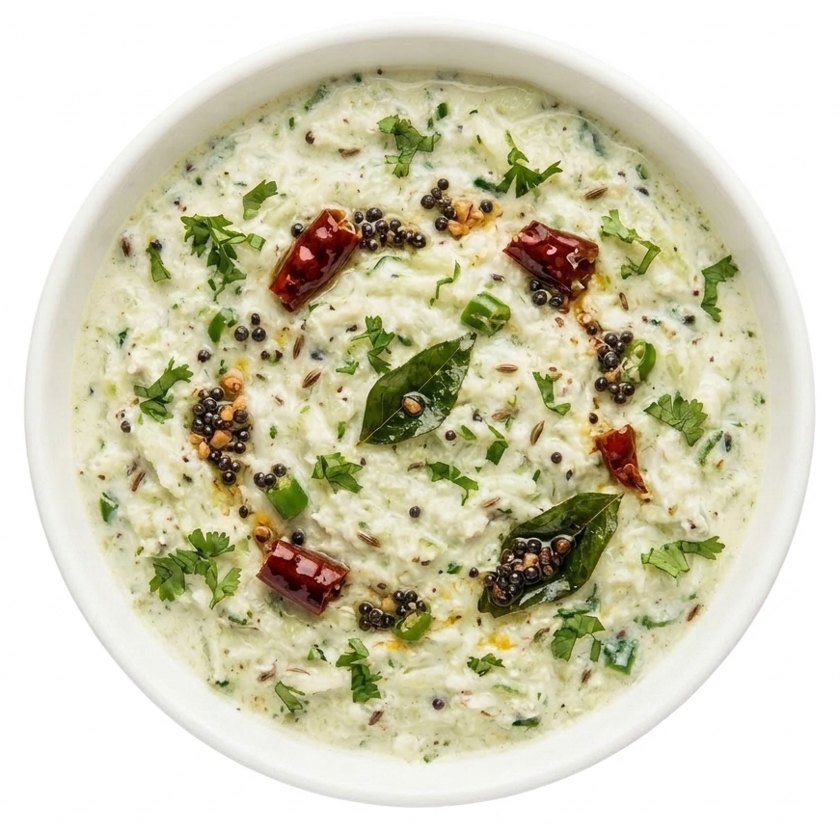
Cucumber Pachadi
A cooling cucumber and coconut yoghurt dish with a mustard-cumin paste, finished with a sizzling tempering of mustard, dried chilli and curry leaves. It tastes creamy and tangy, with gentle heat and a nutty mustard aroma.
Coconut paste spices
9 gBlended with the coconut, chilli and yoghurt (step 1)Tempering spices
8 gAdded to the hot oil for the tempering (step 4)Everything else

Method
- Put 100 g coconut, the coconut paste spices (7 g black mustard seed, 2.1 g cumin seed), 2 g green bird's-eye chilli and 90 g Greek yoghurt in a blender. Blend to a smooth paste.
- Transfer the paste to a serving bowl. Stir in 450 g cucumber with its water and 8.4 g caster sugar. Season with salt to taste, balancing the mustard and chilli pungency.
- Heat 27 g vegetable or coconut oil in a small frying pan over medium heat.
- Add 3.5 g black mustard seed from the tempering spices and let it splutter. Quickly stir in the rest of the tempering spices (4 g dried mild red chilli, 1.5 g ground turmeric) and 2.5–3 g curry leaf. Turn off the heat.
- Pour the flavoured oil over the pachadi and stir well.
- Garnish with chopped coriander to taste.
Don't have something?
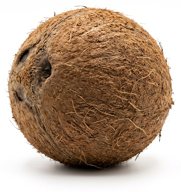
 Fresh coconut
Use equal weight freshly grated or diced. Delivers the identical sweet, milky taste and juicy texture.
 Desiccated coconut
Use 60% of the weight and soak in hot water or milk for 15 minutes before using. The finished dish will be slightly sweeter and less fibrous.
 Dried coconut
Finely grate and use 50% of the weight, soaked in hot water for 20 minutes. Yields a firmer chew and a denser, oilier coconut aroma.


 Mustard seeds
Use equal weight. Pop in hot fat until they crackle and turn greyish; yields an almost identical nutty, pungent finish.
 Yellow mustard seeds
Use equal weight. Fry over medium heat; delivers a milder, sweeter pop and turns bitter quickly if the oil is excessively hot.


 Ground cumin
Use 70% of the weight; add with ground spices or sauce bases rather than hot oil tempering, where it scorches quickly and turns bitter.
 Black cumin seeds
Use equal weight for oil tempering. Delivers an earthy profile with an additional musky, smoky, and slightly bitter edge.
 Fennel seed
Use 60% of the weight for tempering; offers comparable warm aroma, but leans sweet and liquorice-like rather than savoury and earthy.


- Bird's eye green chilli
Use the same weight; heat and flavour are very close.
 Green chilli
Use 1.5 to 2 times the weight; deseed for less heat. Larger chillies are more watery.
 Fresh green chilli
Use 1.5 to 2 times the weight; chop finely and adjust heat by tasting.


 Hung natural yoghurt
Use the same weight and whisk smooth; same thick consistency.
 Full-fat natural yoghurt
Use 1.25 times the weight and strain through muslin for 30 minutes; looser if not strained.
 Hung yogurt
Use the same weight; virtually identical.


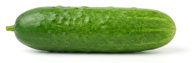
 Courgette
Use the same weight; peel if eating raw and salt-drain briefly. Softer and less watery.
 White radish
Use 70% of the weight, grate, salt and squeeze out water. Sharper and peppery.
 Chayote
Use the same weight, peeled and diced; crisp but bland, so adjust salt and lemon.


 Granulated sugar
Use the same weight. It is slightly coarser, so stir a little longer to dissolve; in baking, grind briefly if a fine texture matters.
 Demerara sugar
Use the same weight, but dissolve it earlier as it is coarser. It adds a light caramel note and a little colour.
 Ground jaggery or soft brown sugar
Use the same weight; crush or grate jaggery first. It darkens the dish and adds molasses flavour, so reduce other liquid slightly.


 Coriander leaf
Use equal weight, chopped fresh and stirred in off the heat or used as garnish. Matches the citrus-herbal profile identically.
 Mint
Use 40% to 50% of the weight; chop finely and add at the very end. Adds fresh herbal brightness, but shifts the aroma toward cool menthol.


 Sunflower oil
Use the same weight. Neutral, no change to flavour.
 Groundnut oil
Use the same weight. Slightly nutty, suits Indian dishes.
 Mustard oil
Use the same weight but heat to smoking point first. Strong pungent flavour changes the dish.


 Dried kashmiri chilli
Use the same weight; similar mild heat and good colour. Remove seeds if you want it milder.
 Kashmiri red chilli powder
Use half the weight of whole chilli (1 g powder for 2 g whole); add to hot oil briefly so it does not burn.
 Paprika
Use the same weight; sweeter and milder, good for colour. Add a pinch of cayenne pepper if you need heat.


 Bay leaf
Fry 1 bay leaf for every 5 curry leaves in hot oil; imparts a warm, woodsy background note, but misses the citrus-sulphury punch entirely.
 Lime juice
Add a small squeeze (about 5 ml per sprig of curry leaves) right before serving; provides sharp citrus top notes without the toasty, herbal aroma.


 Ground ginger
Use 50% of the weight. Mimics turmeric's warm, earthy, rhizome background, but provides none of the golden-yellow colour.
 Saffron
Steep a tiny pinch (0.1 g per 2 g turmeric) in 2 tbsp warm water; use to match the rich golden hue. Contributes an aristocratic, honeyed floral flavour rather than earthy bitterness.


Similar dishes

- Same: Mor Keerai Kuzhambu shares Greek yoghurt, fresh coconut, green bird's-eye chilli, black mustard seed, cumin seed, ground turmeric and vegetable oil with this dish.
- Different: Mor Keerai Kuzhambu adds spinach, ginger, fenugreek seed and water and cooks them into a diluted yoghurt-coconut curry, while this dish uses cucumber, sugar, dried red chilli and curry leaves in a thick yoghurt-coconut pachadi with a tempering.

- Same: Uttarakhand Ka Pahadi Raita shares with this dish a cooling cucumber-yoghurt base seasoned with mustard seed, cumin seed, turmeric, coriander leaf and salt.
- Different: It lacks this dish's coconut, caster sugar, curry leaves and oil tempering with dried red chilli, and it uses Kashmiri chilli powder plus mustard oil instead of a coconut-mustard-cumin paste and vegetable or coconut oil.

- Same: Beetroot Pachadi shares with this dish a yogurt base, a coconut-mustard paste, and a tempering of mustard seeds, dried red chilli and curry leaves.
- Different: Beetroot Pachadi uses cooked beetroot and fresh ginger, while this dish uses raw cucumber, cumin seed, green chilli, sugar and turmeric; it also uses less oil and coconut and no Greek yoghurt.
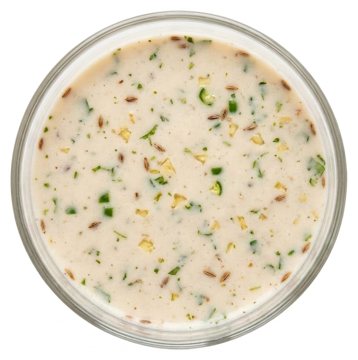
- Same: Mattha/Chaas shares Greek yoghurt, cumin seed, green bird's-eye chilli, coriander and salt with this dish.
- Different: Mattha/Chaas is a water-thinned whisked drink with fresh ginger and no coconut, cucumber, mustard seeds, turmeric, curry leaves, oil, sugar or tempering, unlike this dish’s thick coconut-cucumber yoghurt with mustard-cumin paste and oil tempering.