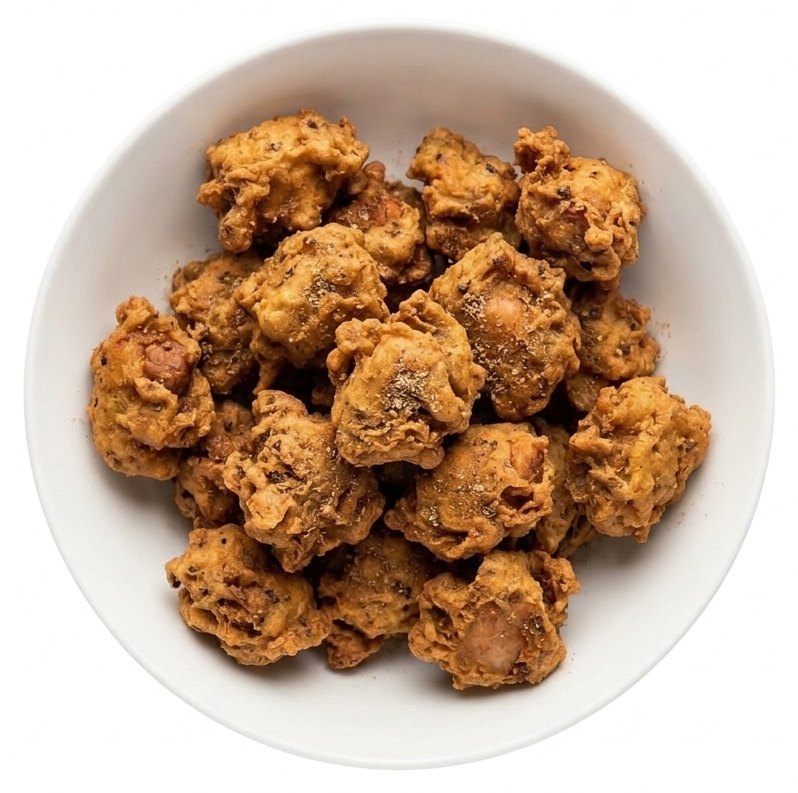
Chicken Pakora
Tender pieces of chicken encased in a spiced chickpea batter and deep-fried to a crisp golden brown. Tangy chaat masala and fresh lemon cut cleanly through the rich, crunchy coating.
Batter masala
64 gWhisked into the chickpea flour batter (step 2)Everything else

Method
- Skin and carve 1 chicken into 12 pieces.
- Whisk 125 g chickpea flour, the batter masala, 48–60 g green chilli, 12 g ginger, 45.9 g lemon juice, 2 eggs, salt to taste, and 150 ml water in a large bowl until a thick, clingy batter forms. Turn the chicken pieces through the mixture to coat them completely, then cover and refrigerate for 2½ hours.
- Fill a kadhai or deep heavy pan with vegetable oil for deep-frying and heat to 180°C (350°F), then ease back the flame. Drop the battered chicken into the oil in small batches and fry for 2 to 3 minutes, turning until crisp, golden, and cooked through.
- Lift out the pakoras using a slotted spoon and transfer to paper towels to drain excess fat. Dust with chaat masala to taste and serve hot with 1 lemon cut into wedges.
Don't have something?


 Chicken pieces
Use the same weight; joints cook faster, so reduce roasting time by 15–20 minutes and check at the bone.
 Chicken breast and leg pieces
Use the same weight; brown breast later or remove earlier as it dries out.
 Chicken leg
Use the same weight; legs need 10–15 minutes more than breast, so cook to tenderness.


 Peanut oil
Use 1:1 by weight. Handles high-heat frying identically and introduces a very subtle, pleasant nuttiness.
 Ghee
Use 1:1 by weight. Yields a much richer, authentic aroma and a glossy, heavier mouthfeel.
 Mustard oil
Use 1:1 by weight. Heat until smoking, then cool slightly before cooking to temper its intensely pungent, sharp mustard kick.


 Tandoori snack spice mix
Use the same weight; taste first as it can be smokier and saltier. Add lime or amchoor if the dish needs more tang.
 Dried mango powder
Use about half the weight, mixed with black salt and a pinch of ground cumin. It gives tang and saltiness but lacks the minty, asafoetida notes.
 Black salt
Use about half the weight and add lime juice to taste. It gives the salty, sulphurous edge but not the full tangy blend.


 Lime
Use the same weight or juice amount; sharper, so taste before adding all the juice.
 Lemon juice
Use about 45–50 ml for 1 lemon; add off the heat to keep the freshness.
- Dried mango powder
Use 1 tsp for the juice of 1 lemon; add early. Sourness is flatter and less fresh.


 Yellow split pea flour
Use 100% of the weight. Many commercial gram flours are milled from split peas; performs identically in pakora batters and kadhi.
 Cornstarch
For crisping batters or binding cutlets: use 50% to 60% of the weight. Produces a very crisp shell but lacks the earthy, roasted nutty flavour of besan.


 Fresh ginger
Use equal weight; peel and grate very finely on a microplane or pound to a fine paste in a mortar.
 Ginger
Use equal weight; mince finely and crush with the flat of a knife before frying.
 Ground ginger
Use 20% of the weight; add directly with the dry spice powders, though it yields an earthier, less pungent profile.


 Chilli powder
Use 10 to 15% of the weight (about 1/4 teaspoon per chilli); imparts dry pungent heat and reddens the dish without the grassy crunch.
 Dried red chilli
Use 1 dried pod per fresh green chilli; snap in half and temper in hot oil for a deeper, toastier heat.


 Red chilli powder
Use 100% of the weight. Provides direct, sharp heat and red colour in equal measure.
 Kashmiri chilli powder
Use 150% to 200% of the weight if matching colour, but add a pinch of black pepper or hot chilli if you need equivalent fiery heat.
 Cayenne pepper
Use 75% to 100% of the weight. Offers a sharp, clean heat with slightly less earthy depth and less crimson colour.


 Ground cumin
Use 50% of the weight mixed with equal parts ground coriander and a pinch of ground cinnamon, ground cloves, and ground green cardamom. Sprinkle near the end for a warming finish.
 Lentil stew spice mix
Use 75% of the weight. Simmer briefly in the gravy; imparts roasted warmth and complexity, though it adds a slight tang and earthy lentil undertone.


 Garlic
Use equal weight; crush or finely grate to a smooth pulp to replicate the same fresh, pungent moisture in your base gravy.
 Garlic powder
Use 20 to 25% of the weight; mix with a teaspoon of water before adding to oil so it does not burn, noting it lacks the fresh bite.


- Fresh ginger
Use equal weight; scrape off the skin and grate or finely julienne according to the recipe.
- Ginger paste
Use equal weight; stir straight into the sizzling aromatics, taking care as the extra moisture may spit.
- Ground ginger
Use 15 to 20% of the weight; add alongside ground spices, noting it imparts warm, dry heat rather than zesty freshness.

 Lime juice
Use equal volume or weight; delivers almost identical sharp acidity with a faintly more aromatic, bitter-edged profile.
 Dried mango powder
Use 25% of the weight (about 1 g amchoor for 4 g juice); provides clean fruity tartness without thinning the sauce.
 White vinegar
Use 75% of the volume; gives direct sourness without any citrus floral fragrance.


- Chickpea flour
For binding, use about 10 g chickpea flour mixed with 20 ml water per egg and rest for 10 minutes. Denser and nuttier; not suitable for baking or coating in the same way.
 Full-fat natural yoghurt
Use about 30 g per egg for moisture and binding in koftas or fillings. Adds tang and softness; will not set or glaze like egg.
 Tofu
Use the same weight, mashed, for egg-like bulk in curries. Soft and bland; add extra spices and do not expect it to bind.


 Ground coriander
Use 75% of the weight; stir in along with wet masala or tomato purée rather than frying in hot oil, as the fine powder burns instantly.
 Cumin seed
Use 50% of the weight for tempering in hot oil. Lacks the floral, sweet citrus flavour of coriander, introducing warm, pungent earthiness instead.
 Fennel seed
Use 50% of the weight in tempering; provides pleasant aromatic sweetness, though noticeably aniseedy rather than citrusy.


Similar dishes

- Same: Amritsari Tawa Murg also features chicken seasoned with ginger, garlic, green chillies, chilli powder, coriander seeds, and garam masala.
- Different: Instead of coating the chicken in chickpea flour batter and deep-frying it in vegetable oil like this dish, Amritsari Tawa Murg is pan-fried in ghee with black peppercorns, ground cumin, and black cumin seeds.
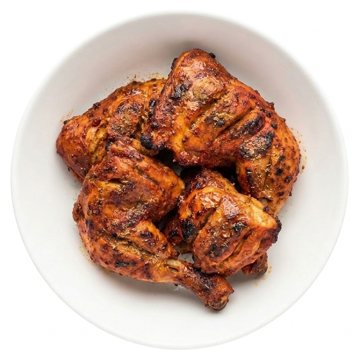
- Same: Both dishes feature chicken seasoned with ginger paste, garlic paste, garam masala, lemon juice, and chaat masala.
- Different: Tandoori Murg roasts marinated whole chicken, omitting the chickpea flour batter, green chillies, coriander seeds, and deep-frying used in this dish.

- Same: Murg Methi Tikka shares chicken, lemon juice, chickpea flour, chilli powder, green chillies, ginger paste, and garlic paste with this dish.
- Different: Instead of being battered and deep-fried in vegetable oil with chaat masala, coriander seeds, and garam masala, it is marinated with fenugreek seeds, mustard oil, yoghurt, and butter, then grilled.

- Same: Teekha Murg Tikka shares chicken, chickpea flour, garam masala, chaat masala, ginger paste, garlic paste, and green chilli with this dish.
- Different: Teekha Murg Tikka uses chicken leg pieces marinated with amchoor, white malt vinegar, ajwain seeds, kasuri methi, Kashmiri chilli powder, boiled onion paste, and butter, then grilled or broiled, while this dish coats whole chicken in a chickpea-flour and egg batter and deep-fries it.