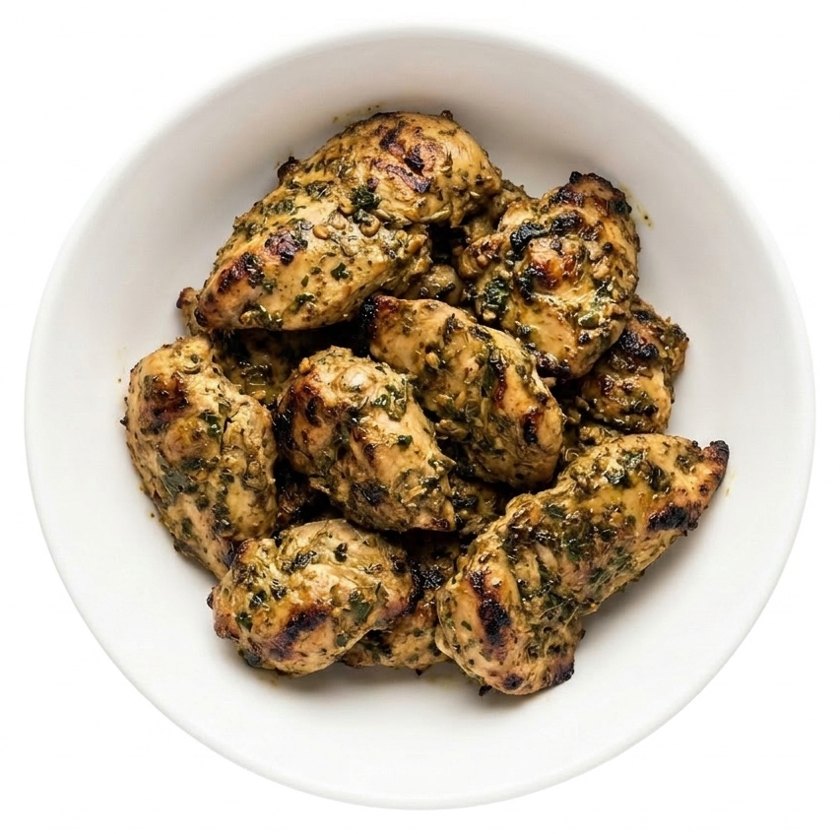
Murg Methi Tikka
Tender chicken breasts marinated twice in an aromatic combination of fresh fenugreek purée, spiced yoghurt, and warming garlic and ginger. Grilled until lightly charred and juicy, they balance herbaceous, slightly bitter methi notes with rich, buttery savouriness.
Tempering seeds
1.9 gFried in hot mustard oil (step 2)Ginger-garlic paste
23 gDivided between the first and second marinades (steps 3 and 4)Yoghurt marinade spice
2.6 gWhisked into the second marinade (step 4)Everything else

Method
- Submerge 250 g fenugreek leaves in a pot of boiling water and blanch until tender, then drain thoroughly and process in a blender until smooth.
- Warm 54 g mustard oil in a skillet set over medium-low heat. Tip in the tempering seeds, letting them sizzle for 30 seconds, then fold in the fenugreek purée and gently fry for 10 minutes. Take the pan off the heat and allow the mixture to cool completely.
- In a shallow dish, stir together half of the ginger-garlic paste, 15 g of the 30.6 g lemon juice, and salt to taste. Rub the mixture thoroughly over 750 g chicken breasts, cover, and rest in the refrigerator for 1 hour.
- In a separate dish, whisk together 300 g whisked yoghurt, the remaining ginger-garlic paste, the yoghurt marinade spice, the cooled fenugreek purée, the remaining lemon juice, 3 tablespoon ground dried fenugreek, 12–18 g green chilli, 1 tablespoon chickpea flour, 13.5 g vegetable oil, and salt to taste. Thoroughly coat the chicken breasts in this mixture, cover, and marinate for 2 more hours.
- Preheat a grill, barbecue, or tandoor to medium heat. Thread the chicken breasts onto metal skewers over a drip tray and cook for 5 minutes until partly done.
- Lift the skewers off the heat and suspend upright for 2 to 3 minutes so excess liquid drains away. Baste thoroughly with melted butter to taste, then return to the grill for 3 to 4 minutes until cooked through and lightly charred.
Don't have something?


 Dried fenugreek leaf
Use 10% of the fresh weight, rub between the palms or soak in warm water for 5 minutes. More hay-like and less fresh-bitter; add near the end.
 Spinach
Use the same weight, chop and wilt. Gives leafy body but none of methi's bitter aroma; adjust salt and add a pinch of sugar.
 Fenugreek shoots
Use the same weight, chop finely and discard any tough stems. Milder and more tender; cook 2–3 minutes less.


 Peanut oil
Use equal weight. It handles high-heat cooking well, but lacks the signature pungent, nasal heat of mustard oil.
 Vegetable oil
Use equal weight. Neutral in flavour, so your curry will lack the characteristic Bengali or North Indian pungent punch.


 Mustard seed
Use 50% of the weight, crush or grind. Sharper heat and less maple-bitter; fry briefly in oil before adding.
 Caraway seeds
Use the same weight, crush lightly. Similar bitter-seed note but more aniseed; reduce other sweet spices slightly.
 Ajwain seeds
Use 25–30% of the weight, crush. Much stronger thyme-like flavour; do not overdo.


 Fresh ginger
Use equal weight; peel and grate very finely on a microplane or pound to a fine paste in a mortar.
 Ginger
Use equal weight; mince finely and crush with the flat of a knife before frying.
 Ground ginger
Use 20% of the weight; add directly with the dry spice powders, though it yields an earthier, less pungent profile.


 Garlic
Use equal weight; crush or finely grate to a smooth pulp to replicate the same fresh, pungent moisture in your base gravy.
 Garlic powder
Use 20 to 25% of the weight; mix with a teaspoon of water before adding to oil so it does not burn, noting it lacks the fresh bite.


 Lime juice
Use equal volume or weight; delivers almost identical sharp acidity with a faintly more aromatic, bitter-edged profile.
 Dried mango powder
Use 25% of the weight (about 1 g amchoor for 4 g juice); provides clean fruity tartness without thinning the sauce.
 White vinegar
Use 75% of the volume; gives direct sourness without any citrus floral fragrance.


 Boneless chicken thigh
Use same weight, cut into even pieces; thigh is the best all-round swap for curry.
 Boneless chicken breast
Use same weight but simmer 5 minutes less, as breast dries out quickly.
 Boneless chicken leg
Use same weight, cut into even pieces and simmer 5 minutes longer if needed.


 Hung natural yoghurt
Use the same weight. The names are used interchangeably; check seasoning.
 Greek yoghurt
Use the same weight. It is thick enough for marinades and raitas, with a slightly sharper taste.
 Full-fat natural yoghurt
Use about 175% of the weight and strain through muslin for 3–4 hours to get the same thick weight.


- Dried fenugreek leaf
Use the same weight and crush finely; it is virtually the same.
 Dried fenugreek leaves
Use the same weight and crush finely; it is slightly stronger in aroma.
 Ground dried fenugreek leaf
Use the same weight; this is the same herb.


 Chilli powder
Use 10 to 15% of the weight (about 1/4 teaspoon per chilli); imparts dry pungent heat and reddens the dish without the grassy crunch.
 Dried red chilli
Use 1 dried pod per fresh green chilli; snap in half and temper in hot oil for a deeper, toastier heat.


 Red chilli powder
Use 100% of the weight. Provides direct, sharp heat and red colour in equal measure.
 Kashmiri chilli powder
Use 150% to 200% of the weight if matching colour, but add a pinch of black pepper or hot chilli if you need equivalent fiery heat.
 Cayenne pepper
Use 75% to 100% of the weight. Offers a sharp, clean heat with slightly less earthy depth and less crimson colour.


 Yellow split pea flour
Use 100% of the weight. Many commercial gram flours are milled from split peas; performs identically in pakora batters and kadhi.
 Cornstarch
For crisping batters or binding cutlets: use 50% to 60% of the weight. Produces a very crisp shell but lacks the earthy, roasted nutty flavour of besan.


- Peanut oil
Use 1:1 by weight. Handles high-heat frying identically and introduces a very subtle, pleasant nuttiness.
 Ghee
Use 1:1 by weight. Yields a much richer, authentic aroma and a glossy, heavier mouthfeel.
- Mustard oil
Use 1:1 by weight. Heat until smoking, then cool slightly before cooking to temper its intensely pungent, sharp mustard kick.


 Unsalted butter
Use 100% of the weight. If the original recipe relies on salted table butter, add a pinch of salt to balance.
- Ghee
Use 80% to 85% of the weight. Ghee is pure butterfat with moisture removed; it yields a deeper, nuttier flavour and handles high heat better.
- Vegetable oil
Use 80% of the weight for frying or tempering. The dish loses sweet dairy richness but remains glossy and light.

Similar dishes

- Same: Murg Banjara also features chicken grilled with garlic, ginger, lemon juice, chilli powder, mustard oil, and butter.
- Different: It uses chicken legs marinated in yogurt, vinegar, and amchoor, omitting the fenugreek seeds, green chillies, and chickpea flour found in this dish.
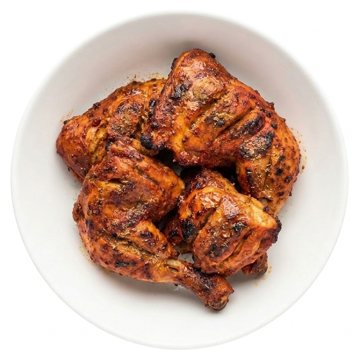
- Same: Tandoori Murg and this dish both double-marinate chicken in hung yoghurt with ginger, garlic, lemon juice, dried fenugreek leaves, vegetable oil, and salt, then cook it over high heat.
- Different: Tandoori Murg uses a whole chicken with chaat masala, garam masala, red chilli paste, and melted butter, while this dish uses boneless chicken breasts with fresh fenugreek purée, mustard oil, chickpea flour, green chilli, chilli powder, and fenugreek seed.

- Same: Kali Mirch ka Murg shares chicken, ginger paste, garlic paste, lemon juice, vegetable oil, and salt with this dish, and both use lemon juice as a souring agent.
- Different: Kali Mirch ka Murg is a onion-thickened curry built on black peppercorn, while this dish is a grilled yoghurt-marinated tikka with fresh and dried fenugreek, chickpea flour, mustard oil, and butter.

- Same: Chooza Makhani shares chicken, ginger paste, garlic paste, green chilli, chilli powder, and butter with this dish.
- Different: Chooza Makhani has tomato, cream, and cashew paste and is simmered in a gravy, while this dish lacks tomato and cream and is grilled after a fenugreek-and-yoghurt marinade.