Indian cooking
Indian cooking / Dishes / Kamala Phoolkopi
Kamala Phoolkopi (Cauliflower with Oranges)

Kamala Phoolkopi

Cauliflower with Oranges
Vegetarian●●●Origin West BengalPrep 15-20 minutesCook 20 minutes

A fragrant Bengali vegetable curry combining tender cauliflower and potatoes simmered in a spiced onion gravy, brightened by sweet-tart fresh orange segments.

Turmeric for coating

3 gTossed with the vegetables before frying (step 1)
01
3 g1 teaspoon
spice
Keep ready to dust over the vegetables.

Whole spices for the oil

4.3 gFried in the hot oil (step 3)
01
1 g2 leaves
spice
02
0.3 g4 cloves
spice
04
2.6 g1 piece
spice
Keep whole; they go into the hot oil together.

Ground spices

8 gStir-fried with the onion paste (step 4)
01
2.6 g1 teaspoon
spice
02
5 g2 teaspoons
spice
Stir the powders together.

Everything else

01
Cauliflower · Phool Gobhicut into 2.5-cm / 1-inch florets
500 g
vegetable
02
Potato · Aloocut into 2.5-cm / 1-inch pieces
1200 g4 potatoes
vegetable
03
54 g4 tablespoons
oil/fat
04
8 g1 tablespoon
aromatic
05
300 g2 onions
vegetable
06
4.2 g1 teaspoon
sweetener
07
Orange · Santrapeeled and de-seeded, pith removed, reserving flesh
420 g3 oranges
fruit
08
Green chilli · Hari Mirchde-seeded and chopped
18–24 g3–4 chillies
vegetable
09
to taste
salt

Method

  1. Place 500 g cauliflower florets and 1200 g potato pieces into a wide mixing bowl, sprinkle over the turmeric for coating, and toss until evenly tinted yellow.
  2. Set a heavy-based pan over high heat and pour in 54 g vegetable oil. Lower the heat to medium-high, tip in the coated cauliflower and potatoes, and fry for 2 to 3 minutes until lightly browned at the edges. Transfer the vegetables to a plate with a slotted spoon.
  3. Drop the whole spices for the oil into the hot pan and fry for roughly 1 minute until fragrant.
  4. Stir in 300 g ground onion, 7.5 g ground ginger, 4.2 g granulated sugar, and the ground spices. Fry for about 1 minute until the mixture darkens, adding a splash of water if the spices begin to catch on the bottom.
  5. Return the fried cauliflower and potatoes to the pan, season with salt to taste, and mix thoroughly to coat in the paste.
  6. Add the flesh from 2 of the 3 oranges, reserving the remaining segments. Pour in 125 ml water, cover with a tight-fitting lid, and let simmer gently over low heat for 15 minutes.
  7. Uncover the pan 5 minutes before the end of cooking and stir in 18–24 g chopped green chilli. Simmer until the vegetables are tender and the liquid has reduced to almost nothing, then dress with the reserved orange segments before serving.

Don't have something?

Cauliflower
  • Broccoli

    Use the same weight; cut into similar florets and cook 2–3 minutes less. It is greener and slightly stronger in flavour.

  • Cauliflower floret

    Use the same weight and break into even florets. This is essentially the same vegetable, so cooking and flavour change little.

  • Cabbage

    Use the same weight; cut into wedges and cook 3–5 minutes less. It becomes much softer and sweeter, so the dish loses cauliflower's bite.

Potato
  • Eggplant

    Use equal weight. Cut into large chunks; cooks down much faster (10-12 minutes) and softens into the sauce rather than staying starchy and firm.

  • Paneer

    Use 80% of the weight. Cube and add in the last 5-10 minutes of cooking; adds rich dairy protein instead of starchy bulk.

  • Dried chickpea

    Use 45% dry weight. Soak overnight and boil until fully soft before stirring into the sauce to simmer for 10 minutes.

Ground turmeric
  • Ground ginger

    Use 50% of the weight. Mimics turmeric's warm, earthy, rhizome background, but provides none of the golden-yellow colour.

  • Saffron

    Steep a tiny pinch (0.1 g per 2 g turmeric) in 2 tbsp warm water; use to match the rich golden hue. Contributes an aristocratic, honeyed floral flavour rather than earthy bitterness.

Vegetable oil
  • Peanut oil

    Use 1:1 by weight. Handles high-heat frying identically and introduces a very subtle, pleasant nuttiness.

  • Ghee

    Use 1:1 by weight. Yields a much richer, authentic aroma and a glossy, heavier mouthfeel.

  • Mustard oil

    Use 1:1 by weight. Heat until smoking, then cool slightly before cooking to temper its intensely pungent, sharp mustard kick.

Bay leaf
  • Cinnamon stick

    Use a 2 cm piece (about 1 g) for every 1 to 2 bay leaves. Fry in whole-spice temperings; provides the cassia-like warmth typical of Indian tejpatta.

  • Ground cinnamon (cassia)

    Use 0.5 g per leaf. Stir into the sauce during simmering; gives the same warm woodiness but darkens the colour slightly.

Ginger
  • Fresh ginger

    Use equal weight; scrape off the skin and grate or finely julienne according to the recipe.

  • Ginger paste

    Use equal weight; stir straight into the sizzling aromatics, taking care as the extra moisture may spit.

  • Ground ginger

    Use 15 to 20% of the weight; add alongside ground spices, noting it imparts warm, dry heat rather than zesty freshness.

Onion
  • Shallot

    Use equal weight, finely sliced. Shallots soften and brown faster, giving a slightly sweeter and more delicate base to curries.

  • Cabbage

    Use 80% of the weight, finely shredded and browned slowly with a pinch of asafoetida. Replicates the bulk and natural sweetness in gravies without allium.

Chilli powder
  • Red chilli powder

    Use 100% of the weight. Provides direct, sharp heat and red colour in equal measure.

  • Kashmiri chilli powder

    Use 150% to 200% of the weight if matching colour, but add a pinch of black pepper or hot chilli if you need equivalent fiery heat.

  • Cayenne pepper

    Use 75% to 100% of the weight. Offers a sharp, clean heat with slightly less earthy depth and less crimson colour.

Ground cumin
  • Cumin seed

    Dry-roast briefly and grind finely; use equal weight (1:1). Imparts an even punchier, nuttier, toasty aroma than pre-ground cumin.

  • Ground coriander

    Use equal weight (1:1). Adds mild, lemony sweetness rather than cumin's smoky, earthy bite; curries will taste lighter and less savoury.

  • Black cumin seeds

    Grind finely; use 60% to 75% of the weight. Produces a darker, more complex, smoky-herbal flavour suited to rich gravies.

Granulated sugar
  • Jaggery

    Use equal weight; grate or shave finely so it dissolves rapidly, giving a warm, caramel-like sweetness and slightly darker sauce.

Orange
  • Orange juice

    Use about 80% of the weight if the recipe wants orange flavour in a liquid form; for segments, use juice only as a partial swap. It adds sweetness and acidity but no peel or flesh texture.

  • Pineapple

    Use the same weight, cut into small pieces. It is sweeter and more acidic; cook briefly if raw, and reduce any added sugar.

  • Lemon or lime

    Use about 30% of the weight, plus sugar to taste, when the recipe needs orange's acidity. It gives no orange aroma and is much sharper, so add gradually.

Green chilli
  • Chilli powder

    Use 10 to 15% of the weight (about 1/4 teaspoon per chilli); imparts dry pungent heat and reddens the dish without the grassy crunch.

  • Dried red chilli

    Use 1 dried pod per fresh green chilli; snap in half and temper in hot oil for a deeper, toastier heat.

Clove
  • Ground cloves

    Use 1 g ground for 4 g whole (or 1 small pinch per 2 to 3 whole cloves). Add with spice powders; disperses intense warmth quickly, so use with restraint.

  • Allspice berries

    Use 100% of the weight whole in tempering. Imparts a warm, clove-like aromatic profile combined with hints of nutmeg and cinnamon.

  • Black cardamom pod

    Use 1 pod for 3 to 4 cloves in whole tempering. Shares a camphor-like warmth and medicinal depth, though it introduces a distinct smoky undertone.

Green cardamom pod
  • Green cardamom seed

    Use 35 to 40% of the total pod weight; lightly bruise the seeds before frying in oil to release their essential oils.

  • Ground green cardamom

    Use 20 to 25% of the pod weight (about 1 generous pinch per pod); stir in toward the end of cooking so the delicate floral notes do not dissipate.

  • White cardamom pod

    Use 1:1 by pod count or weight; crack gently before using, though it is slightly less intensely floral.

Cassia bark
  • Ceylon cinnamon

    True cinnamon: thinner, papery quills, milder and sweeter. Use about 1.5 times the weight, and taste.

  • Ground cinnamon (cassia)

    Use about a third of the weight (0.5 g ground for a 2.5 cm piece), stirred in with the ground spices rather than fried whole, since the powder burns quickly.


  • Cassia buds

    Use 60-70% of the weight; stronger and more peppery, so taste before adding more.

Similar dishes

Phool Gobi
Cauliflower Masala
Phool Gobi tastes earthy and savoury from fenugreek and asafoetida with fresh coriander, and it is not sweet-tart from orange like this dish.
  • Same: Phool Gobi shares cauliflower, turmeric, chilli powder, ginger, sugar, vegetable oil and salt with this dish.
  • Different: Phool Gobi lacks potato, onion, orange and whole bay leaf, clove, cardamom and cinnamon, and it adds asafoetida, fenugreek seed, garam masala and fresh coriander; it is a dry masala, while this dish is an onion gravy curry with orange segments and potato.
Bharwan Phoolgobi
Stuffed Grilled (Broiled) Cauliflower
Bharwan Phoolgobi is rich, charred, and tangy from dairy and lemon juice, whereas this dish is sweet-tart, fruity, and saucy.
  • Same: Both dishes feature cauliflower cooked with vegetable oil, turmeric, ginger, green chillies, cinnamon, and cloves.
  • Different: Bharwan Phoolgobi stuffs the cauliflower with paneer, khoya, and urad dal to grill in a yogurt marinade, omitting the potatoes, onions, and fresh oranges simmered in this curry.
Chholar Dal
Chana Dal with Coconut
Chholar Dal is richer, nuttier, and sweeter from the coconut, raisins, and ghee, lacking the tart citrus freshness of this dish.
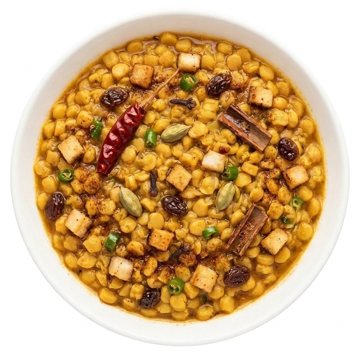
  • Same: Chholar Dal shares whole warm spices like cinnamon, cardamom, clove, and bay leaf with this dish, as well as turmeric, cumin, and green chillies.
  • Different: Instead of the potato, onion, ginger, and vegetable oil used in this dish, Chholar Dal is a lentil dish cooked in ghee with chana dal, fresh coconut, and raisins.
Gobi Rajwadi
Spicy Cauliflower & Yam
Gobi Rajwadi tastes tangy, dry, spicy and smoky from amchoor and optional charcoal, while this dish tastes sweet-tart from orange in a spiced onion gravy.
  • Same: Gobi Rajwadi shares cauliflower, onion, ginger, turmeric, chilli powder and green cardamom with this dish.
  • Different: Gobi Rajwadi uses yam, ghee, garlic, cumin seed, kachri powder, ground coriander and amchoor, with an optional charcoal smoke, while this dish uses potato, orange, sugar, vegetable oil, bay leaf, clove and cinnamon.