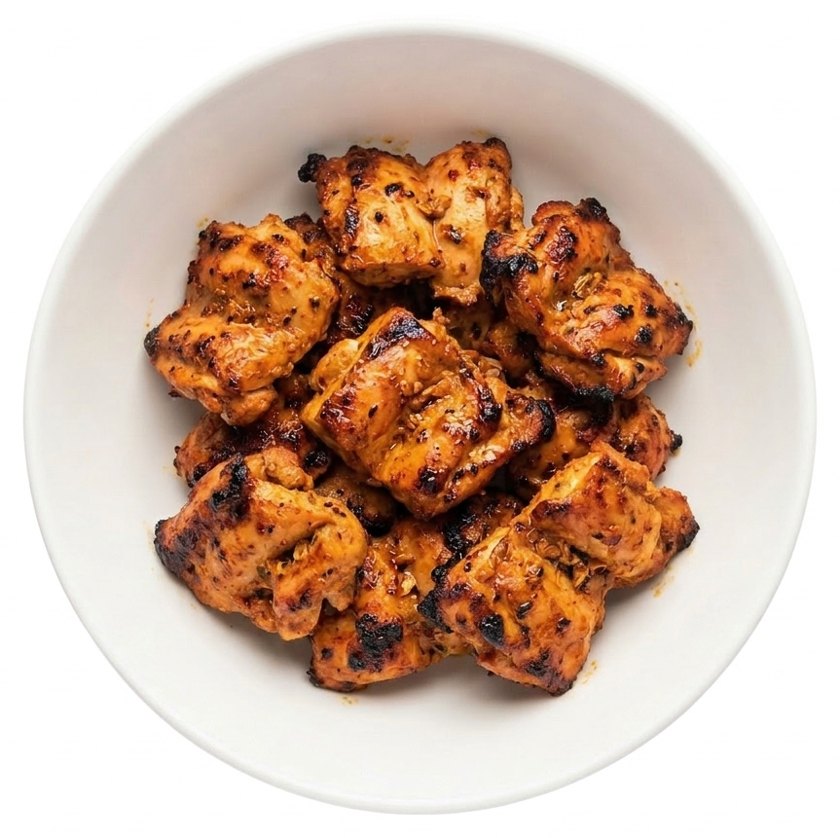
Achari Murgh Tikka
Achari murgh tikka is boneless chicken thigh marinated with yoghurt, lime and pickling spices, then grilled on skewers until charred at the edges. It tastes tangy, mustardy and warmly spiced.
Chilli marinade spice
2.6 gStirred into the garlic, ginger and lime marinade (step 1)Toasted whole-spice masala
16 gToasted dry in step 2, then added to the chicken in step 4Everything else

Method
- Blend 18 g garlic and 10 g ginger with a little water until fine. Stir this into a bowl with 2.6 g kashmiri chilli powder and 25 g lime juice. Add 640 g chicken thigh and turn to coat. Set aside for 20 minutes.
- Put 3 g fennel seed, 3.2 g cumin seed, 5.2 g black mustard seed, 3 g nigella seeds and 1.9 g fenugreek seed in a dry frying pan over medium heat. Toast for 2 minutes, shaking the pan. Tip into a bowl to cool, then crush coarsely in a pestle and mortar.
- In the same pan, melt 28.2 g butter over medium heat. Add 12 g chickpea flour and stir out lumps. Cook for 2–3 minutes until nutty and lightly coloured.
- Add the toasted whole-spice masala and the chickpea flour mixture to the chicken. Add 13.5 g mustard oil and 45 g greek yoghurt. Season with salt and mix. Chill for 2 hours, or overnight.
- Heat the grill to medium-high. Line a baking tray with foil and set a wire rack on it. Thread the chicken onto soaked wooden skewers and lay them on the rack.
- Grill for 16–18 minutes, turning once halfway and brushing with melted butter, until the edges are lightly charred and the chicken is cooked through. Slide off the skewers, put on a platter and squeeze over 25 g lime juice.
Don't have something?


 Boneless chicken thigh
Use the same weight if boneless is needed; cooks 5–10 minutes faster than bone-in. Juicy and forgiving.
 Chicken leg
Use the same weight; bone-in and larger, so add 5–10 minutes. Similar richness.
 Chicken breast
Use the same weight; much leaner and drier, so reduce cooking time by 5–10 minutes and do not overcook.


 Unsalted butter
Use 100% of the weight. If the original recipe relies on salted table butter, add a pinch of salt to balance.
 Ghee
Use 80% to 85% of the weight. Ghee is pure butterfat with moisture removed; it yields a deeper, nuttier flavour and handles high heat better.
 Vegetable oil
Use 80% of the weight for frying or tempering. The dish loses sweet dairy richness but remains glossy and light.


 Yellow split pea flour
Use 100% of the weight. Many commercial gram flours are milled from split peas; performs identically in pakora batters and kadhi.
 Cornstarch
For crisping batters or binding cutlets: use 50% to 60% of the weight. Produces a very crisp shell but lacks the earthy, roasted nutty flavour of besan.


 Peanut oil
Use equal weight. It handles high-heat cooking well, but lacks the signature pungent, nasal heat of mustard oil.
- Vegetable oil
Use equal weight. Neutral in flavour, so your curry will lack the characteristic Bengali or North Indian pungent punch.


 Hung natural yoghurt
Use the same weight and whisk smooth; same thick consistency.
 Full-fat natural yoghurt
Use 1.25 times the weight and strain through muslin for 30 minutes; looser if not strained.
 Hung yogurt
Use the same weight; virtually identical.


 Lemon
Use the same weight; sharper and less floral, so reduce any extra souring slightly.
 Lemon juice
Use about 30 g juice per lime (2 tbsp), strain pips; add at the end for fresh sourness.
 Dried mango powder
Use 1 g amchoor for about 15 g lime juice; add early with spices; gives dry mango sourness, not citrus aroma.



 Garlic paste
Use equal weight. Fry gently in oil or ghee with the ginger; incorporates smoothly into curries without visible minced bits.
 Garlic powder
Use 15% to 20% of the weight (about 1 g for every 5 to 6 g fresh cloves). Whisk into sauces; gives a savoury, toasted garlic flavour without raw pungency.
 Shallot
Use 1.5 times the weight, very finely minced. Sauté until golden; provides savoury allium sweetness, though it lacks garlic's pungent sulphur bite.


 Ginger paste
Use equal weight. Sauté in hot fat until the raw allium smell disappears; slightly wetter, but provides identical warmth and pungency.
 Ground ginger
Use 20% to 25% of the weight (1 g for every 4 to 5 g fresh). Stir into the gravy; adds peppery heat and warmth, though it misses the crisp, zesty kick of raw root.


 Dried kashmiri chilli
Grind deseeded dried pods to an equal weight of powder; gives identical vivid red colour and gentle warmth.
 Red chilli powder
Use 25% of the weight mixed with sweet paprika for colour; straight red chilli powder is substantially hotter and will make the dish fiery.
 Chilli powder
Use one-third of the weight; the sauce will be less intensely red and notably sharper in heat.


 Aniseed
Use 75% of the weight. Fry in hot oil or ghee; has a sharper, more pronounced liquorice flavour, so use a lighter hand.
 Ground fennel seed
Use 60% of the weight. Stir into the sauce with ground masalas; provides identical sweet aniseed flavour without whole seed crunch.
 Star anise
Use one point (single carpel) per 1 g of fennel seeds. Simmer in gravies and remove before serving; gives a deeper, woodier liquorice aroma.


 Ground cumin
Use 70% of the weight; add with ground spices or sauce bases rather than hot oil tempering, where it scorches quickly and turns bitter.
 Black cumin seeds
Use equal weight for oil tempering. Delivers an earthy profile with an additional musky, smoky, and slightly bitter edge.
- Fennel seed
Use 60% of the weight for tempering; offers comparable warm aroma, but leans sweet and liquorice-like rather than savoury and earthy.


 Mustard seeds
Use equal weight. Pop in hot fat until they crackle and turn greyish; yields an almost identical nutty, pungent finish.
 Yellow mustard seeds
Use equal weight. Fry over medium heat; delivers a milder, sweeter pop and turns bitter quickly if the oil is excessively hot.


- Black cumin seeds
Use equal weight. Imparts an earthy, slightly bitter note in temperings, though it lacks nigella's oniony sharpness.
 Black sesame seeds
Use equal weight. Gives a similar speckled appearance and light crunch on breads, but provides a nutty rather than herbaceous, onion-like flavour.


- Mustard seed
Use 50% of the weight, crush or grind. Sharper heat and less maple-bitter; fry briefly in oil before adding.
 Caraway seeds
Use the same weight, crush lightly. Similar bitter-seed note but more aniseed; reduce other sweet spices slightly.
 Ajwain seeds
Use 25–30% of the weight, crush. Much stronger thyme-like flavour; do not overdo.


Similar dishes
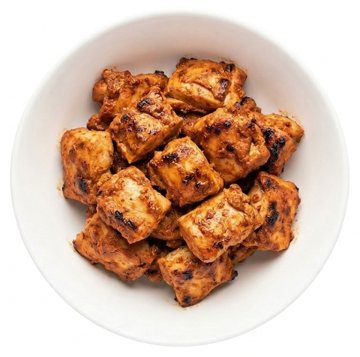
- Same: Tandoori Chicken Tikka shares chicken thigh, Greek yoghurt, lime, garlic, ginger, Kashmiri chilli powder, chickpea flour and a grilled charred finish with this dish.
- Different: Tandoori Chicken Tikka uses more yoghurt and less chickpea flour, adds chaat masala, garam masala, ground coriander, cinnamon, saffron, dried fenugreek leaf and sugar, and lacks this dish's mustard oil, black mustard seed, nigella seed, fennel seed, cumin seed and fenugreek seed.

- Same: Chettinad Chicken shares boneless chicken thigh, lime, Kashmiri chilli powder, black mustard seed and fennel seed with this dish.
- Different: Chettinad Chicken uses vegetable oil, onion, tomato, curry leaves, urad dal, cinnamon and water and is cooked in a pan, while this dish uses butter, mustard oil, yoghurt and chickpea flour and is grilled on skewers.
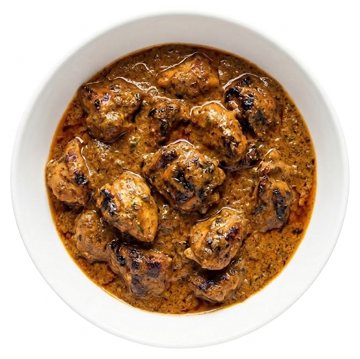
- Same: It shares with this dish boneless chicken thigh, a yoghurt marinade, garlic, cumin and Kashmiri chilli powder, and both are cooked with butter and charred.
- Different: It uses malt vinegar instead of lime as the souring agent, adds coal smoke, whole garam masala, chaat masala, black salt, soured cream and single cream, and lacks this dish’s mustard oil, black mustard seed, nigella, fennel, fenugreek seed, chickpea flour and skewer-grill finish.

- Same: Anardana Murgh shares chicken thigh, garlic, ginger, Kashmiri chilli powder and salt with this dish, and both use a souring agent and warm spices.
- Different: Unlike this dish, Anardana Murgh has no yoghurt, lime, butter, mustard oil, chickpea flour or whole pickling seeds; it uses pomegranate powder, onion and vegetable oil and is cooked with onions and stock, not grilled on skewers.