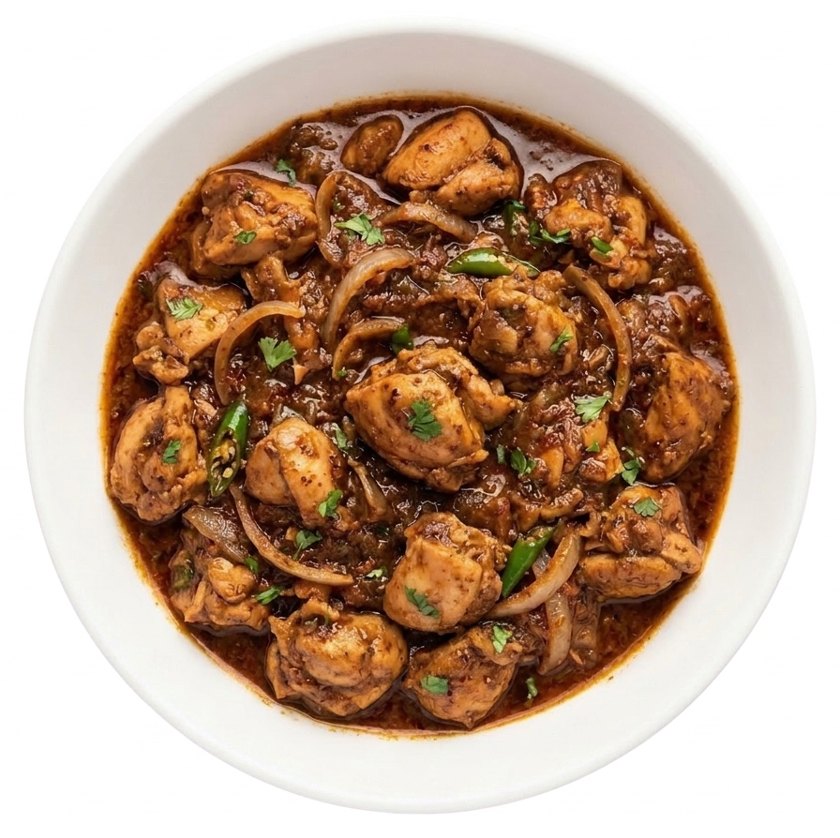
Anardana Murgh
A tangy chicken dish with a pomegranate and chilli marinade, cooked with onions and finished with garam masala. It tastes savoury, lightly sour and warm with gentle heat.
Pomegranate marinade spices
44 gMixed into the chicken marinade (step 1)Garam masala
2.6 gStirred in after the chicken browns (step 3)Everything else

Method
- Mix the pomegranate marinade spices with 18 g garlic, 10 g ginger and 13.5 g vegetable oil to form a paste. Add 950 g chicken thigh pieces and turn to coat, then cover and refrigerate for 3–4 hours or overnight.
- Heat 27 g vegetable oil in a large non-stick frying pan over medium heat. Add 300 g thinly sliced white onion and fry for 11–12 minutes, until softened and pale golden.
- Add the marinated chicken and its marinade to the pan. Cook for 5 minutes, stirring, until the chicken changes colour and browns. Stir in the garam masala, then pour in 99.4 g water or chicken stock, season with salt and bring to the boil.
- Lower the heat, cover the pan and simmer gently for 9–10 minutes, until the chicken is cooked through; stir once halfway.
- Add 4 g green bird's-eye chilli and 1 g roughly chopped coriander leaf. Stir and serve warm.
Don't have something?


 Boneless chicken thigh
Use the same weight if boneless is needed; cooks 5–10 minutes faster than bone-in. Juicy and forgiving.
 Chicken leg
Use the same weight; bone-in and larger, so add 5–10 minutes. Similar richness.
 Chicken breast
Use the same weight; much leaner and drier, so reduce cooking time by 5–10 minutes and do not overcook.


 Peanut oil
Use 1:1 by weight. Handles high-heat frying identically and introduces a very subtle, pleasant nuttiness.
 Ghee
Use 1:1 by weight. Yields a much richer, authentic aroma and a glossy, heavier mouthfeel.
 Mustard oil
Use 1:1 by weight. Heat until smoking, then cool slightly before cooking to temper its intensely pungent, sharp mustard kick.


 Brown onion
Use the same weight; it is the closest everyday match, with a slightly deeper sweetness when fried.
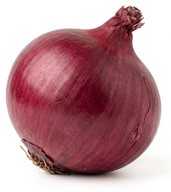 Red onion
Use the same weight; it is sharper and will tint the dish pink, so cook a little longer for sweetness.
 Shallot
Use the same weight; it is milder and sweeter, so reduce frying time slightly to avoid burning.


 Ground cumin
Use 50% of the weight mixed with equal parts ground coriander and a pinch of ground cinnamon, ground cloves, and ground green cardamom. Sprinkle near the end for a warming finish.
 Lentil stew spice mix
Use 75% of the weight. Simmer briefly in the gravy; imparts roasted warmth and complexity, though it adds a slight tang and earthy lentil undertone.


 Chicken stock
Use the same weight. Richer, more body; reduce salt in the recipe.
 Vegetable stock
Use the same weight. Vegetarian; lighter flavour but works well.
 Water
Use the same weight. Plain; the dish will be less savoury, so adjust salt.


- Bird's eye green chilli
Use the same weight; heat and flavour are very close.
 Green chilli
Use 1.5 to 2 times the weight; deseed for less heat. Larger chillies are more watery.
 Fresh green chilli
Use 1.5 to 2 times the weight; chop finely and adjust heat by tasting.


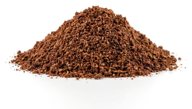 Ground dried pomegranate seed
Use the same weight; exact substitute.
 Dried pomegranate seeds
Grind the same weight fresh; toast very lightly first if you want a rounder flavour.
 Dried mango powder
Use 50–70% of the weight. Sour but less fruity; adjust sugar and salt.


 Dried kashmiri chilli
Grind deseeded dried pods to an equal weight of powder; gives identical vivid red colour and gentle warmth.
 Red chilli powder
Use 25% of the weight mixed with sweet paprika for colour; straight red chilli powder is substantially hotter and will make the dish fiery.
 Chilli powder
Use one-third of the weight; the sauce will be less intensely red and notably sharper in heat.


 Coriander seeds
Dry-roast lightly in a pan and grind to a fine powder; use equal weight (1:1). Offers a noticeably fresher, brighter citrus note.
- Ground cumin
Use 50% to 75% of the weight. Lacks the floral, citrusy profile of coriander and turns the gravy heavier, earthier, and darker.
- Garam masala
Use 50% of the weight and stir in near the end of cooking. Adds warmth and depth since it contains ground coriander, but introduces stronger spices like clove and cinnamon.


 Garlic paste
Use equal weight. Fry gently in oil or ghee with the ginger; incorporates smoothly into curries without visible minced bits.
 Garlic powder
Use 15% to 20% of the weight (about 1 g for every 5 to 6 g fresh cloves). Whisk into sauces; gives a savoury, toasted garlic flavour without raw pungency.
- Shallot
Use 1.5 times the weight, very finely minced. Sauté until golden; provides savoury allium sweetness, though it lacks garlic's pungent sulphur bite.


 Ginger paste
Use equal weight. Sauté in hot fat until the raw allium smell disappears; slightly wetter, but provides identical warmth and pungency.
 Ground ginger
Use 20% to 25% of the weight (1 g for every 4 to 5 g fresh). Stir into the gravy; adds peppery heat and warmth, though it misses the crisp, zesty kick of raw root.


Similar dishes

- Same: Murgh Malai Tikka shares chicken thigh, garlic, ginger, green bird's-eye chilli, garam masala and coriander leaf with this dish.
- Different: Murgh Malai Tikka adds Greek yoghurt, double cream, cheddar cheese, butter, malt vinegar and chaat masala and is grilled as skewers, while this dish uses vegetable oil, onions, pomegranate powder, Kashmiri chilli powder and ground coriander and is cooked with onions.
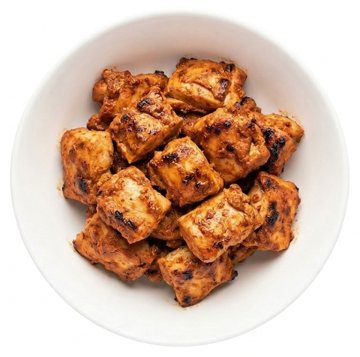
- Same: Tandoori Chicken Tikka shares chicken thigh, garlic, ginger, Kashmiri chilli powder, ground coriander, garam masala and salt with this dish.
- Different: Tandoori Chicken Tikka uses a yoghurt marinade with chickpea flour, cinnamon, saffron, dried fenugreek, sugar, lime, chaat masala and butter, then grills the chicken; this dish uses pomegranate powder, onion, green bird's-eye chilli, vegetable oil and water or stock and cooks with onions.

- Same: Bengali Kancha Lonka Murgi shares chicken, onion, garlic, ginger, green bird's-eye chilli, ground coriander, garam masala and vegetable oil with this dish.
- Different: It uses a yoghurt marinade, a coriander and green chilli paste, turmeric, tomato purée, bay leaf, cinnamon and bone-in chicken, while this dish uses pomegranate powder, Kashmiri chilli powder, water or stock and chicken thigh.

- Same: Tulsi ke Tikke shares chicken thigh, garlic, ginger, green chilli, garam masala, oil, and salt with this dish.
- Different: Tulsi ke Tikke uses basil, cashews, and chaat masala and is skewered, while this dish uses pomegranate powder, Kashmiri chilli powder, ground coriander, onion, and stock and is cooked with onions.