Indian cooking
Indian cooking / Dishes / Murg Lazawab
Murg Lazawab (Cold Curried Chicken)

Murg Lazawab

Cold Curried Chicken
Non-vegetarian●●●Origin NewPrep 1 hour, plus marinating, cooling and soaking timeCook 40 minutes

Gently poached chicken breasts chilled and coated in a delicate, spiced cream sauce set with gelatine. It offers a smooth, mildly aromatic flavour profile designed to be served cold.

Marinade spices

4.2 gMixed into the yogurt marinade (step 1)
01
1.3 g½ teaspoon
spice blend
03
1.5 g½ teaspoon
spice
Keep ground; blend together into the yogurt.

Poaching spices

2.7 gAdded to the stock pot (step 2)
02
0.4 g5 cloves
spice
03
0.5 g1 leaf
spice
Leave whole to infuse the poaching liquid.

Sauce spices

4.2 gStirred into the cooked flour roux (step 4)
01
1.3 g½ teaspoon
spice blend
03
1.5 g½ teaspoon
spice
Keep ground; stir directly into the roux.

Finishing spices

1.8 gStirred into the simmering sauce before taking it off the heat (step 4)
Keep ground; stir in at the end of cooking.

Everything else

01
60 g4 tablespoons
dairy
02
Chicken breastwith skin and bone
800 g4 breasts
poultry
04
to taste
salt
05
33 g7 teaspoons
dairy
06
18 g3 tablespoons
flour
07
20 g2½ tablespoons
flour
09
~0.3 gpinch
salt
10
6 g2 teaspoons
other
11
105 g7 tablespoons
dairy

Method

  1. Combine 60 g plain yogurt with the marinade spices and salt to taste in a bowl. Coat 4 chicken breasts (with skin and bone) thoroughly in the marinade, cover, and chill in the refrigerator for 45 minutes.
  2. Pour 2000 g stock into a wide, heavy pan along with the poaching spices and bring to a boil. Simmer gently until reduced to a level that will just submerge the meat. Place the chicken breasts side by side into the liquid and simmer for 20 to 30 minutes until cooked through, then lift them out and set aside to cool.
  3. Once cool enough to handle, peel away the skin and carefully remove the bones, keeping the breast meat neat and intact. Neaten the edges, place the breasts onto a wire rack, and refrigerate.
  4. Melt 32.9 g butter in a deep pan over low heat. Stir in 3 tablespoon chickpea flour and 2.5 tablespoon plain flour, frying continuously for 30 to 60 seconds. Add the sauce spices and 0.3 g salt, followed by 400 g stock whisked in steadily. Simmer for 15 minutes, adjust salt to taste, then stir in the finishing spices and take the pan off the heat. Strain the sauce through a sieve into a clean bowl and let cool.
  5. Soak 2 teaspoon gelatine in 3 tablespoons of cold water for 10 minutes in a heatproof bowl, then place over a pan of simmering water and stir until completely melted. Whisk the dissolved gelatine into the strained sauce, then set the bowl over ice and stir until the sauce begins to set and thicken.
  6. Whip 105 g single cream until soft peaks form, then fold it gently through the chilled, thickening sauce.
  7. Arrange the cold chicken breasts on a serving platter and coat or serve alongside the chilled sauce.

Don't have something?

Plain yogurt
  • Yogurt

    Use equal weight, whisked thoroughly until smooth before adding to hot dishes to prevent curdling.

  • Coconut milk

    Use equal weight with 1 teaspoon lemon juice mixed in. Provides rich creaminess in curries, but adds a noticeable coconut flavour.

  • Single cream

    Use 80% of the weight plus a squeeze of lemon juice for acidity. Enriches sauces nicely, though it is richer and less tangy.

Garam masala
  • Ground cumin

    Use 50% of the weight mixed with equal parts ground coriander and a pinch of ground cinnamon, ground cloves, and ground green cardamom. Sprinkle near the end for a warming finish.

  • Lentil stew spice mix

    Use 75% of the weight. Simmer briefly in the gravy; imparts roasted warmth and complexity, though it adds a slight tang and earthy lentil undertone.

Yellow chilli powder
  • Green chilli

    Use 100% of the weight, finely minced or ground into a smooth paste. Provides sharp heat while preserving the light colour of delicate kormas.

  • Kashmiri chilli powder

    Use 50% to 75% of the weight. It brings mild heat but will turn pale or white sauces noticeably orange-red.

  • Red chilli powder

    Use 50% of the weight. Gives strong, sharp heat, but will stain cream-based or yellow Mughlai gravies red.

Ground turmeric
  • Ground ginger

    Use 50% of the weight. Mimics turmeric's warm, earthy, rhizome background, but provides none of the golden-yellow colour.

  • Saffron

    Steep a tiny pinch (0.1 g per 2 g turmeric) in 2 tbsp warm water; use to match the rich golden hue. Contributes an aristocratic, honeyed floral flavour rather than earthy bitterness.

Chicken breast
  • Boneless chicken thigh

    Use the same weight; cut into similar pieces. Juicier and more forgiving; cook 2–3 minutes longer.

  • Boneless chicken leg

    Use the same weight; cut into similar pieces. More flavour and slightly more fat; cook 3–5 minutes longer.

  • Chicken thigh

    Use the same weight; bone-in needs 5–10 minutes longer. More flavour, less dry.

Clear chicken stock
  • Chicken stock

    Use the same weight; skim if cloudy and adjust salt only at the end.

  • Vegetable stock

    Use the same weight; it is lighter, so add a little ghee or butter if the dish needs richness.

  • Water

    Use the same weight plus extra salt and a pinch of sugar; only for thin gravies, as it lacks body.

Green cardamom pod
  • Green cardamom seed

    Use 35 to 40% of the total pod weight; lightly bruise the seeds before frying in oil to release their essential oils.

  • Ground green cardamom

    Use 20 to 25% of the pod weight (about 1 generous pinch per pod); stir in toward the end of cooking so the delicate floral notes do not dissipate.

  • White cardamom pod

    Use 1:1 by pod count or weight; crack gently before using, though it is slightly less intensely floral.

Clove
  • Ground cloves

    Use 1 g ground for 4 g whole (or 1 small pinch per 2 to 3 whole cloves). Add with spice powders; disperses intense warmth quickly, so use with restraint.

  • Allspice berries

    Use 100% of the weight whole in tempering. Imparts a warm, clove-like aromatic profile combined with hints of nutmeg and cinnamon.

  • Black cardamom pod

    Use 1 pod for 3 to 4 cloves in whole tempering. Shares a camphor-like warmth and medicinal depth, though it introduces a distinct smoky undertone.

Bay leaf
  • Cinnamon stick

    Use a 2 cm piece (about 1 g) for every 1 to 2 bay leaves. Fry in whole-spice temperings; provides the cassia-like warmth typical of Indian tejpatta.

  • Ground cinnamon (cassia)

    Use 0.5 g per leaf. Stir into the sauce during simmering; gives the same warm woodiness but darkens the colour slightly.

Butter
  • Unsalted butter

    Use 100% of the weight. If the original recipe relies on salted table butter, add a pinch of salt to balance.

  • Ghee

    Use 80% to 85% of the weight. Ghee is pure butterfat with moisture removed; it yields a deeper, nuttier flavour and handles high heat better.

  • Vegetable oil

    Use 80% of the weight for frying or tempering. The dish loses sweet dairy richness but remains glossy and light.

Chickpea flour
  • Yellow split pea flour

    Use 100% of the weight. Many commercial gram flours are milled from split peas; performs identically in pakora batters and kadhi.

  • Cornstarch

    For crisping batters or binding cutlets: use 50% to 60% of the weight. Produces a very crisp shell but lacks the earthy, roasted nutty flavour of besan.


Plain flour
  • Whole wheat flour

    Use the same weight, add 10–15% more water and rest the dough for 20 minutes; the result is heavier and nuttier.

  • Rice flour

    Use the same weight for crisp coatings; for doughs use no more than half rice flour with wheat flour, or it will be crumbly.

  • Cornflour

    For thickening use half the weight, mixed with cold water; it is not suitable for bread or chapati dough.

Ground mace
  • Mace blade

    Grind dried blades finely in a spice mill; use equal weight (1:1). Provides an identical, freshly aromatic, sweet-musky profile.

  • Ground nutmeg

    Use 75% to 80% of the weight. Derived from the seed of the same tree, it shares the flavour profile but is heavier, sweeter, and more pungent.

  • Ground cinnamon (cassia)

    Use 50% of the weight. Adds warming sweetness, but lacks mace's savoury, elegant floral notes.

Ground green cardamom
  • Green cardamom seed

    Grind freshly extracted inner black seeds finely; use equal weight (1:1). Greatly superior aroma with potent eucalyptus and citrus notes.

  • Green cardamom pod

    Lightly crack whole pods and simmer them in the gravy; use 150% of the weight of ground cardamom. Fish out the pods before serving.

  • Ground nutmeg

    Use 50% of the weight. Delivers warm, sweet aroma, but lacks cardamom's cooling, citrusy top notes.

Gelatine powder
  • Agar agar

    Use about 1.5 times the weight of agar powder, simmer in the liquid for 2–3 minutes and set cold; it gives a firmer, more brittle set.

Single cream
  • Whole milk

    Use equal weight, whisked with a small knob of unsalted butter. Simmer gently over low heat to reduce curdling; sauce will be slightly lighter.

  • Clotted cream

    Use 50% weight combined with 50% whole milk, whisked until smooth. Adds intense richness, so stir in at the very end off the heat.

  • Cashew paste

    Use 60% cashew paste mixed with 40% warm water. Creates a silky, luxurious thickening that won't split even under high heat.

Similar dishes

Murg Mumtaz
Celebratory Chicken Korma
Murg Mumtaz tastes much richer, hotter, and heavier, carrying deep nut and onion flavours served warm, compared to the light, mild, and chilled profile of this dish.
  • Same: Murg Mumtaz shares chicken, yogurt, cream, ground mace, green cardamom, cloves, bay leaf, and turmeric with this dish.
  • Different: Murg Mumtaz is a hot braised korma cooked in ghee with onions, ginger, green chillies, black cardamom, cinnamon, and a poppy seed and nut paste, whereas this dish uses butter, chickpea flour, and gelatine to coat poached chicken for cold service.
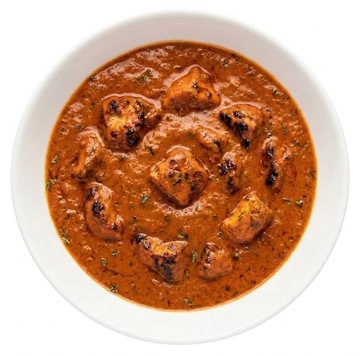
Murgh Makhni
Chicken Tikka in Creamed Fresh Tomatoes
Murgh Makhni is served hot with a punchier, tangy, and aromatic taste, whereas this dish has a cooler, milder, and more delicate profile.
  • Same: Murgh Makhni also pairs chicken with butter, cream, yogurt, garam masala, cloves, and bay leaf.
  • Different: Unlike this poached, gelatine-set cold dish flavoured with mace and turmeric, Murgh Makhni uses charred chicken cooked hot in oil with ginger, garlic, green chillies, cinnamon, and kasuri methi.
Thengakkai Kori
Chicken Curry (II)
Thengakkai Kori is a hot, coconut-rich curry with gentle chilli heat and cooling yogurt, while this dish is a cold, mildly aromatic cream sauce set with gelatine.
  • Same: Thengakkai Kori and this dish both use chicken breast, plain yogurt, turmeric, chilli powder, chicken stock, green cardamom and clove.
  • Different: Thengakkai Kori adds coconut milk, coconut, onion, garlic paste, ginger paste, cinnamon and vegetable oil, and it is strained; this dish uses butter, flours, cream, gelatine, mace and bay leaf and is served cold as a set sauce.
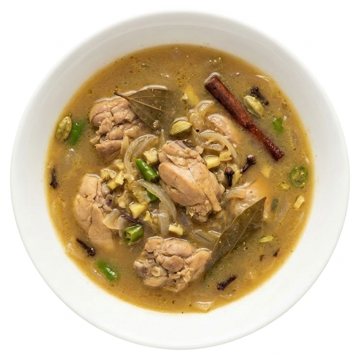
Chicken Ishtoo
Indian-Style Chicken Stew
Chicken Ishtoo tastes warm, savory, and mildly spicy from green chilli and whole spices, while this dish is cold, creamy, and delicately aromatic.
  • Same: Chicken Ishtoo shares chicken, green cardamom, clove, bay leaf, and salt with this dish.
  • Different: Chicken Ishtoo braises chicken with vegetable oil, onion, ginger, garlic, green chilli, and cinnamon in a broth, while this dish poaches chicken breast and sets a cream sauce with butter, flour, yogurt, turmeric, chilli powder, mace, and gelatine.