Indian cooking
Indian cooking / Dishes / Dal ki Kaleji
Dal ki Kaleji (Fried Moong Dal Cubes In Sauce)

Dal ki Kaleji

Fried Moong Dal Cubes In Sauce
Vegetarian●●●Origin AwadhPrep 1¼ hours, plus soaking timeCook 35 minutes

Savory steamed-and-fried moong dal dumplings simmered in a spiced tomato and yogurt gravy. They offer a rich, meaty texture reminiscent of liver, wrapped in a warm, fragrant sauce.

Base spices

7 gStirred in with the tomatoes (step 7)
01
5 g3 teaspoons
spice
02
1.5 g½ teaspoon
spice
Stir together so they can be tipped in at once.

Finishing garam masala

1.3 gStirred off the heat with the yogurt (step 8)
01
1.3 g½ teaspoon
spice blend
Keep separate to stir into the sauce towards the end.

Everything else

01
200 g
legume
02
Onion · Pyazcut into quarters
300 g2 onions
vegetable
03
Green chilli · Hari Mirchde-seeded and chopped
12 g2 chillies
vegetable
04
Ginger · Adrakpeeled and finely chopped
4.8 g1 cm
aromatic
05
0.7 g2 teaspoons
herb
06
1.1 g¼ teaspoon
other
07
Gheefor frying
250 g
oil/fat
08
to taste
salt
09
30 g10 cloves
aromatic
10
12 g2½ cm
aromatic
11
100 g
oil/fat
12
Onion · Pyazground to a paste
600 g4 onions
vegetable
13
240–360 g2–3 tomatoes
vegetable
14
61 g4 tablespoons
dairy
15
~0.3 gpinch
salt
16
1.5 g1 tablespoon
herb

Method

  1. Blitz 30 g garlic and 12 g ginger in a mini food processor to a smooth paste, then reserve.
  2. Place 200 g moong dal in a bowl, cover generously with cold water, and leave to soak for 8 to 10 hours.
  3. Drain the soaked dal and puree it alongside 300 g onion in a food processor until completely smooth. Tip into a bowl and vigorously whisk in 12 g green chilli, 4.8 g ginger, 0.7 g coriander leaf, 0.25 tsp bicarbonate of soda, and salt to taste.
  4. Transfer the batter to the centre of a clean square of muslin, bundle the edges together, and tie tightly with string. Lower the parcel into a large pot of boiling water for 2 minutes, then lower the heat and simmer for 45 minutes. Remove the parcel and let it cool slightly.
  5. Untie the muslin and slice the firm dal loaf into 1-cm (½-inch) dice. Melt 250 g ghee in a deep frying pan or kadhai over high heat, then fry the cubes in batches for 2 to 3 minutes until deep golden all over. Drain on kitchen paper.
  6. Warm 100 g ghee in a wide pan over medium-high heat. Add 600 g onion paste and fry for 1 to 2 minutes until it turns golden. Add the reserved ginger-garlic paste and 2 tsp of water, then cook for 2 minutes more.
  7. Tip in 240–360 g tomato and the base spices. Fry for roughly 7 minutes, stirring regularly, until the liquid evaporates and a thick, glossy paste forms.
  8. Take the pan off the heat. Whisk in 61.2 g yogurt, the finishing garam masala, 1 tbsp coriander leaves, and 0.3 g salt. Stir in 500 ml water, put the pan back over the heat, and simmer gently for 5 minutes.
  9. Slide the fried dal pieces into the sauce, cover, and cook over low heat for 10 minutes until thoroughly heated through.

Don't have something?

Moong dal
  • Red lentils

    Use equal weight. It cooks in about the same time and breaks down to a similar soft, creamy consistency, though the colour will be slightly pinkish-orange.

  • Pigeon peas

    Use equal weight. Requires longer soaking and cooking time, and produces a slightly earthier, denser dal.

Onion
  • Shallot

    Use equal weight, finely sliced. Shallots soften and brown faster, giving a slightly sweeter and more delicate base to curries.

  • Cabbage

    Use 80% of the weight, finely shredded and browned slowly with a pinch of asafoetida. Replicates the bulk and natural sweetness in gravies without allium.

Green chilli
  • Chilli powder

    Use 10 to 15% of the weight (about 1/4 teaspoon per chilli); imparts dry pungent heat and reddens the dish without the grassy crunch.

  • Dried red chilli

    Use 1 dried pod per fresh green chilli; snap in half and temper in hot oil for a deeper, toastier heat.

Ginger
  • Fresh ginger

    Use equal weight; scrape off the skin and grate or finely julienne according to the recipe.

  • Ginger paste

    Use equal weight; stir straight into the sizzling aromatics, taking care as the extra moisture may spit.

  • Ground ginger

    Use 15 to 20% of the weight; add alongside ground spices, noting it imparts warm, dry heat rather than zesty freshness.

Coriander leaf
  • Coriander

    Use equal weight finely chopped; this is the exact same fresh herb.

  • Mint

    Use half the weight finely chopped; provides vibrant green freshness, though the flavour profile becomes noticeably cooler and sharper.

Bicarbonate of soda
  • Baking soda

    Use the same weight; it is the same ingredient under another name.

  • Baking powder

    Use about 3 g baking powder for 1 g bicarbonate of soda; it already contains acid, so expect slight extra rise and a different taste in baking.

  • Alkaline water

    Only for soaking or tenderising, not baking; use enough to cover and expect a much weaker effect.

Ghee
  • Unsalted butter

    Use 120% of the weight; melt gently over low heat to avoid burning the milk solids, which will yield a softer, creamier richness rather than a nutty aroma.

  • Vegetable oil

    Use 85% of the weight; holds high cooking temperatures without smoking, but the final dish will lack traditional dairy depth.

  • Mustard oil

    Use equal weight; heat to smoking point and cool slightly before cooking, bearing in mind it introduces an assertive, pungent edge.

Garlic
  • Garlic paste

    Use equal weight. Fry gently in oil or ghee with the ginger; incorporates smoothly into curries without visible minced bits.

  • Garlic powder

    Use 15% to 20% of the weight (about 1 g for every 5 to 6 g fresh cloves). Whisk into sauces; gives a savoury, toasted garlic flavour without raw pungency.

  • Shallot

    Use 1.5 times the weight, very finely minced. Sauté until golden; provides savoury allium sweetness, though it lacks garlic's pungent sulphur bite.

Coriander seeds
  • Ground coriander

    Use 75% of the weight; stir in along with wet masala or tomato purée rather than frying in hot oil, as the fine powder burns instantly.

  • Cumin seed

    Use 50% of the weight for tempering in hot oil. Lacks the floral, sweet citrus flavour of coriander, introducing warm, pungent earthiness instead.

  • Fennel seed

    Use 50% of the weight in tempering; provides pleasant aromatic sweetness, though noticeably aniseedy rather than citrusy.

Ground turmeric
  • Ground ginger

    Use 50% of the weight. Mimics turmeric's warm, earthy, rhizome background, but provides none of the golden-yellow colour.

  • Saffron

    Steep a tiny pinch (0.1 g per 2 g turmeric) in 2 tbsp warm water; use to match the rich golden hue. Contributes an aristocratic, honeyed floral flavour rather than earthy bitterness.

Tomato
  • Tomato purée

    Use 40% to 50% of the fresh tomato weight mixed with a splash of water. Imparts a deeper red colour, thicker sauce, and slightly sweeter cooked flavour.

  • Plain yogurt

    Use 60% of the weight, whisked smooth and added on low heat. Provides rich body and sourness, though the gravy becomes paler and creamier.

Yogurt
  • Plain yogurt

    Use 100% of the weight. Whisk thoroughly until smooth before stirring into warm gravies to prevent curdling.

  • Single cream

    Use 90% of the weight combined with 10% lemon juice to replicate the lactic tang and rich body in marinades and curries.

Garam masala
  • Ground cumin

    Use 50% of the weight mixed with equal parts ground coriander and a pinch of ground cinnamon, ground cloves, and ground green cardamom. Sprinkle near the end for a warming finish.


  • Lentil stew spice mix

    Use 75% of the weight. Simmer briefly in the gravy; imparts roasted warmth and complexity, though it adds a slight tang and earthy lentil undertone.

Coriander leaves
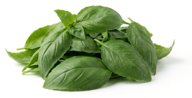
  • Coriander (cilantro) or basil

    Use the same weight, choosing the coriander element if available. If only basil is available, expect a sweeter, more aniseed flavour.

  • Basil leaves

    Use the same weight. Basil is sweeter and more aromatic in a different way; add near the end so it keeps its perfume.

  • Coriander paste

    Use 1.5 times the weight and reduce other liquid slightly; it is less fresh and more concentrated, so taste before adding more.

Similar dishes

Dal ka Kima
Moong Dal with Peas
Dal ka Kima is sweeter, tangier, and more heavily garlicky, but lacks the sharp heat of the fresh chillies in this dish.
  • Same: Both recipes cook moong dal in a rich ghee-based gravy seasoned with coriander seeds, turmeric, and garam masala, soured by tomatoes and yogurt.
  • Different: Dal ka Kima adds sweet green peas and double the garlic while omitting fresh green chillies, using coarse fried dal rather than steamed-and-fried dumplings.
Sookhi Mangori
Dried Moong Dal Dumplings
Sookhi Mangori is earthier and less rich, missing the dairy tang of yogurt and carrying a sharper hit of dried spices and asafoetida.
  • Same: Both dishes feature moong dal dumplings stewed in an onion and tomato gravy spiced with ginger, garlic, turmeric, and garam masala.
  • Different: Sookhi Mangori uses sun-dried rather than steamed-and-fried moong dal dumplings, seasons with asafoetida and chilli powder instead of coriander seeds and fresh green chillies, and skips the yogurt and heavy measure of ghee used in this dish.
Aamati
Sweet & Tangy Yellow Dal
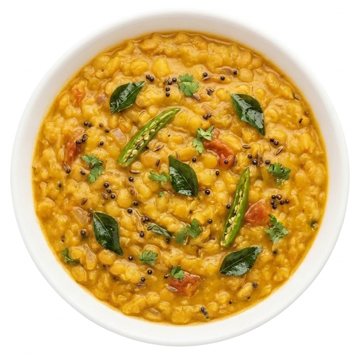
Aamati is lighter with a distinctly sweet and tangy profile, whereas this dish is much richer, buttery, and deeply savory.
  • Same: Both dishes use lentils cooked in an onion and tomato sauce seasoned with green chillies, turmeric, and garam masala.
  • Different: Aamati simmers loose toor dal in vegetable oil with mustard seeds, asafoetida, and sugar, rather than shaping moong dal into steamed and fried dumplings cooked with yogurt, garlic, and heavy amounts of ghee.
Tadka Dal (Indian Kitchen)
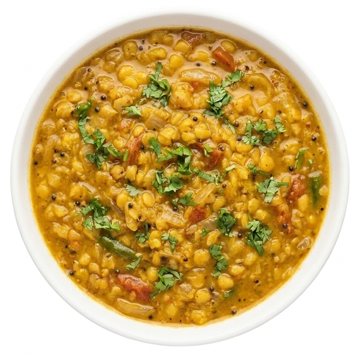
Tadka Dal is soft, lightly mashed, savoury, gently spicy and slightly tangy, while this dish is rich and meaty with liver-like dumplings in a warm tomato-yogurt sauce.
  • Same: Tadka Dal and this dish are both dal-based Indian dishes with onion, tomato, green chilli, turmeric and coriander leaf.
  • Different: Tadka Dal uses masoor dal, vegetable oil, mustard seed, cumin seed, curry leaf, garlic and sugar, while this dish uses moong dal, ghee, yogurt, bicarbonate of soda, ginger, coriander seeds and garam masala and is made as steamed-and-fried dal cubes in gravy.