Indian cooking
Indian cooking / Dishes / Tadka Dal (Indian Kitchen)
Tadka Dal (Indian Kitchen) ()

Tadka Dal (Indian Kitchen)

Vegetarian

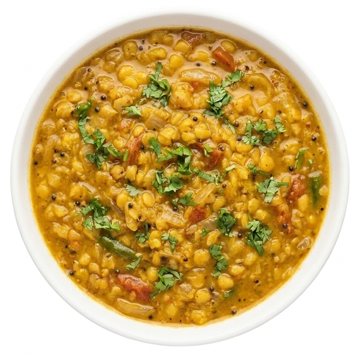
A soft, lightly mashed masoor dal finished with a mustard-and-cumin tempering, onion, tomato and green chilli. It tastes savoury, gently spicy and slightly tangy.

Dal turmeric

1.5 gMost stirred into the dal at the start, a pinch added to the garlic later (steps 1 and 4)
01
1.5 g½ teaspoon
spice
Keep a small pinch back for the garlic.

Whole spices for the oil

6 gAdded to the hot oil for the tempering (step 3)
01
3.5 g1 teaspoon
spice
02
2.1 g1 teaspoon
spice
Keep whole; add them together to the hot oil.

Everything else

02
27 g2 tablespoons
oil/fat
03
2.5 g10 leaves
herb
04
12 g2 chillies
vegetable
05
Onion · Pyazfinely chopped
150 g1 onion
vegetable
06
Garlic · Lehsunfinely chopped
15 g5 cloves
aromatic
07
Tomato · Tamatarfinely chopped
240 g2 tomatoes
vegetable
08
~0.3 gpinch
sweetener
09
to taste
salt
10
1 g1 tablespoon
herb

Method

  1. Put 160 g masoor dal in a heavy saucepan with 700 ml water and most of the dal turmeric (1.5 g ground turmeric), holding back a small pinch. Bring to a simmer and cook for 20–25 minutes, adding more water if the dal gets too thick.
  2. Turn off the heat. Mash the dal lightly with a potato masher or fork so it thickens, then cover and leave to cool.
  3. Heat 27 g vegetable oil in another pan over medium heat. When hot, add the whole spices for the oil and fry for 20 seconds, until they splutter. Add 1.25 g curry leaves and 12 g green chilli, slit lengthways, then add 150 g finely chopped onion. Fry for 4–5 minutes, until the onion starts to soften. Press the chilli lightly to release some seeds.
  4. Add 15 g finely chopped garlic and fry for 3 minutes. Stir in the reserved pinch of dal turmeric for a few seconds, then add 240 g finely chopped tomato and cook for 1 minute.
  5. Stir the cooked dal into the pan. Add 0.3 g granulated sugar and salt to taste. Simmer for 2 minutes.
  6. Scatter over 1 g chopped coriander leaf and the remaining 1.25 g curry leaves.

Don't have something?

Masoor dal
  • Split mung beans

    Use equal weight; cooks down to a creamy, comforting purée in roughly the same 20-25 minutes, with a paler yellow colour.

  • Pigeon peas

    Use equal weight; needs 15 minutes longer cooking or pressure cooking, producing a slightly grainier, nuttier dal.

  • Chana dal

    Use equal weight; pre-soak for 1 hour and cook for 20 minutes longer; stays whole rather than breaking down into a silky soup.

Ground turmeric
  • Ground ginger

    Use 50% of the weight. Mimics turmeric's warm, earthy, rhizome background, but provides none of the golden-yellow colour.

  • Saffron

    Steep a tiny pinch (0.1 g per 2 g turmeric) in 2 tbsp warm water; use to match the rich golden hue. Contributes an aristocratic, honeyed floral flavour rather than earthy bitterness.

Vegetable oil
  • Peanut oil

    Use 1:1 by weight. Handles high-heat frying identically and introduces a very subtle, pleasant nuttiness.

  • Ghee

    Use 1:1 by weight. Yields a much richer, authentic aroma and a glossy, heavier mouthfeel.

  • Mustard oil

    Use 1:1 by weight. Heat until smoking, then cool slightly before cooking to temper its intensely pungent, sharp mustard kick.

Black mustard seed
  • Mustard seeds

    Use equal weight. Pop in hot fat until they crackle and turn greyish; yields an almost identical nutty, pungent finish.

  • Yellow mustard seeds

    Use equal weight. Fry over medium heat; delivers a milder, sweeter pop and turns bitter quickly if the oil is excessively hot.

Cumin seed
  • Ground cumin

    Use 70% of the weight; add with ground spices or sauce bases rather than hot oil tempering, where it scorches quickly and turns bitter.

  • Black cumin seeds

    Use equal weight for oil tempering. Delivers an earthy profile with an additional musky, smoky, and slightly bitter edge.

  • Fennel seed

    Use 60% of the weight for tempering; offers comparable warm aroma, but leans sweet and liquorice-like rather than savoury and earthy.

Curry leaf
  • Bay leaf

    Fry 1 bay leaf for every 5 curry leaves in hot oil; imparts a warm, woodsy background note, but misses the citrus-sulphury punch entirely.

  • Lime juice

    Add a small squeeze (about 5 ml per sprig of curry leaves) right before serving; provides sharp citrus top notes without the toasty, herbal aroma.

Green chilli
  • Chilli powder

    Use 10 to 15% of the weight (about 1/4 teaspoon per chilli); imparts dry pungent heat and reddens the dish without the grassy crunch.

  • Dried red chilli

    Use 1 dried pod per fresh green chilli; snap in half and temper in hot oil for a deeper, toastier heat.

Onion
  • Shallot

    Use equal weight, finely sliced. Shallots soften and brown faster, giving a slightly sweeter and more delicate base to curries.

  • Cabbage

    Use 80% of the weight, finely shredded and browned slowly with a pinch of asafoetida. Replicates the bulk and natural sweetness in gravies without allium.

Garlic
  • Garlic paste

    Use equal weight. Fry gently in oil or ghee with the ginger; incorporates smoothly into curries without visible minced bits.

  • Garlic powder

    Use 15% to 20% of the weight (about 1 g for every 5 to 6 g fresh cloves). Whisk into sauces; gives a savoury, toasted garlic flavour without raw pungency.

  • Shallot

    Use 1.5 times the weight, very finely minced. Sauté until golden; provides savoury allium sweetness, though it lacks garlic's pungent sulphur bite.

Tomato
  • Tomato purée

    Use 40% to 50% of the fresh tomato weight mixed with a splash of water. Imparts a deeper red colour, thicker sauce, and slightly sweeter cooked flavour.


  • Plain yogurt

    Use 60% of the weight, whisked smooth and added on low heat. Provides rich body and sourness, though the gravy becomes paler and creamier.

Granulated sugar
  • Jaggery

    Use equal weight; grate or shave finely so it dissolves rapidly, giving a warm, caramel-like sweetness and slightly darker sauce.

Coriander leaf
  • Coriander

    Use equal weight finely chopped; this is the exact same fresh herb.

  • Mint

    Use half the weight finely chopped; provides vibrant green freshness, though the flavour profile becomes noticeably cooler and sharper.

Similar dishes

Hyderabadi Khatti Dal
Toor Dal with Curry Leaves, Tamarind, Chilli and Coriander
Hyderabadi Khatti Dal tastes more tart from tamarind and lightly spicy, while this dish is gently spicy with only slight tang.
  • Same: Hyderabadi Khatti Dal shares a soft dal base with turmeric, tomato, green chilli, garlic, coriander, and a mustard-cumin curry-leaf tempering in vegetable oil.
  • Different: Hyderabadi Khatti Dal uses toor dal instead of masoor, adds tamarind paste and mild chilli powder, uses much more water, and omits onion and sugar.
Ankur ka Raita
Mung Bean Sprout Raita
Ankur ka Raita tastes cool, creamy, crisp and refreshing with sharp onion and toasted cumin, while this dish tastes savoury, soft, gently spicy and slightly tangy.
  • Same: Ankur ka Raita shares onion, green chilli, cumin seed, salt and coriander leaf with this dish.
  • Different: Ankur ka Raita is a yogurt-based side with mung bean sprouts and chilli powder, while this dish is cooked masoor dal with turmeric, mustard seed, curry leaf, garlic, tomato and vegetable oil.
Keoti Dal
Mixed Dal
Keoti Dal is creamy with whole toor grains and has a lemon tang plus a garlicky, dried-chilli tempering, while this dish is soft mashed masoor with tomato tang and green-chilli heat.
  • Same: Keoti Dal shares with this dish the use of lentils, turmeric, vegetable oil, onion, green chilli, garlic, and a mustard-and-cumin seed tempering with curry leaf.
  • Different: Keoti Dal uses toor dal with masoor dal, adds ginger paste, garlic paste, dried red chilli, lemon juice, and a second ghee-or-oil tempering with garlic, while this dish uses only masoor dal and gets tang from tomato.
Aamati
Sweet & Tangy Yellow Dal
Aamati tastes sweeter and tangier than this dish, with a stronger garam masala and chilli lift and less garlicky cumin aroma.
  • Same: Aamati shares a mustard-seed tempering, turmeric, onion, tomato, green chilli, vegetable oil and coriander leaf with this dish.
  • Different: Aamati uses toor dal instead of masoor dal, adds asafoetida and garam masala, omits garlic, cumin seed and curry leaf, and has more sugar and green chilli but less oil.