
Chincheche Talwan
A vibrant Goan-style fish curry combining tender fish and vegetables in a sharp, savoury tamarind sauce perfumed with green chillies and aromatics.
Fish marinade spices
4.3 gMixed with lime juice to coat the fish in step 1Finishing spice
0.7 gScattered over the finished curry in step 5Everything else

Method
- Mix the fish marinade spices with 15.3 g lime juice and a generous pinch of salt. Rub this mixture evenly over 750 g fish, cover, and let it rest in the refrigerator for 15 minutes.
- Put 1 g coriander leaf, 24 g green chilli, 12 g ginger, 18 g garlic, and a pinch of salt into a blender with a splash of water, then puree until smooth.
- Warm 13.5 g vegetable oil in a wide, heavy-bottomed pan over medium-low heat. Tip in the blended aromatics and sauté gently without letting them take on colour. Toss in 500 g mixed vegetables, pour in 250 ml water, and bring to a boil. Turn the heat down, fit the lid, and simmer gently for 7–8 minutes.
- Remove the lid and stir in 15.6 g tamarind extract, 120 g tomato, 2.1 g granulated sugar, and another 250 ml water. Slide in the fish along with all of its juices, season to taste with salt, and cover. Cook for 5 minutes until the fish flakes easily and is cooked through.
- Take the pan off the heat and dust the finishing spice across the curry before serving.
Don't have something?

 Firm white fish
Use the same weight, clean and cut into fillet-sized pieces. Cooking time is the same; remove any bones.
 Firm fish fillet
Use the same weight. Check thickness; thick pieces may need 2–3 minutes more simmering.
 Skinless firm white fish fillet
Use the same weight. Skinless flakes more; handle gently and add late.


 Ground ginger
Use 50% of the weight. Mimics turmeric's warm, earthy, rhizome background, but provides none of the golden-yellow colour.
 Saffron
Steep a tiny pinch (0.1 g per 2 g turmeric) in 2 tbsp warm water; use to match the rich golden hue. Contributes an aristocratic, honeyed floral flavour rather than earthy bitterness.



 Lemon juice
Use equal volume or weight; slightly sweeter and less pungent, but otherwise an imperceptible swap.
 Dried mango powder
Use 25% of the weight; imparts dry, fruity sourness, best stirred in right at the end of cooking.
 Tamarind extract
Use 50% of the weight; delivers pleasant fruity tang but turns pale sauces considerably darker.


 Red chilli powder
Use 100% of the weight. Provides direct, sharp heat and red colour in equal measure.
 Kashmiri chilli powder
Use 150% to 200% of the weight if matching colour, but add a pinch of black pepper or hot chilli if you need equivalent fiery heat.
 Cayenne pepper
Use 75% to 100% of the weight. Offers a sharp, clean heat with slightly less earthy depth and less crimson colour.


 Peanut oil
Use 1:1 by weight. Handles high-heat frying identically and introduces a very subtle, pleasant nuttiness.
 Ghee
Use 1:1 by weight. Yields a much richer, authentic aroma and a glossy, heavier mouthfeel.
 Mustard oil
Use 1:1 by weight. Heat until smoking, then cool slightly before cooking to temper its intensely pungent, sharp mustard kick.


 Mixed vegetables
Use the same weight; cut into even pieces. Frozen mixes may release water, so cook uncovered for the last few minutes.
 Cauliflower
Use the same weight with carrot and green bean if available; cut small and cook 5–8 minutes longer than soft vegetables.
 Frozen peas
Use the same weight but only as part of the mix; stir in for the last 5 minutes so they stay bright and sweet.


 Tamarind
Use 180% of the weight of compressed tamarind; soak in three times its weight of boiling water for 15 minutes, knead, and strain out the thick pulp.
- Dried mango powder
Use 35% of the weight dissolved in two tablespoons of warm water. Provides sharp tang, though the resulting sauce will be lighter in colour.
- Lemon juice
Use equal weight, added right at the end of cooking. Adds sharp acidity without the deep brown hue or pulpy thickness.


 Tomato purée
Use 40% to 50% of the fresh tomato weight mixed with a splash of water. Imparts a deeper red colour, thicker sauce, and slightly sweeter cooked flavour.
 Plain yogurt
Use 60% of the weight, whisked smooth and added on low heat. Provides rich body and sourness, though the gravy becomes paler and creamier.


 Jaggery
Use equal weight; grate or shave finely so it dissolves rapidly, giving a warm, caramel-like sweetness and slightly darker sauce.


 Ground cumin
Use 50% of the weight mixed with equal parts ground coriander and a pinch of ground cinnamon, ground cloves, and ground green cardamom. Sprinkle near the end for a warming finish.
 Lentil stew spice mix
Use 75% of the weight. Simmer briefly in the gravy; imparts roasted warmth and complexity, though it adds a slight tang and earthy lentil undertone.


- Chilli powder
Use 10 to 15% of the weight (about 1/4 teaspoon per chilli); imparts dry pungent heat and reddens the dish without the grassy crunch.
 Dried red chilli
Use 1 dried pod per fresh green chilli; snap in half and temper in hot oil for a deeper, toastier heat.


 Fresh ginger
Use equal weight; scrape off the skin and grate or finely julienne according to the recipe.
 Ginger paste
Use equal weight; stir straight into the sizzling aromatics, taking care as the extra moisture may spit.
- Ground ginger
Use 15 to 20% of the weight; add alongside ground spices, noting it imparts warm, dry heat rather than zesty freshness.



 Garlic paste
Use equal weight. Fry gently in oil or ghee with the ginger; incorporates smoothly into curries without visible minced bits.
 Garlic powder
Use 15% to 20% of the weight (about 1 g for every 5 to 6 g fresh cloves). Whisk into sauces; gives a savoury, toasted garlic flavour without raw pungency.
 Shallot
Use 1.5 times the weight, very finely minced. Sauté until golden; provides savoury allium sweetness, though it lacks garlic's pungent sulphur bite.


Similar dishes

- Same: Both dishes season fish using ginger, garlic, green chillies, turmeric, lime juice, and vegetable oil.
- Different: Kothmiratil Machhi is fried in a thick coating of fresh coriander leaf, omitting this dish's simmered sauce of tamarind extract, tomatoes, chilli powder, and garam masala.

- Same: Both are firm white fish curries soured with tamarind and seasoned with turmeric, green chilli, vegetable oil and salt.
- Different: Meen Godavari uses fresh coconut, fenugreek, coriander, black pepper and far more vegetable oil, while this dish uses tomato, mixed seasonal vegetables, lime juice, ginger, garlic, sugar and garam masala and has no coconut.

- Same: Lal Machhali shares this dish’s firm white fish, vegetable oil, turmeric, lime juice, sugar, and salt.
- Different: Lal Machhali lacks this dish’s mixed vegetables, tomato, tamarind, garam masala, ginger, green chilli, and coriander, and instead uses dried red chilli, desiccated coconut, malt vinegar, and less garlic.
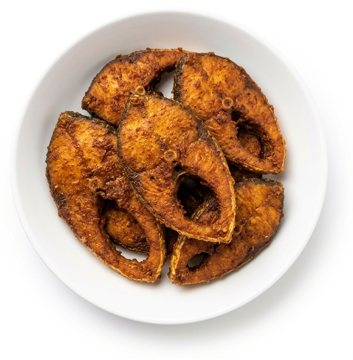
- Same: Podi Chapa shares firm white fish, ground turmeric, chilli powder, ginger, garlic and vegetable oil with this dish.
- Different: Podi Chapa is a dry fried fish with a lime, ginger-garlic, turmeric, chilli powder and black pepper marinade and no tamarind, tomato, mixed vegetables, sugar, garam masala or coriander leaf, while this dish is a tamarind-soured curry with tomato, mixed vegetables and green chilli.