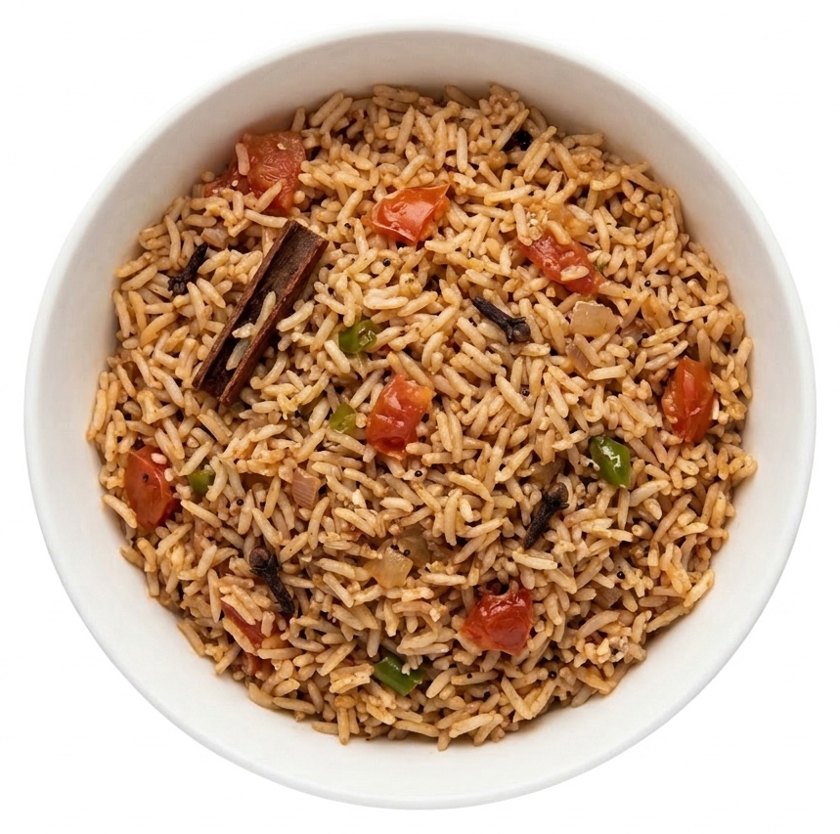
Tamatar Pulihora
A fragrant South Indian spiced rice dish enriched with ripe tomatoes, fresh coconut paste, and aromatic whole spices. It has a rich, mildly savoury, and pleasantly tangy flavour.
Poppy seeds for the coconut paste
2.8 gBlended with the fresh coconut in step 2Whole spices
1.5 gFried in the hot ghee in step 3Ginger and garlic pastes
16 gAdded to the browned onions in step 5Everything else


Method
- Submerge 500 g basmati rice in plenty of water to soak for 30 minutes, then drain thoroughly.
- Place 175 g fresh coconut and the poppy seeds for the coconut paste into a blender, add a splash of water, and blend to a smooth paste.
- Warm 125 g ghee in a large pot or deep frying pan set over medium heat, drop in the whole spices, and fry for 30 seconds until fragrant.
- Stir in 4 cashew nuts, 600 g onion, and 60 g green chilli, cooking for about 4 minutes until the onions turn pale golden.
- Add the ginger and garlic pastes and fry for another 2 minutes until aromatic.
- Stir in the blended coconut and poppy seed paste, then mix in 840 g tomato and cook for 3 minutes until softened.
- Add 100 g coriander leaf and salt to taste, stirring well.
- Pour in double the volume of water compared to the rice, then bring the mixture to a rolling boil.
- Tip in the drained rice and boil for roughly 10 minutes until the grains are half cooked.
- Lower the heat to minimum, cover with a tight-fitting lid, and steam for 15 minutes until the rice is completely tender and the water is absorbed.
Don't have something?

 Plain boiled rice
Use 2.5 times the weight if substituting pre-cooked rice. Fold in gently at the end of the recipe; grains will be shorter and less fragrant.


 Cashew nut
Use equal weight. Soak in warm water for 20 minutes and grind to a smooth paste; produces an even creamier, slightly richer gravy than poppy seeds.
 White sesame seed
Use equal weight. Soak and grind finely; provides similar thickening and body with a slightly nuttier, faintly bitter edge.
 Almond
Use equal weight. Blanch, peel, and grind finely with a splash of water; lends a velvety body and gentle sweetness to gravies.



 Desiccated coconut
Use 50% to 60% of the weight, soaked in equal parts warm water for 15 minutes before grinding. Works well for chutneys, though texture is slightly finer and sweeter.
 Coconut milk
Use 1.2 times the weight in curries. Adds creamy richness and authentic flavour, but makes gravies smoother and eliminates the grated, chewy mouthfeel.


 Unsalted butter
Use 120% of the weight; melt gently over low heat to avoid burning the milk solids, which will yield a softer, creamier richness rather than a nutty aroma.
 Vegetable oil
Use 85% of the weight; holds high cooking temperatures without smoking, but the final dish will lack traditional dairy depth.
 Mustard oil
Use equal weight; heat to smoking point and cool slightly before cooking, bearing in mind it introduces an assertive, pungent edge.


 Ceylon cinnamon
True cinnamon: thinner, papery quills, milder and sweeter. Use about 1.5 times the weight, and taste.
 Ground cinnamon (cassia)
Use about a third of the weight (0.5 g ground for a 2.5 cm piece), stirred in with the ground spices rather than fried whole, since the powder burns quickly.
 Cassia buds
Use 60-70% of the weight; stronger and more peppery, so taste before adding more.


 Ground cloves
Use 1 g ground for 4 g whole (or 1 small pinch per 2 to 3 whole cloves). Add with spice powders; disperses intense warmth quickly, so use with restraint.
 Allspice berries
Use 100% of the weight whole in tempering. Imparts a warm, clove-like aromatic profile combined with hints of nutmeg and cinnamon.
 Black cardamom pod
Use 1 pod for 3 to 4 cloves in whole tempering. Shares a camphor-like warmth and medicinal depth, though it introduces a distinct smoky undertone.


- Almond
Use 100% of the weight. Soak in boiling water and slip off skins before frying or grinding; gives a lighter, slightly less sweet richness to curries.
- Poppy seed
Use 60% of the weight for gravies. Soak in warm water and grind into a fine paste to thicken royal kormas without adding heavy oiliness.
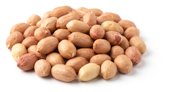 Shelled peanut
Use 100% of the weight. Roast, skin, and grind; creates a thicker, earthier texture typical of Maharashtrian and western Indian curries.




 Chilli powder
Use 10 to 15% of the weight (about 1/4 teaspoon per chilli); imparts dry pungent heat and reddens the dish without the grassy crunch.
 Dried red chilli
Use 1 dried pod per fresh green chilli; snap in half and temper in hot oil for a deeper, toastier heat.


 Fresh ginger
Use equal weight; peel and grate very finely on a microplane or pound to a fine paste in a mortar.
 Ginger
Use equal weight; mince finely and crush with the flat of a knife before frying.
 Ground ginger
Use 20% of the weight; add directly with the dry spice powders, though it yields an earthier, less pungent profile.


 Garlic
Use equal weight; crush or finely grate to a smooth pulp to replicate the same fresh, pungent moisture in your base gravy.
 Garlic powder
Use 20 to 25% of the weight; mix with a teaspoon of water before adding to oil so it does not burn, noting it lacks the fresh bite.


 Tomato purée
Use 40% to 50% of the fresh tomato weight mixed with a splash of water. Imparts a deeper red colour, thicker sauce, and slightly sweeter cooked flavour.
 Plain yogurt
Use 60% of the weight, whisked smooth and added on low heat. Provides rich body and sourness, though the gravy becomes paler and creamier.


Similar dishes

- Same: Bhagara Bhaath shares a base of basmati rice cooked in ghee with sliced onions, ginger paste, garlic paste, cinnamon, and cloves.
- Different: Bhagara Bhaath adds green cardamom pods but leaves out this dish's tomatoes, fresh coconut, poppy seeds, green chillies, and fresh coriander.

- Same: Murga ka Safed Pulao shares basmati rice, cinnamon, cloves, ginger, garlic, green chillies, and coriander leaves with this dish.
- Different: Instead of using tomatoes, coconut, onions, poppy seeds, and ghee, it incorporates chicken simmered in milk and butter with green cardamom and finishes in the oven.

- Same: Kabuli Chaneda Pulao shares basmati rice, ghee, onion, ginger paste, garlic paste, green chilli, tomato, coriander, salt, cinnamon and clove with this dish.
- Different: Kabuli Chaneda Pulao adds chickpeas, lemon juice, mint, kewra or rosewater, black and green cardamom, bay leaf, and a dough seal for slow steaming, while it lacks this dish's fresh coconut, poppy seed, cashew nut and very large tomato and onion quantities.

- Same: Both dishes feature basmati rice seasoned with onions, ginger, garlic, poppy seeds, cinnamon, cloves, and fresh coriander.
- Different: Keema Khichari is a layered meat pulao that incorporates minced meat, yogurt, saffron milk, cardamom, and vegetable oil, whereas this dish is vegetarian and cooked in ghee with fresh coconut, green chillies, and far more tomatoes.