
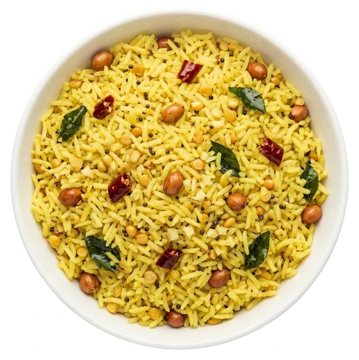
Lemon Rice
A fragrant South Indian rice dish infused with tart lemon juice, tempered lentils, and aromatic spices, then finished with grated coconut.
Tempering seeds
3.3 gFried in the hot oil (step 3)Ground spices
3.3 gStirred into the pan with the lemon juice (step 4)Everything else

Method
- Submerge 500 g rice in water and let soak for 30 minutes, then drain thoroughly.
- Bring a large pan of water seasoned with salt (to taste) to a boil, tip in the drained rice, and cook for 18 to 20 minutes until tender, then drain.
- Warm 40.5 g peanut oil in a skillet over medium heat, then tip in the tempering seeds, 2.5–3 g curry leaf, 8.4 g chana dal, and 24–36 g green chilli. Stir-fry for 1 to 2 minutes until the dal turns pale golden.
- Pour in 103 g lemon juice along with the ground spices, cooking and stirring for 15 seconds before removing from the heat.
- Transfer the spiced lemon mixture onto the cooked rice, scatter over 50 g coconut and 1 g coriander, and toss gently until thoroughly mixed.
Don't have something?


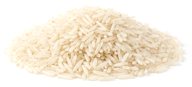 Basmati rice
Use the same weight; rinse and soak as needed. Fluffier and drier, so use slightly less water.
 Long-grain rice
Use the same weight; similar behaviour, adjust water to your usual method.
 Short-grain rice
Use the same weight; stickier and softer, so reduce water and avoid stirring.


 Vegetable oil
Use equal weight. Offers a similar neutral base and high smoke point, ideal for deep-frying and high-heat tadkas.
 Mustard oil
Use equal weight, but heat to smoking point and cool slightly before using. Adds a sharp, pungent flavour that alters the dish significantly.


 Black mustard seed
Use the same weight. The seeds are smaller and hotter; fry in hot oil until they pop, about 20–30 seconds, and reduce the heat if they darken too fast. The dish will be a little sharper.
 Yellow mustard seeds
Use the same weight. They are milder and larger; fry a few seconds longer until they pop. The finished dish will have less pungency.
 Ground mustard seed
Use 70% of the weight of whole seed, added with the other ground spices rather than fried whole. You lose the popping texture and the heat comes through more evenly.


 Bay leaf
Fry 1 bay leaf for every 5 curry leaves in hot oil; imparts a warm, woodsy background note, but misses the citrus-sulphury punch entirely.
 Lime juice
Add a small squeeze (about 5 ml per sprig of curry leaves) right before serving; provides sharp citrus top notes without the toasty, herbal aroma.


 Yellow split peas
Use 100% of the weight. Soak for at least 1 hour; takes about 10 minutes longer to cook through and has a marginally earthier flavour.
 Pigeon peas
Use 100% of the weight. Reduces cooking time by about 10 minutes and breaks down softer, giving a smoother consistency rather than distinct grains.
 Black gram
For tempering or tadka only: use 70% of the weight. Browns faster in hot oil, providing a nutty, crunchy bite.


 Chilli powder
Use 10 to 15% of the weight (about 1/4 teaspoon per chilli); imparts dry pungent heat and reddens the dish without the grassy crunch.
 Dried red chilli
Use 1 dried pod per fresh green chilli; snap in half and temper in hot oil for a deeper, toastier heat.


- Lime juice
Use equal volume or weight; delivers almost identical sharp acidity with a faintly more aromatic, bitter-edged profile.
 Dried mango powder
Use 25% of the weight (about 1 g amchoor for 4 g juice); provides clean fruity tartness without thinning the sauce.
 White vinegar
Use 75% of the volume; gives direct sourness without any citrus floral fragrance.


 Ground ginger
Use 50% of the weight. Mimics turmeric's warm, earthy, rhizome background, but provides none of the golden-yellow colour.
 Saffron
Steep a tiny pinch (0.1 g per 2 g turmeric) in 2 tbsp warm water; use to match the rich golden hue. Contributes an aristocratic, honeyed floral flavour rather than earthy bitterness.


 Garlic powder
Use double the weight. Stir into hot oil just before adding wet ingredients; mimics the allium savoury background without the sulphurous edge.
 Garlic paste
Use 2 g for every 0.5 g of asafoetida. Sauté in oil until the raw smell clears; adds moisture and sweet allium depth.


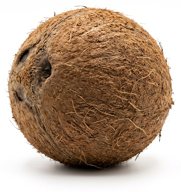
 Fresh coconut
Use equal weight freshly grated or diced. Delivers the identical sweet, milky taste and juicy texture.
 Desiccated coconut
Use 60% of the weight and soak in hot water or milk for 15 minutes before using. The finished dish will be slightly sweeter and less fibrous.
 Dried coconut
Finely grate and use 50% of the weight, soaked in hot water for 20 minutes. Yields a firmer chew and a denser, oilier coconut aroma.


 Coriander leaf
Use equal weight, chopped fresh and stirred in off the heat or used as garnish. Matches the citrus-herbal profile identically.
 Mint
Use 40% to 50% of the weight; chop finely and add at the very end. Adds fresh herbal brightness, but shifts the aroma toward cool menthol.


Similar dishes
- Same: Elumikkai Sadam shares the tempered foundation of mustard seeds, curry leaves, and turmeric.
- Different: Elumikkai Sadam includes fresh ginger and specifies basmati rice, but omits the chana dal, green chillies, asafoetida, grated coconut, and coriander found in this dish.

- Same: Kobbaraiannam shares rice, mustard seed, chana dal, curry leaf, turmeric, asafoetida, green chilli, oil, salt and coriander with this dish.
- Different: Kobbaraiannam uses vegetable oil instead of peanut oil, adds dried red chilli, garlic, ginger and urad dal, uses lime juice instead of lemon juice, and has far more coconut (198 g total vs 50 g).

- Same: Mamri Kaya Pulihora shares a tempered rice base seasoned with mustard seeds, chana dal, curry leaves, green chillies, turmeric, asafoetida, and coconut.
- Different: Instead of lemon juice and peanut oil, it uses chargrilled mango and vegetable oil, adding urad dal, cumin seeds, fenugreek seeds, and dried red chillies.

- Same: Moru Kalli shares the South Indian tempering base of mustard seeds, curry leaves, asafoetida, dal, and fresh green chillies.
- Different: Instead of tossing whole rice grains in peanut oil with chana dal, turmeric, coconut, and lemon juice, Moru Kalli cooks rice flour and yoghurt into a soft savoury cake tempered with urad dal and dried red chillies.