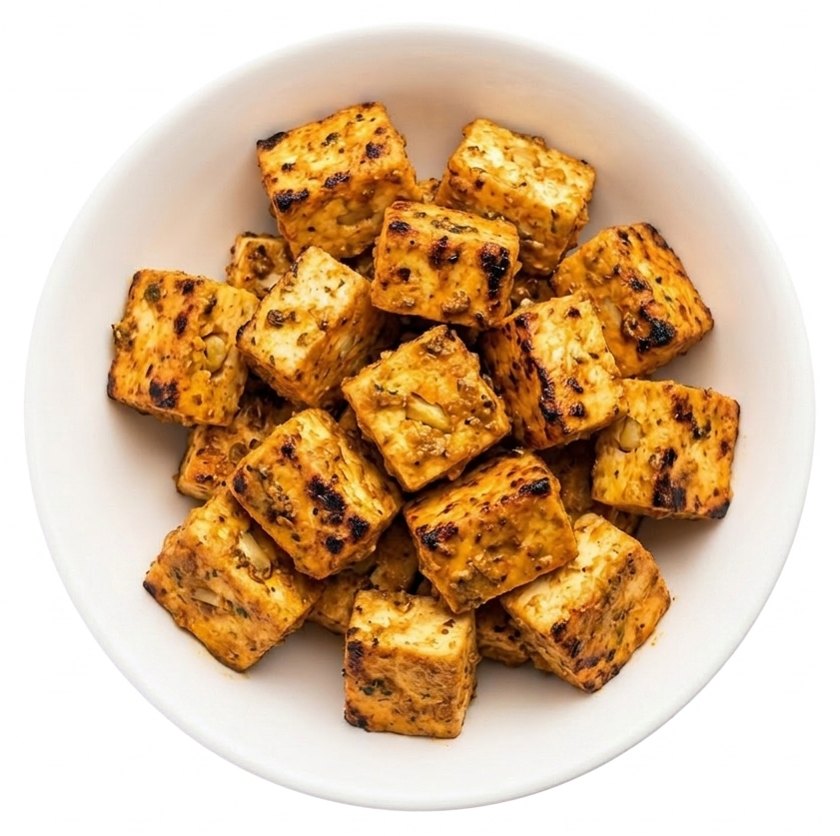
Lehsuni Paneer Tikka
Garlic-stuffed cubes of fresh paneer are coated in a spiced gram flour and yogurt marinade, then grilled until charred and tender.
Stuffing garlic paste
31 gMixed with tandoori chaat masala to stuff the paneer (step 2)Marinade spices
84 gWhisked into the yogurt marinade (step 3)Everything else

Method
- Preheat the oven to 180°C (350°F) or fire up a charcoal grill. Slice 750 g paneer into large cubes, then cut a deep slit into the centre of each cube to create a pocket without cutting all the way through. Pound or blend 5 g green chilli to a coarse paste.
- Stir together 2 tablespoon tandoori chaat masala with the stuffing garlic paste. Spoon some mixture into the slit of each paneer piece, then rub the remainder evenly over the outsides.
- In a wide mixing bowl, combine 250 g plain yogurt, 4 tablespoon cream, the crushed green chilli, the marinade spices, 1 tablespoon chaat masala, 4 tablespoon chickpea flour, 1 teaspoon vinegar, and 27 g vegetable oil or ghee. Season to taste with salt and mix until smooth. Coat the stuffed paneer in the marinade and let it stand for 2 hours.
- Space the paneer cubes about 2.5 cm (1 inch) apart on metal skewers. Cook over charcoal or bake in the preheated oven for 6 to 8 minutes until heated through and lightly browned.
Don't have something?

 Extra-firm tofu
Use equal weight, pressed well to remove excess moisture and cut into cubes. Pan-fry lightly before adding; absorbs sauces similarly, though it lacks dairy sweetness.
 Halloumi
Use equal weight, soaked in warm water for 20 minutes to leach out excess salt. Holds shape during frying, but has a denser, saltier chew.


 Chilli powder
Use 10 to 15% of the weight (about 1/4 teaspoon per chilli); imparts dry pungent heat and reddens the dish without the grassy crunch.
 Dried red chilli
Use 1 dried pod per fresh green chilli; snap in half and temper in hot oil for a deeper, toastier heat.


 Yogurt
Use equal weight, whisked thoroughly until smooth before adding to hot dishes to prevent curdling.
 Coconut milk
Use equal weight with 1 teaspoon lemon juice mixed in. Provides rich creaminess in curries, but adds a noticeable coconut flavour.
 Single cream
Use 80% of the weight plus a squeeze of lemon juice for acidity. Enriches sauces nicely, though it is richer and less tangy.


 Heavy cream
Use the same weight; whips and cooks almost identically.
- Single cream
Use the same weight in cooking, but it will not whip; reduce other liquid slightly.
 Clotted cream
Use 80% of the weight; richer and thicker, good for serving but not for whipping.


 Garlic
Use equal weight; crush or finely grate to a smooth pulp to replicate the same fresh, pungent moisture in your base gravy.
 Garlic powder
Use 20 to 25% of the weight; mix with a teaspoon of water before adding to oil so it does not burn, noting it lacks the fresh bite.


 Coriander seeds
Dry-roast lightly in a pan and grind to a fine powder; use equal weight (1:1). Offers a noticeably fresher, brighter citrus note.
 Ground cumin
Use 50% to 75% of the weight. Lacks the floral, citrusy profile of coriander and turns the gravy heavier, earthier, and darker.
 Garam masala
Use 50% of the weight and stir in near the end of cooking. Adds warmth and depth since it contains ground coriander, but introduces stronger spices like clove and cinnamon.


 Red chilli powder
Use 100% of the weight. Provides direct, sharp heat and red colour in equal measure.
 Kashmiri chilli powder
Use 150% to 200% of the weight if matching colour, but add a pinch of black pepper or hot chilli if you need equivalent fiery heat.
 Cayenne pepper
Use 75% to 100% of the weight. Offers a sharp, clean heat with slightly less earthy depth and less crimson colour.


 Ground ginger
Use 50% of the weight. Mimics turmeric's warm, earthy, rhizome background, but provides none of the golden-yellow colour.
 Saffron
Steep a tiny pinch (0.1 g per 2 g turmeric) in 2 tbsp warm water; use to match the rich golden hue. Contributes an aristocratic, honeyed floral flavour rather than earthy bitterness.


- Ground cumin
Use 50% of the weight mixed with equal parts ground coriander and a pinch of ground cinnamon, ground cloves, and ground green cardamom. Sprinkle near the end for a warming finish.
 Lentil stew spice mix
Use 75% of the weight. Simmer briefly in the gravy; imparts roasted warmth and complexity, though it adds a slight tang and earthy lentil undertone.


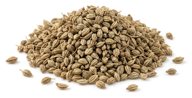 Carom seed
Use the same weight; this is the same spice.
 Cumin seed
Use 75% of the weight, toasted; different, less medicinal flavour.
 Fennel seed
Use 50% of the weight, crushed; sweeter and milder.


 Tandoori snack spice mix
Use the same weight; taste first as it can be smokier and saltier. Add lime or amchoor if the dish needs more tang.
 Dried mango powder
Use about half the weight, mixed with black salt and a pinch of ground cumin. It gives tang and saltiness but lacks the minty, asafoetida notes.
 Black salt
Use about half the weight and add lime juice to taste. It gives the salty, sulphurous edge but not the full tangy blend.


 Yellow split pea flour
Use 100% of the weight. Many commercial gram flours are milled from split peas; performs identically in pakora batters and kadhi.
 Cornstarch
For crisping batters or binding cutlets: use 50% to 60% of the weight. Produces a very crisp shell but lacks the earthy, roasted nutty flavour of besan.


 White vinegar
Use 100% of the weight directly. It delivers an identical sharp, clean acidity to curries and marinades.
 Lemon juice
Use 100% of the weight. Add towards the end of cooking off the heat; introduces a fruity citrus aroma rather than pungent acetic sharpness.
 Tamarind extract
Use 75% of the weight diluted in a splash of warm water. Gives a rich, fruity sourness and darkens the gravy.


 Peanut oil
Use equal weight; handles high tempering heat well and keeps flavours neutral.
 Butter
Use equal weight; cook over gentle heat to prevent browning the milk solids too quickly.


- Chaat masala
Use the same weight; tangier and more pungent, so taste before adding extra salt.
 Tandoori masala
Use 50–60% of the weight and add a squeeze of lemon; it is warmer and less tangy than chaat masala.
- Garam masala
Use 50% of the weight plus a pinch of amchoor and black salt; lacks the sour chaat edge.

Similar dishes

- Same: Chaaman and this dish both use paneer cubes seasoned with chilli powder, garam masala, ground coriander, turmeric, and salt.
- Different: Chaaman is pan-fried and simmered in a ghee or oil sauce with ground ginger, cumin, asafoetida, and coriander leaf, while this dish is garlic-stuffed, coated in a yogurt, cream, chickpea flour, ajwain, and chaat masala marinade, and grilled.

- Same: Achari Paneer also features paneer paired with plain yogurt, green chillies, turmeric, chilli powder, and garam masala.
- Different: Instead of being coated in chickpea flour, heavily spiced with garlic, and grilled dry, it is simmered as a saucy stovetop curry with onions, ginger, and whole pickling seeds including mustard, fenugreek, and nigella.

- Same: Paneer Pasanda also features paneer paired with chickpea flour, garlic, green chillies, chilli powder, and garam masala cooked in ghee and vegetable oil.
- Different: Rather than grilling paneer cubes marinated in yogurt, vinegar, and ajwain seeds, Paneer Pasanda batters and fries paneer stuffed with cashews, then serves it in a simmered gravy of tomatoes, fried onion paste, and cashew paste.

- Same: Tandoori Bharwan Paneer shares grilled paneer, a yogurt marinade, and spices such as chaat masala, garam masala, chilli powder, turmeric, and garlic paste with this dish.
- Different: It wraps paneer around a cabbage-and-carrot filling and uses hung yogurt, lemon juice, cumin seed, dried fenugreek leaves, and melted butter, while this dish stuffs paneer cubes with garlic and uses chickpea flour, cream, ajwain, vinegar, green chilli, and ghee or oil.