Indian cooking
Indian cooking / Dishes / Hare Masale ka Murg
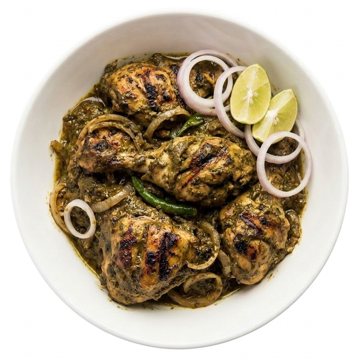
Hare Masale ka Murg (Chicken with Green Herbs)

Hare Masale ka Murg

Chicken with Green Herbs
Non-vegetarian●●●Origin AwadhPrep 30 minutesCook 35 minutes

A fragrant, mild chicken curry simmered in a luscious sauce of coconut, cream, and vibrant herbs. It delivers tender poultry coated in a rich, herbal gravy with a delicate nutty sweetness.

Garlic rub

5 gRubbed onto the chicken (step 1)
01
5 g1 teaspoon
aromatic
Keep ready to season the meat.

Yoghurt spices

2.8 gWhisked into the dairy mixture (step 3)
01
1.3 g½ teaspoon
spice
02
1.5 g½ teaspoon
spice
Stir the ground spices together until evenly combined.

Everything else

01
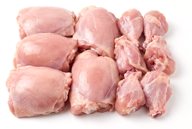
Chicken · Murghcut into pieces
1200 g1 chicken
poultry
02
114 g125 ml
oil/fat
03
12 g10 almonds
nut/seed
04
388 g375 ml
dairy
05
254 g250 ml
dairy
06
Green chilli · Hari Mirchde-seeded and ground
36 g6 chillies
vegetable
08
~100 g1 bunch
herb
09
175 g½ coconut
fruit
10
to taste
salt

Method

  1. Thoroughly coat 1200 g chicken, cut into pieces, with salt to taste and the garlic rub.
  2. Set a wide, heavy-bottomed pan over a low flame and heat 114 g vegetable oil. Add the chicken and fry for 8 to 10 minutes, turning until nicely browned on all surfaces. Stir in 10 blanched almond and cook for 1 minute.
  3. In a separate bowl, whisk together 388 g whisked yogurt, 254 g single cream, and the yoghurt spices. Pour this into the pan with the poultry and cook for 5 minutes, allowing the excess moisture to boil off.
  4. Fold in 36 g de-seeded and ground green chilli, 15 g ground coriander leaf, 100 g mint, and 175 g ground fresh coconut. Turn up the heat and cook rapidly for 1 minute.
  5. Pour in 250 ml of water, lower the flame, and simmer gently for 20 to 30 minutes, splashing in extra water if the pan dries out, until the chicken is tender and a film of oil floats to the surface.

Don't have something?

Ground fresh ginger
  • Ginger paste

    Use the same weight; it is practically the same.

  • Fresh ginger

    Grate the same weight; it is the same but more fibrous.

  • Ground ginger

    Use about 30% of the weight, mixed with a little water; it is drier and hotter, with less fresh brightness.

Ground garlic
  • Garlic powder

    Use equal weight (1:1). Behaves virtually identically, dissolving seamlessly into dry rubs or wet gravies.

  • Garlic paste

    Use 300% to 400% of the weight (e.g. 3–4 g paste for 1 g ground). Sauté in oil to cook off the raw moisture; imparts a fresher, sharper punch.

  • Garlic

    Finely mince or grate fresh cloves; use 300% to 400% of the weight. Fry gently in oil early in the cooking process to mellow the pungency.

Chicken
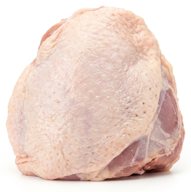
  • Turkey thigh

    Use 100% of the weight, cut into equivalent bone-in or boneless pieces. Simmer for an extra 5 to 10 minutes; flavour and texture are very similar.

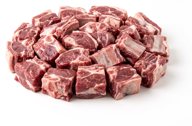
  • Lamb

    Use 100% of the weight. Cut into bite-sized pieces and extend simmering time by 35 to 50 minutes, adding extra liquid to allow the meat to tenderise.

Vegetable oil
  • Peanut oil

    Use 1:1 by weight. Handles high-heat frying identically and introduces a very subtle, pleasant nuttiness.

  • Ghee

    Use 1:1 by weight. Yields a much richer, authentic aroma and a glossy, heavier mouthfeel.

  • Mustard oil

    Use 1:1 by weight. Heat until smoking, then cool slightly before cooking to temper its intensely pungent, sharp mustard kick.

Almond
  • Cashew nut

    Use equal weight. Soak in warm water and grind to a paste or fry identically; yields a slightly creamier and sweeter sauce.

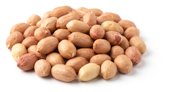
  • Shelled peanut

    Use equal weight. Lightly roast, skin, and grind; introduces a heavier body and a pronounced roasted-nut aroma.

Yogurt
  • Plain yogurt

    Use 100% of the weight. Whisk thoroughly until smooth before stirring into warm gravies to prevent curdling.

  • Single cream

    Use 90% of the weight combined with 10% lemon juice to replicate the lactic tang and rich body in marinades and curries.

Single cream
  • Whole milk

    Use equal weight, whisked with a small knob of unsalted butter. Simmer gently over low heat to reduce curdling; sauce will be slightly lighter.

  • Clotted cream

    Use 50% weight combined with 50% whole milk, whisked until smooth. Adds intense richness, so stir in at the very end off the heat.

  • Cashew paste

    Use 60% cashew paste mixed with 40% warm water. Creates a silky, luxurious thickening that won't split even under high heat.

Ground cumin
  • Cumin seed

    Dry-roast briefly and grind finely; use equal weight (1:1). Imparts an even punchier, nuttier, toasty aroma than pre-ground cumin.

  • Ground coriander

    Use equal weight (1:1). Adds mild, lemony sweetness rather than cumin's smoky, earthy bite; curries will taste lighter and less savoury.

  • Black cumin seeds

    Grind finely; use 60% to 75% of the weight. Produces a darker, more complex, smoky-herbal flavour suited to rich gravies.

Ground turmeric
  • Ground ginger

    Use 50% of the weight. Mimics turmeric's warm, earthy, rhizome background, but provides none of the golden-yellow colour.

  • Saffron

    Steep a tiny pinch (0.1 g per 2 g turmeric) in 2 tbsp warm water; use to match the rich golden hue. Contributes an aristocratic, honeyed floral flavour rather than earthy bitterness.

Green chilli
  • Chilli powder

    Use 10 to 15% of the weight (about 1/4 teaspoon per chilli); imparts dry pungent heat and reddens the dish without the grassy crunch.

  • Dried red chilli

    Use 1 dried pod per fresh green chilli; snap in half and temper in hot oil for a deeper, toastier heat.

Coriander leaf
  • Coriander

    Use equal weight finely chopped; this is the exact same fresh herb.

  • Mint

    Use half the weight finely chopped; provides vibrant green freshness, though the flavour profile becomes noticeably cooler and sharper.

Mint
  • Dried mint

    Use about 30% of the weight of fresh mint. Rub between your palms to crush before stirring in; the flavour will be more intensely herbal and less bright.

  • Coriander leaf

    Use equal weight, finely chopped. Adds fresh citrusy green notes, but lacks the cooling menthol lift.

Fresh coconut
  • Desiccated coconut

    Use 50% to 60% of the weight, soaked in equal parts warm water for 15 minutes before grinding. Works well for chutneys, though texture is slightly finer and sweeter.

  • Coconut milk

    Use 1.2 times the weight in curries. Adds creamy richness and authentic flavour, but makes gravies smoother and eliminates the grated, chewy mouthfeel.


Similar dishes

Sika Murg
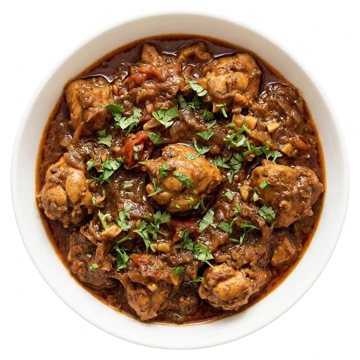
Charcoal-grilled Chicken
Sika Murg tastes smokier and more intensely savoury, lacking the creamy sweetness and lush herbal notes of this dish.
  • Same: Sika Murg shares the chicken, yogurt base, garlic, and fresh green chillies with this dish.
  • Different: Instead of simmering in oil, coconut, cream, almonds, mint, coriander, and ground spices, Sika Murg incorporates onions and ghee and is grilled over charcoal.
Cha Sha
Chicken
Cha Sha tastes light, brothy, and cleanly pungent from ginger and chilli powder, without the rich, creamy, and herbal sweetness of this dish.
  • Same: Both recipes braise an equal amount of chicken in vegetable oil seasoned with garlic, turmeric, and salt.
  • Different: Cha Sha simmers the meat in a light onion-and-ginger broth using far less oil, entirely omitting the yogurt, cream, coconut, almonds, cumin, mint, and coriander leaf that enrich this dish.
Thokan
Chicken Curry (I)
Thokan tastes robust, savory, and tangy from tomatoes with mustard-oil pungency and green-chilli heat, while this dish is mild, creamy, herbal, and nutty-sweet.
  • Same: Both are chicken curries that simmer 1200 g chicken with green chilli, coriander leaf, and salt until tender.
  • Different: Thokan uses mustard oil, onion, tomato, garlic, and dried mint for a reduced gravy, while this dish uses vegetable oil, yogurt, cream, fresh coconut, almond, ginger, cumin, turmeric, and a large amount of fresh mint and coriander.
Mangalorean Chicken Curry
Chicken Curry from Mangalore
It tastes of roasted coconut and red chilli with coconut milk richness, while this dish is milder, creamier, and herbal with yogurt, mint, and almond.
  • Same: Mangalorean Chicken Curry shares chicken, vegetable oil, fresh coconut, turmeric, garlic, and salt with this dish.
  • Different: It adds onion, coconut milk, coriander seeds, fenugreek, and dried Kashmiri chilli, and it lacks this dish's yogurt, cream, almond, mint, green chilli, and ginger.