
Chunke Matar
A spiced North Indian dry dish of tender green peas sautéed with golden onions, warm aromatics, and a sharp, tangy lift from amchoor and fresh lemon.
Tempering spice
4.2 gSizzled in the ghee (step 2)Asafoetida
0.3 gAdded alongside the sliced onions (step 3)Ground spices
4.7 gStirred in with the aromatics (step 4)Everything else

Method
- Submerge 1000 g green peas in a large bowl of cold water for a few minutes, then drain thoroughly and set aside.
- Warm 26.4 g ghee in a heavy-bottomed pan set over medium heat. Tip in the tempering spice and let it crackle for roughly 1 minute.
- Add 300 g sliced onion and the asafoetida, cooking for 5 to 7 minutes until the onions become richly browned.
- Incorporate 30 g chopped green chilli, 24 g ginger, the ground spices, and salt to taste. Sauté continuously for about 1 minute.
- Tumble in the drained peas and cook for 7 to 8 minutes, turning them occasionally until tender.
- Stir in 30.6 g lemon juice, take the pan off the heat, and serve.
Don't have something?


 Frozen peas
Use the same weight; no need to thaw. Add 1–2 minutes earlier than fresh.
- Green pea
Use the same weight and simmer until tender. Closest fresh swap.
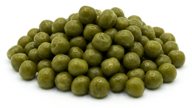 Boiled peas
Use the same weight and add in the last 1–2 minutes just to heat through.


 Unsalted butter
Use 120% of the weight; melt gently over low heat to avoid burning the milk solids, which will yield a softer, creamier richness rather than a nutty aroma.
 Vegetable oil
Use 85% of the weight; holds high cooking temperatures without smoking, but the final dish will lack traditional dairy depth.
 Mustard oil
Use equal weight; heat to smoking point and cool slightly before cooking, bearing in mind it introduces an assertive, pungent edge.


 Ground cumin
Use 70% of the weight; add with ground spices or sauce bases rather than hot oil tempering, where it scorches quickly and turns bitter.
 Black cumin seeds
Use equal weight for oil tempering. Delivers an earthy profile with an additional musky, smoky, and slightly bitter edge.
 Fennel seed
Use 60% of the weight for tempering; offers comparable warm aroma, but leans sweet and liquorice-like rather than savoury and earthy.






 Garlic powder
Use double the weight. Stir into hot oil just before adding wet ingredients; mimics the allium savoury background without the sulphurous edge.
 Garlic paste
Use 2 g for every 0.5 g of asafoetida. Sauté in oil until the raw smell clears; adds moisture and sweet allium depth.


 Chilli powder
Use 10 to 15% of the weight (about 1/4 teaspoon per chilli); imparts dry pungent heat and reddens the dish without the grassy crunch.
 Dried red chilli
Use 1 dried pod per fresh green chilli; snap in half and temper in hot oil for a deeper, toastier heat.



 Coriander seeds
Dry-roast lightly in a pan and grind to a fine powder; use equal weight (1:1). Offers a noticeably fresher, brighter citrus note.
- Ground cumin
Use 50% to 75% of the weight. Lacks the floral, citrusy profile of coriander and turns the gravy heavier, earthier, and darker.
 Garam masala
Use 50% of the weight and stir in near the end of cooking. Adds warmth and depth since it contains ground coriander, but introduces stronger spices like clove and cinnamon.


 Black peppercorn
Use the same weight and crush or grind as the recipe needs; whole peppercorn is the same spice.
 Ground black pepper
Use the same weight; add nearer the end if the recipe calls for whole pepper, as ground loses aroma faster.
 Ground white pepper
Use about 75–80% of the weight; it is milder and earthier, with less bite.


 Black cardamom seeds
Use equal weight; grind freshly in a mortar or spice mill for an even more vibrant camphor-and-smoke aroma.
 Black cardamom pod
Use 2.5 times the weight in whole pods; crack open, extract the sticky seeds, and grind to a fine powder, discarding the husks.
- Garam masala
Use 60% of the weight; provides some warm resinous smokiness if it contains black cardamom, though it adds cinnamon and clove notes.


 Lemon juice
Use 15 g (1 tbsp) for every 5 g of amchoor. Stir in at the very end off the heat; adds liquid and fresh citrus aroma rather than dry fruity tang.
 Tamarind extract
Use 75% of the weight, dissolved in a splash of warm water. Simmer briefly; darkens the gravy and provides a deeper, caramelised sourness.


 Fresh ginger
Use equal weight; scrape off the skin and grate or finely julienne according to the recipe.
 Ginger paste
Use equal weight; stir straight into the sizzling aromatics, taking care as the extra moisture may spit.
 Ground ginger
Use 15 to 20% of the weight; add alongside ground spices, noting it imparts warm, dry heat rather than zesty freshness.


 Lime juice
Use equal volume or weight; delivers almost identical sharp acidity with a faintly more aromatic, bitter-edged profile.
- Dried mango powder
Use 25% of the weight (about 1 g amchoor for 4 g juice); provides clean fruity tartness without thinning the sauce.
 White vinegar
Use 75% of the volume; gives direct sourness without any citrus floral fragrance.

Similar dishes

- Same: Matar ki Phali shares green peas, cumin seeds, asafoetida, and amchoor with this dish.
- Different: Matar ki Phali uses whole pea pods braised in vegetable oil with garam masala, omitting the ghee, fresh onions, ginger, green chillies, ground coriander, black cardamom, and lemon juice used in this dish.
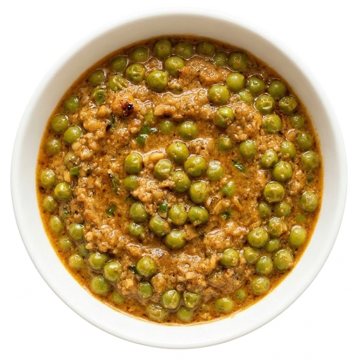
- Same: Khoya Matar also features green peas cooked with cumin seeds, asafoetida, fresh ginger, green chillies, and ground coriander.
- Different: Khoya Matar cooks peas into a sauced dish with khoya, cloves, and garam masala, omitting the large quantity of onions, black cardamom, amchoor, and lemon juice used in this dry sauté.
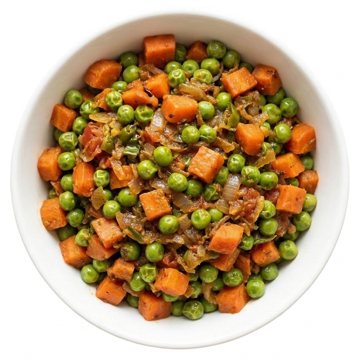
- Same: Both are dry North Indian vegetable preparations featuring green peas cooked with browned onions, cumin seeds, fresh ginger, green chillies, and ground coriander.
- Different: Gajar Matar incorporates carrots, tomatoes, garlic, ground cumin, and chilli powder, but omits the asafoetida, black cardamom, amchoor, and fresh lemon juice used here.
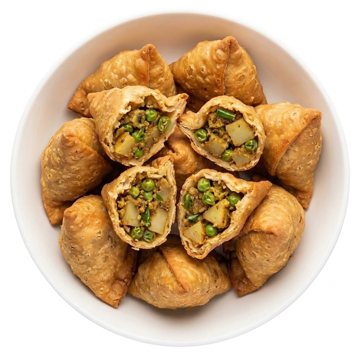
- Same: Samosa shares green peas, ghee, cumin, ginger, green chilli, ground coriander and salt with this dish.
- Different: Samosa is a deep-fried plain-flour pastry stuffed with potato and peas, while this dish is a dry sauté of peas with onion and no pastry or potato; Samosa also uses vegetable oil, chilli powder, turmeric, pomegranate seed and coriander leaf, while this dish uses amchoor, lemon juice, asafoetida, black pepper and black cardamom.