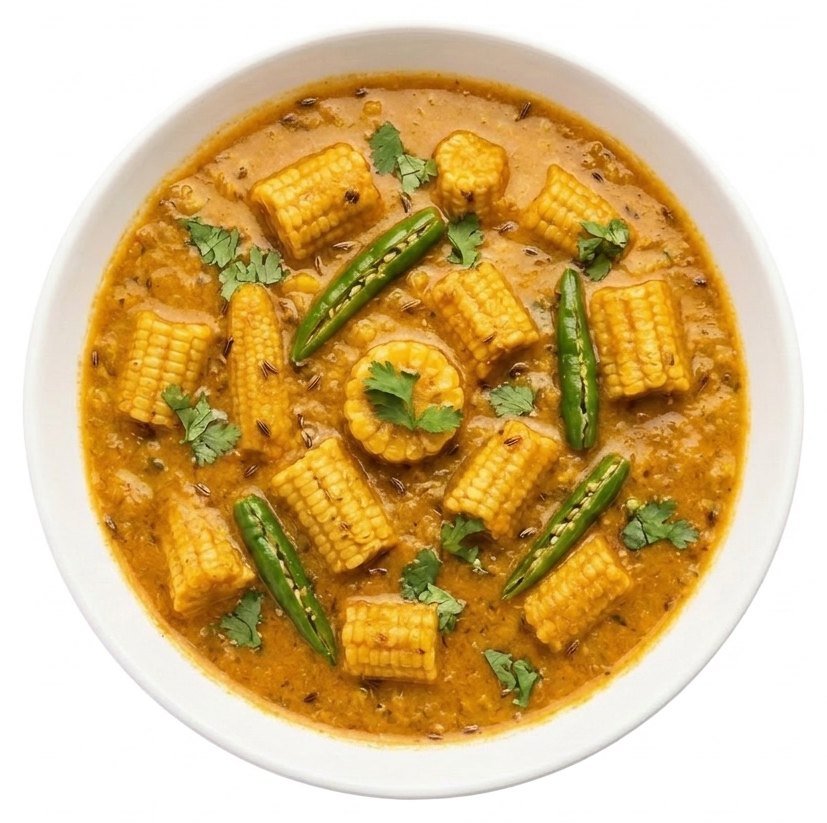
Marathi Sweetcorn Aamti
Marathi sweetcorn aamti is a sweet-and-sour corn curry: small corn cobs simmered in a thickened chickpea-flour sauce with jaggery and tamarind. It tastes sweet, tangy and mildly spicy, with a cumin-scented oil base.
Ground spices for the aamti liquid
3 gWhisked into the flour, jaggery and tamarind liquid (step 1)Whole cumin for the oil
2.1 gAdded to the hot oil (step 2)Everything else

Method
- In a bowl, whisk 30 g chickpea flour, 37.8 g jaggery or caster sugar, 6 g tamarind paste and the ground spices for the aamti liquid (0.6 g kashmiri chilli powder or mild paprika, 1.5 g ground turmeric, 0.9 g ground coriander) with 60 ml water to a smooth runny paste. Pass through a sieve if any lumps remain, then stir in 340 ml water and set aside.
- Heat 27 g vegetable oil in a heavy-based saucepan over medium heat.
- Add the whole cumin for the oil (2.1 g cumin seed) and let it sizzle for 10 seconds.
- Add 2 g green bird's eye chilli, slit lengthways, and infuse for a few seconds.
- Take the pan off the heat, pour in the aamti liquid and mix well, scraping the base.
- Return to low heat and stir continuously to prevent lumps; simmer for 5 minutes.
- Add 600 g corn on the cob, small, cover and simmer for 5 minutes more, stirring halfway, until the cobs are tender and the sauce is as thick as soup.
- Season to taste with salt and scatter with roughly chopped coriander leaves.
Don't have something?


 Yellow split pea flour
Use 100% of the weight. Many commercial gram flours are milled from split peas; performs identically in pakora batters and kadhi.
 Cornstarch
For crisping batters or binding cutlets: use 50% to 60% of the weight. Produces a very crisp shell but lacks the earthy, roasted nutty flavour of besan.


 Light brown soft sugar
Use the same weight. It has mild molasses and is close to caster sugar with a little colour; taste and adjust.
- Dark brown sugar
Use 90% of the weight. It has stronger molasses, which suits dishes where jaggery was intended; dissolve fully.
 Honey
Use 75% of the weight. Reduce other liquid by about 20% and add off the heat; it brings its own floral flavour.


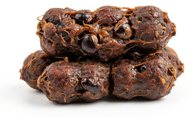 Tamarind pulp
Use 120–150% of the weight and strain; pulp is less concentrated, so simmer a little longer to thicken.
 Tamarind extract
Use 150–200% of the weight and reduce gently; extract is already diluted.
 Lime juice
Use 60–70% of the weight with a pinch of jaggery; sharper, so add near the end off the heat.


 Kashmiri chilli powder
Use the same weight; this is the first half of the book's option and gives the best red colour with mild heat.
 Mild paprika
Use the same weight; add a pinch of cayenne pepper for warmth. Slightly less colour.
- Paprika
Use the same weight and add cayenne pepper to taste; works but is less aromatic.


 Ground ginger
Use 50% of the weight. Mimics turmeric's warm, earthy, rhizome background, but provides none of the golden-yellow colour.
 Saffron
Steep a tiny pinch (0.1 g per 2 g turmeric) in 2 tbsp warm water; use to match the rich golden hue. Contributes an aristocratic, honeyed floral flavour rather than earthy bitterness.



 Coriander seeds
Dry-roast lightly in a pan and grind to a fine powder; use equal weight (1:1). Offers a noticeably fresher, brighter citrus note.
 Ground cumin
Use 50% to 75% of the weight. Lacks the floral, citrusy profile of coriander and turns the gravy heavier, earthier, and darker.
 Garam masala
Use 50% of the weight and stir in near the end of cooking. Adds warmth and depth since it contains ground coriander, but introduces stronger spices like clove and cinnamon.


 Peanut oil
Use 1:1 by weight. Handles high-heat frying identically and introduces a very subtle, pleasant nuttiness.
 Ghee
Use 1:1 by weight. Yields a much richer, authentic aroma and a glossy, heavier mouthfeel.
 Mustard oil
Use 1:1 by weight. Heat until smoking, then cool slightly before cooking to temper its intensely pungent, sharp mustard kick.


- Ground cumin
Use 70% of the weight; add with ground spices or sauce bases rather than hot oil tempering, where it scorches quickly and turns bitter.
 Black cumin seeds
Use equal weight for oil tempering. Delivers an earthy profile with an additional musky, smoky, and slightly bitter edge.
 Fennel seed
Use 60% of the weight for tempering; offers comparable warm aroma, but leans sweet and liquorice-like rather than savoury and earthy.


- Bird's eye green chilli
Use the same weight; heat and flavour are very close.
 Green chilli
Use 1.5 to 2 times the weight; deseed for less heat. Larger chillies are more watery.
 Fresh green chilli
Use 1.5 to 2 times the weight; chop finely and adjust heat by tasting.


 Sweetcorn kernel
Use about 100 g kernels for 1 cob (150 g with cob). Simmer or char briefly; texture is looser but sweet flavour is close.
 Baby corn
Use the same weight, halve lengthwise and cook 2–3 minutes less; crunchier and less sweet than cob kernels.
 Tinned sweetcorn
Use the same drained weight, add at the end and warm through; softer and already salted.


 Coriander (cilantro) or basil
Use the same weight, choosing the coriander element if available. If only basil is available, expect a sweeter, more aniseed flavour.
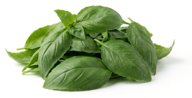 Basil leaves
Use the same weight. Basil is sweeter and more aromatic in a different way; add near the end so it keeps its perfume.
 Coriander paste
Use 1.5 times the weight and reduce other liquid slightly; it is less fresh and more concentrated, so taste before adding more.


Similar dishes

- Same: Makai Butta shares corn on the cob and Kashmiri chilli powder with this dish.
- Different: Makai Butta uses lime and a large amount of salt and is charred, while this dish simmers corn in a chickpea-flour sauce with jaggery, tamarind, turmeric, coriander, cumin seed, green chilli and vegetable oil.

- Same: Makkai Butta and this dish both use corn on the cob and Kashmiri chilli powder, and both finish with coriander leaf.
- Different: Makkai Butta is chargrilled and brushed with a lime-chilli-coriander butter, while this dish simmers corn in a chickpea-flour sauce with jaggery, tamarind, turmeric, ground coriander, cumin seed, green chilli and vegetable oil.

- Same: Indore Bhutte Ki Kees shares sweetcorn, vegetable oil, cumin seed, green bird's-eye chilli, turmeric, Kashmiri chilli powder and coriander leaves with this dish.
- Different: It is a stir-fry with mustard seed, asafoetida, ginger, milk, fresh coconut and chaat masala, and lacks this dish's chickpea-flour sauce, jaggery and tamarind.

- Same: Maharashtrian Rassa shares vegetable oil, cumin seed, green bird’s eye chilli, Kashmiri chilli powder, turmeric, ground coriander, jaggery, salt and coriander leaves with this dish.
- Different: Maharashtrian Rassa lacks chickpea flour, tamarind and corn, and instead uses asafoetida, curry leaf, garlic, tomato, tomato purée, cauliflower and green peas in a tomato-based sauce.