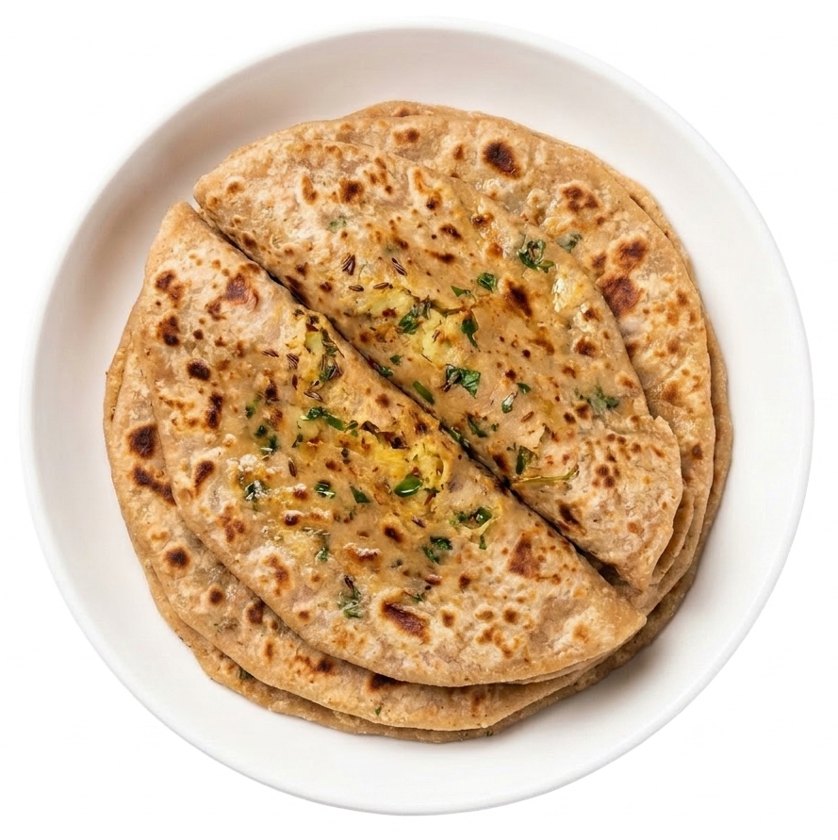
Aloo Ke Parathe
Aloo ke parathe are wheat flatbreads stuffed with a soft, spiced mashed-potato filling and cooked on a griddle with butter until speckled. They taste savoury, lightly tangy and warm-spiced, with a soft potato centre.
Filling spices
9 gMixed into the potato filling (step 4)Everything else

Method
- Mix 300 g wholewheat flour and 0.3 g salt in a bowl.
- Add 40.5 g vegetable oil and about 220 ml water; knead for 5–7 minutes to a soft, smooth dough.
- Cover the dough and leave it to rest while you make the filling.
- Put 600–900 g boiled, crushed potato in a large bowl. Add 20 g grated fresh ginger, 2 g finely chopped green bird’s eye chilli, 4.5 g finely chopped coriander leaves, salt to taste and the masala; mix well.
- Divide the dough into 6 equal balls.
- Flatten one ball and roll it on a lightly floured surface to a 7 cm disc.
- Cup the disc in your palm, put about 2 tbsp filling in the centre, pull the edges up to enclose it, seal well and flatten.
- Dust with flour and roll out to a 15 cm circle, keeping it thick enough not to split; reseal any small splits.
- Heat a flat griddle or heavy frying pan over a low heat and add 1 tsp butter.
- Shake excess flour off one paratha and put it in the pan; cook for 4–5 minutes.
- Brush melted butter over the surface, flip, and cook the second side for 4–5 minutes until browned in speckles and cooked through.
- Wrap cooked parathas in foil to keep warm and repeat with the rest.
Don't have something?


 Wholemeal flour
Use the same weight; it is very close, but add water slowly as it can be coarser and absorb more.
 Plain flour
Use the same weight but reduce water by about 10%; the dough is softer and the flavour less nutty.
 Flour
Use the same weight as a plain-flour swap; reduce water slightly and expect a lighter, less wheaty result.


 Peanut oil
Use 1:1 by weight. Handles high-heat frying identically and introduces a very subtle, pleasant nuttiness.
 Ghee
Use 1:1 by weight. Yields a much richer, authentic aroma and a glossy, heavier mouthfeel.
 Mustard oil
Use 1:1 by weight. Heat until smoking, then cool slightly before cooking to temper its intensely pungent, sharp mustard kick.


 Unsalted butter
Use 100% of the weight. If the original recipe relies on salted table butter, add a pinch of salt to balance.
- Ghee
Use 80% to 85% of the weight. Ghee is pure butterfat with moisture removed; it yields a deeper, nuttier flavour and handles high heat better.
- Vegetable oil
Use 80% of the weight for frying or tempering. The dish loses sweet dairy richness but remains glossy and light.


 Eggplant
Use equal weight. Cut into large chunks; cooks down much faster (10-12 minutes) and softens into the sauce rather than staying starchy and firm.
 Paneer
Use 80% of the weight. Cube and add in the last 5-10 minutes of cooking; adds rich dairy protein instead of starchy bulk.
 Dried chickpea
Use 45% dry weight. Soak overnight and boil until fully soft before stirring into the sauce to simmer for 10 minutes.


 Ground cumin
Use 70% of the weight; add with ground spices or sauce bases rather than hot oil tempering, where it scorches quickly and turns bitter.
 Black cumin seeds
Use equal weight for oil tempering. Delivers an earthy profile with an additional musky, smoky, and slightly bitter edge.
 Fennel seed
Use 60% of the weight for tempering; offers comparable warm aroma, but leans sweet and liquorice-like rather than savoury and earthy.


 Ginger paste
Use equal weight. Sauté in hot fat until the raw allium smell disappears; slightly wetter, but provides identical warmth and pungency.
 Ground ginger
Use 20% to 25% of the weight (1 g for every 4 to 5 g fresh). Stir into the gravy; adds peppery heat and warmth, though it misses the crisp, zesty kick of raw root.


- Bird's eye green chilli
Use the same weight; heat and flavour are very close.
 Green chilli
Use 1.5 to 2 times the weight; deseed for less heat. Larger chillies are more watery.
 Fresh green chilli
Use 1.5 to 2 times the weight; chop finely and adjust heat by tasting.


 Lemon juice
Use 15 g (1 tbsp) for every 5 g of amchoor. Stir in at the very end off the heat; adds liquid and fresh citrus aroma rather than dry fruity tang.
 Tamarind extract
Use 75% of the weight, dissolved in a splash of warm water. Simmer briefly; darkens the gravy and provides a deeper, caramelised sourness.


 Kashmiri chilli powder
Use the same weight; this is the first half of the book's option and gives the best red colour with mild heat.
 Mild paprika
Use the same weight; add a pinch of cayenne pepper for warmth. Slightly less colour.
- Paprika
Use the same weight and add cayenne pepper to taste; works but is less aromatic.


 Coriander (cilantro) or basil
Use the same weight, choosing the coriander element if available. If only basil is available, expect a sweeter, more aniseed flavour.
 Basil leaves
Use the same weight. Basil is sweeter and more aromatic in a different way; add near the end so it keeps its perfume.
 Coriander paste
Use 1.5 times the weight and reduce other liquid slightly; it is less fresh and more concentrated, so taste before adding more.


Similar dishes

- Same: Bread Pakoda shares a spiced potato filling with green chilli, ginger, Kashmiri chilli and coriander with this dish.
- Different: Bread Pakoda uses white bread and a chickpea-flour batter, adds peas, mustard seed, asafoetida, curry leaf, turmeric and lemon, and is deep-fried, while this dish is a wholewheat flatbread griddled with butter and soured with amchoor.

- Same: Dabeli and this dish both use potato, cumin seed, coriander leaves, Kashmiri chilli powder or mild paprika, salt and vegetable oil.
- Different: Dabeli is an assembled soft white roll sandwich with onion, lemon, tamarind chutney, sweet chilli sauce, coconut, peanuts, pomegranate and sev, and it lacks this dish's wholewheat flour, amchoor, fresh ginger and green bird’s eye chilli.

- Same: It shares potato, cumin seed, green bird’s eye chilli, fresh ginger and coriander leaves with this dish.
- Different: It adds Greek yoghurt, green peas, asafoetida, ground coriander and sugar, and lacks wholewheat flour, amchoor, Kashmiri chilli powder and butter, so it is a boiled diced-potato curry rather than a stuffed griddle flatbread.
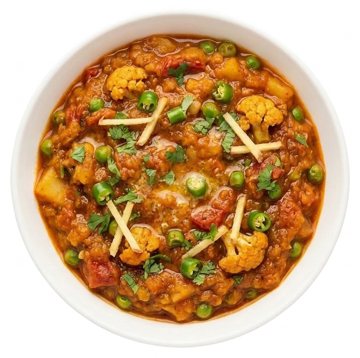
- Same: Pao Bhaji shares potato, ginger, green chilli, coriander, salt and fat with this dish, and both are eaten with wheat bread.
- Different: Pao Bhaji uses tomato, onion, garlic, turmeric, chilli powder, garam masala and lemon juice and simmers mashed vegetables in ghee or oil plus butter, while this dish uses amchoor and cumin seed in a potato stuffing and cooks wheat dough on a griddle; it lacks amchoor and cumin seed and is not a stuffed flatbread.