Indian cooking
Indian cooking / Dishes / Murg Qorma (I)
Murg Qorma (I) (Mughlia Chicken in Rich Sauce)

Murg Qorma (I)

Mughlia Chicken in Rich Sauce
Non-vegetarian●●●Origin AwadhPrep 20 minutesCook 45 minutes

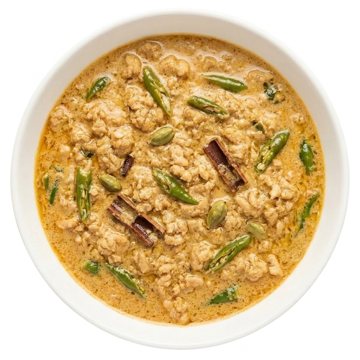
A fragrant North Indian chicken curry gently simmered in an onion and whole-spice gravy, finished with a subtle saffron-infused milk.

Saffron infusion

0.3 gSoaked in milk to finish the curry (step 1)
01
~0.3 gpinch
spice
Leave whole to steep in the milk.

Whole spices for the paste

8 gBlended into the ginger paste (step 2)
01
0.1 g2 cloves
spice
03
4–5 g4–5 chillies
spice
04
2.1 g1 teaspoon
spice
Blend with the ginger, cardamom pods, and a little water until smooth.

Everything else

01
5 g1 teaspoon
dairy
02
40 g3 tablespoons
oil/fat
03
600 g4 onions
vegetable
04
750 g
poultry
05
to taste
salt
06
Fresh ginger · Adrakpeeled and grated
10 g1 piece
aromatic

Method

  1. Steep the saffron infusion in 5.1 g milk in a small cup and set aside.
  2. Add the whole spices for the paste to a blender along with 10 g fresh ginger, 2 cardamom pods, and a splash of water if needed, then process to a smooth paste.
  3. Warm 40.5 g vegetable oil in a large, heavy pan set over medium heat. Stir in 600 g chopped onion and fry for 8 to 10 minutes until pale golden.
  4. Lower the heat, add the prepared spice paste, and gently cook for 2 to 3 minutes.
  5. Tip in 750 g skinless, boneless chicken and stir-fry for 5 minutes until every piece is evenly coated in the paste.
  6. Pour in 750 ml hot water and raise the heat to bring the liquid to a boil. Turn the heat down and simmer uncovered for roughly 30 minutes, or until the chicken is tender and thoroughly cooked.
  7. Drizzle in the soaked saffron infusion along with its milk and season to taste with salt. Put a lid on the pan and leave to steam over very low heat for 2 to 3 minutes.

Don't have something?

Saffron
  • Ground turmeric

    Use 15% of the saffron's weight. Replicates the bright yellow colour well, but lacks the floral, earthy depth; use sparingly to avoid bitterness.

  • Screwpine water or rosewater

    Use a few drops combined with a tiny pinch of ground turmeric to mimic both the regal floral aroma and the golden hue.

Milk
  • Whole milk

    Use equal weight; provides the standard rich dairy fat and body expected in creamy Indian bases.

  • Single cream

    Dilute 3 parts cream with 1 part water to match the weight; yields a richer, glossier gravy that resists curdling.

  • Plain yogurt

    Whisk thoroughly and use equal weight; adds extra body and a mild pleasant acidity, best added off the heat.

Vegetable oil
  • Peanut oil

    Use 1:1 by weight. Handles high-heat frying identically and introduces a very subtle, pleasant nuttiness.

  • Ghee

    Use 1:1 by weight. Yields a much richer, authentic aroma and a glossy, heavier mouthfeel.

  • Mustard oil

    Use 1:1 by weight. Heat until smoking, then cool slightly before cooking to temper its intensely pungent, sharp mustard kick.

Onion
  • Shallot

    Use equal weight, finely sliced. Shallots soften and brown faster, giving a slightly sweeter and more delicate base to curries.

  • Cabbage

    Use 80% of the weight, finely shredded and browned slowly with a pinch of asafoetida. Replicates the bulk and natural sweetness in gravies without allium.

Chicken pieces
  • Chicken thigh

    Use the same weight; cut to similar size. Juicier and forgiving; bone-in needs 5–10 minutes longer.

  • Chicken breast

    Use the same weight; cut to similar size. Cooks faster and is drier, so reduce time by 3–5 minutes.

  • Boneless chicken piece

    Use the same weight; cooks faster than bone-in, so reduce time by 5–10 minutes.

Fresh ginger
  • Ginger paste

    Use equal weight. Sauté in hot fat until the raw allium smell disappears; slightly wetter, but provides identical warmth and pungency.

  • Ground ginger

    Use 20% to 25% of the weight (1 g for every 4 to 5 g fresh). Stir into the gravy; adds peppery heat and warmth, though it misses the crisp, zesty kick of raw root.

Clove
  • Ground cloves

    Use 1 g ground for 4 g whole (or 1 small pinch per 2 to 3 whole cloves). Add with spice powders; disperses intense warmth quickly, so use with restraint.

  • Allspice berries

    Use 100% of the weight whole in tempering. Imparts a warm, clove-like aromatic profile combined with hints of nutmeg and cinnamon.

  • Black cardamom pod

    Use 1 pod for 3 to 4 cloves in whole tempering. Shares a camphor-like warmth and medicinal depth, though it introduces a distinct smoky undertone.

Cassia bark
  • Ceylon cinnamon

    True cinnamon: thinner, papery quills, milder and sweeter. Use about 1.5 times the weight, and taste.

  • Ground cinnamon (cassia)

    Use about a third of the weight (0.5 g ground for a 2.5 cm piece), stirred in with the ground spices rather than fried whole, since the powder burns quickly.


  • Cassia buds

    Use 60-70% of the weight; stronger and more peppery, so taste before adding more.

Dried red chilli
  • Dried kashmiri chilli

    Use equal weight whole. Fry in hot oil or ghee as tempered spice; gives a richer red colour with slightly milder heat.

  • Red chilli powder

    Use 50% to 70% of the weight. Stir into the oil with ground spices; distributes heat evenly throughout the dish without whole chilli skins.

Green cardamom pod
  • Green cardamom seed

    Use 35 to 40% of the total pod weight; lightly bruise the seeds before frying in oil to release their essential oils.

  • Ground green cardamom

    Use 20 to 25% of the pod weight (about 1 generous pinch per pod); stir in toward the end of cooking so the delicate floral notes do not dissipate.

  • White cardamom pod

    Use 1:1 by pod count or weight; crack gently before using, though it is slightly less intensely floral.

Cumin seed
  • Ground cumin

    Use 70% of the weight; add with ground spices or sauce bases rather than hot oil tempering, where it scorches quickly and turns bitter.

  • Black cumin seeds

    Use equal weight for oil tempering. Delivers an earthy profile with an additional musky, smoky, and slightly bitter edge.

  • Fennel seed

    Use 60% of the weight for tempering; offers comparable warm aroma, but leans sweet and liquorice-like rather than savoury and earthy.

Similar dishes

Thanda Qorma
Cold Chicken Korma
Thanda Qorma tastes lightly spiced, savory, and ghee-rich with a cold, nearly dry coating, while this dish has a richer onion gravy with saffron-milk fragrance and dried red chilli heat.
  • Same: Thanda Qorma shares chicken, onion, ginger, clove, green cardamom, cinnamon, and salt with this dish, and both are simmered qorma-style curries.
  • Different: Thanda Qorma uses ghee instead of vegetable oil, adds garlic, black peppercorn, and green chilli, and lacks saffron, milk, dried red chilli, and cumin; it also uses much more chicken and much less onion, and is cooked down until nearly dry then chilled.
Murg Shahjehani
Imperial Chicken
Murg Shahjehani tastes tangier and creamier from yogurt with floral rosewater and nutty poppy seed, while this dish is saffron-milk finished with dried red chilli heat and no yogurt tang.
  • Same: Murg Shahjehani shares a chicken and onion gravy base with this dish, plus vegetable oil, ginger, clove, cinnamon, green cardamom and cumin.
  • Different: Murg Shahjehani adds garlic, black peppercorn, poppy seed, coriander seed, chilli powder, yogurt and rosewater, uses more chicken, and lacks this dish's saffron and milk finish.
Murg Rezhala
Chicken in Rezala Sauce
Murg Rezhala tastes tangy from yoghurt with gentle sugar sweetness and fresh green-chilli heat, while this dish tastes more onion-rich and dried-red-chilli hot with whole spices.
  • Same: Murg Rezhala shares saffron, green cardamom, cinnamon, ginger, chicken, vegetable oil and salt with this dish.
  • Different: Murg Rezhala uses yoghurt as its souring agent plus garlic paste, green chilli and sugar, while this dish uses a large onion base with clove, cumin and dried red chilli; it also uses far more milk and is described as minced chicken in a silky yoghurt sauce rather than chicken pieces in an onion gravy.
Koli Milagu Masala
Pepper Chicken from Chettinad
Koli Milagu Masala is sharper, pungent with black pepper, and slightly acidic from tomatoes, whereas this dish is milder, sweeter, and delicately floral.
  • Same: Both are chicken curries prepared with vegetable oil, onions, ginger, and shared spices including cinnamon, cloves, cumin, and dried red chillies.
  • Different: Koli Milagu Masala incorporates tomatoes, garlic, curry leaves, urad dal, turmeric, fennel, coriander, and black peppercorns, while omitting the saffron and milk found in this dish.