
Darashahi Kaliya
A rich Kashmiri lamb curry braised with whole and ground spices, finished in a creamy yogurt and milk gravy studded with raisins and cashews.
Braising spices
12 gAdded with water to the browned meat (step 3)Everything else

Method
- Whisk together 259 g milk and 259 g yogurt in a bowl until smooth, then set aside.
- In a large, heavy pan, heat 228 g mustard oil over high heat until smoking, then take the pan off the flame to cool slightly. Return the pan to high heat, drop in 1000 g lamb, and sear for 5 minutes until lightly browned.
- Pour in 1 litre of water, then stir in 2 teaspoon aniseed, the braising spices, and salt to taste. Cover with a lid and simmer for 45 minutes, then remove from the heat and allow the pan to cool completely to room temperature.
- Uncover the pot, stir in the milk and yogurt mixture, and cook over medium-low heat for 15 minutes, stirring occasionally until the sauce thickens and fat floats to the surface.
- Fold in 1 teaspoon Garam Masala Kashmiri, 2.5 tablespoon raisins, and 50 g halved cashews. Turn the heat down to low and gently simmer for 10 minutes until the meat is fully tender.
Don't have something?

 Whole milk
Use equal weight; provides the standard rich dairy fat and body expected in creamy Indian bases.
 Single cream
Dilute 3 parts cream with 1 part water to match the weight; yields a richer, glossier gravy that resists curdling.
 Plain yogurt
Whisk thoroughly and use equal weight; adds extra body and a mild pleasant acidity, best added off the heat.


- Plain yogurt
Use 100% of the weight. Whisk thoroughly until smooth before stirring into warm gravies to prevent curdling.
- Single cream
Use 90% of the weight combined with 10% lemon juice to replicate the lactic tang and rich body in marinades and curries.


 Peanut oil
Use equal weight. It handles high-heat cooking well, but lacks the signature pungent, nasal heat of mustard oil.
 Vegetable oil
Use equal weight. Neutral in flavour, so your curry will lack the characteristic Bengali or North Indian pungent punch.


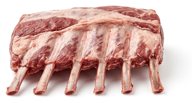 Lamb ribs
Use the same weight; similar fat and bone. Cooking time is about the same.
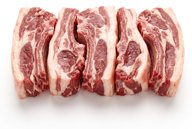 Lamb breast
Use the same weight; fattier and bonier. Skim the fat and allow 10 minutes longer.
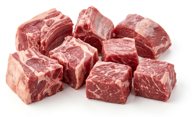 Lamb with fat
Use the same weight; cut into even pieces and brown well. Keeps the richness but loses the rib shape.


 Ginger paste
Use 300% to 400% of the weight (e.g. 3–4 g paste for 1 g ground). Fry in oil alongside onions; provides a juicy, pungent kick rather than a dry, baking-spice heat.
 Fresh ginger
Peel and grate finely; use 300% to 400% of the weight. Add to the hot oil early; delivers bright, peppery warmth rather than the mellow, woody heat of dry ginger.
 Ground mace
Use 50% of the weight. Imparts a warm, spicy undertone in rich gravies, but lacks ginger's fiery, sharp zest.


 Ground fennel seed
Use the same weight; fennel is the closest everyday match, slightly sweeter and milder.
 Aniseed
Grind the same weight freshly; the aroma is stronger, so add it near the end.
 Ground star anise
Use about 50% of the weight; it is much more powerful and slightly liquorice-heavy.


 Garlic powder
Use double the weight. Stir into hot oil just before adding wet ingredients; mimics the allium savoury background without the sulphurous edge.
 Garlic paste
Use 2 g for every 0.5 g of asafoetida. Sauté in oil until the raw smell clears; adds moisture and sweet allium depth.


 Ground cloves
Use 1 g ground for 4 g whole (or 1 small pinch per 2 to 3 whole cloves). Add with spice powders; disperses intense warmth quickly, so use with restraint.
 Allspice berries
Use 100% of the weight whole in tempering. Imparts a warm, clove-like aromatic profile combined with hints of nutmeg and cinnamon.
 Black cardamom pod
Use 1 pod for 3 to 4 cloves in whole tempering. Shares a camphor-like warmth and medicinal depth, though it introduces a distinct smoky undertone.


 Ceylon cinnamon
True cinnamon: thinner, papery quills, milder and sweeter. Use about 1.5 times the weight, and taste.
 Ground cinnamon (cassia)
Use about a third of the weight (0.5 g ground for a 2.5 cm piece), stirred in with the ground spices rather than fried whole, since the powder burns quickly.
 Cassia buds
Use 60-70% of the weight; stronger and more peppery, so taste before adding more.


- Ground ginger
Use 50% of the weight. Mimics turmeric's warm, earthy, rhizome background, but provides none of the golden-yellow colour.
 Saffron
Steep a tiny pinch (0.1 g per 2 g turmeric) in 2 tbsp warm water; use to match the rich golden hue. Contributes an aristocratic, honeyed floral flavour rather than earthy bitterness.


 Red chilli powder
Use 100% of the weight. Provides direct, sharp heat and red colour in equal measure.
 Kashmiri chilli powder
Use 150% to 200% of the weight if matching colour, but add a pinch of black pepper or hot chilli if you need equivalent fiery heat.
 Cayenne pepper
Use 75% to 100% of the weight. Offers a sharp, clean heat with slightly less earthy depth and less crimson colour.


 Green cardamom seed
Use 35 to 40% of the total pod weight; lightly bruise the seeds before frying in oil to release their essential oils.
 Ground green cardamom
Use 20 to 25% of the pod weight (about 1 generous pinch per pod); stir in toward the end of cooking so the delicate floral notes do not dissipate.
 White cardamom pod
Use 1:1 by pod count or weight; crack gently before using, though it is slightly less intensely floral.


 Garam masala
Use 75–80% of the weight; add at the same stage. More pungent and less aromatic, so taste before adding more.
 Ground garam masala
Use 75–80% of the weight; stir in off the heat. Finer powder, so it releases aroma quickly.
 Ground cardamom and mace
Use 20–25% of the weight alongside garam masala for aroma; it lacks the full spice profile.


 Dried plum
Use equal weight, pitted and finely chopped. Lends a deeper, slightly more tart sweetness to curries and rice dishes.
 Cashew nut
Use equal weight. Fry lightly in ghee until golden; substitutes the burst of sweetness with a rich, buttery crunch.
 Jaggery
Use 30% of the weight, finely grated. Dissolve straight into the sauce to match the intended sweetness, though without the fruity chew.


 Almond
Use 100% of the weight. Soak in boiling water and slip off skins before frying or grinding; gives a lighter, slightly less sweet richness to curries.
 Poppy seed
Use 60% of the weight for gravies. Soak in warm water and grind into a fine paste to thicken royal kormas without adding heavy oiliness.
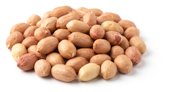 Shelled peanut
Use 100% of the weight. Roast, skin, and grind; creates a thicker, earthier texture typical of Maharashtrian and western Indian curries.


Similar dishes

- Same: Kabargah also uses lamb ribs cooked with milk, cinnamon, green cardamom, cloves, ground ginger, chilli powder, and asafoetida.
- Different: Instead of braising the meat in a mustard oil and yogurt gravy with turmeric and raisins, Kabargah seasons the ribs with fennel seeds before battering and frying them in ghee.
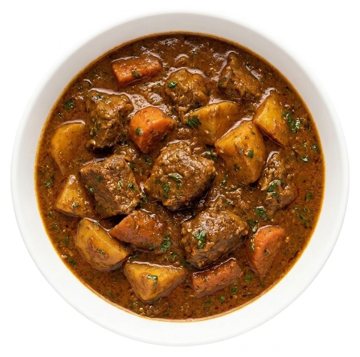
- Same: Both are Kashmiri lamb curries braised in a yogurt-based sauce spiced with turmeric, chili powder, ground ginger, cloves, asafoetida, and Kashmiri garam masala.
- Different: Kaliya uses ghee instead of mustard oil, omits the milk, cinnamon, cardamom, raisins, and cashews, and adds root vegetables, fresh ginger, fennel seeds, sugar, and fresh coriander.

- Same: Kashmiri Kofte shares with this dish a Kashmiri lamb-and-yogurt gravy flavored with ground ginger, ground aniseed, asafoetida, clove, turmeric, chilli powder, and Kashmiri garam masala, and both use mustard oil.
- Different: Kashmiri Kofte uses minced lamb shaped into torpedo meatballs and adds cumin seed, sugar, and vegetable oil, while this dish uses lamb ribs with fat and finishes the yogurt-and-milk gravy with raisins and cashews.
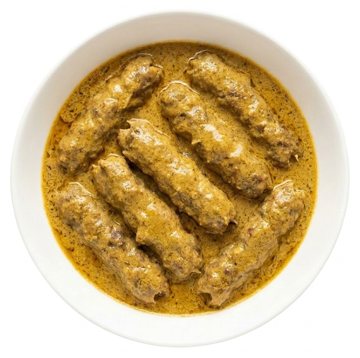
- Same: Both Kashmiri dishes simmer lamb in a sauce of yogurt, milk, and mustard oil seasoned with ginger, asafoetida, cloves, cinnamon, and green cardamom.
- Different: Shyaem uses poached minced lamb cutlets rather than braised bone-in ribs, relies on twice as much yogurt, and adds cumin and black pepper while omitting turmeric, chili powder, raisins, and cashews.