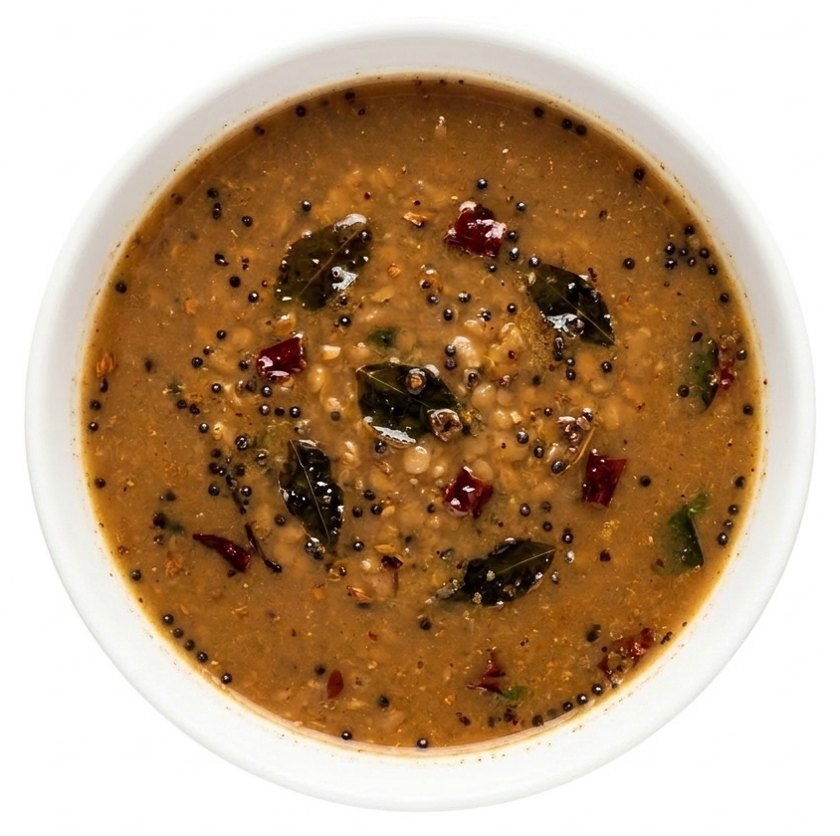
Nimakai Rasam
A vibrant, tangy South Indian lentil broth brightened with fresh lime juice, warming black pepper, and toasted spices. Finished with a sizzled tempering of mustard seeds and curry leaves, it is aromatic and soothing.
Toasting spices
3.6 gToasted dry in the pan (step 3)Rasam spices
7 gStirred into the broth with the dal (step 4)Tempering spices
3.6 gFried in hot oil (step 5)Everything else

Method
- Submerge 200 g masoor dal in 500 ml water and leave to soak for 1 hour.
- Drain the soaked dal and transfer it to a large saucepan with 750 ml water. Bring to a boil and cook for roughly 20 minutes until tender. Drain thoroughly, return the lentils to the pan, and crush them finely with a wooden spatula.
- Warm a dry frying pan or tawa over medium-high heat. Add the toasting spices and stir-fry dry for 30 seconds until fragrant.
- Pour in the juice of 2 limes, then mix in the rasam spices, the mashed dal, 100 g coriander leaf, and salt to taste. Pour in 1 litre water and stir until evenly blended.
- For the tempering, heat 13.5 g vegetable oil in a small pan over medium heat. Add the tempering spices along with 1.2 g curry leaf and fry for about 2 minutes, until the chillies darken slightly.
- Tip the hot tempering into the lentil mixture and put the lid on straight away to lock in the aroma. Bring the rasam to a boil and cook for 3 minutes before taking off the heat.
Don't have something?


 Split mung beans
Use equal weight; cooks down to a creamy, comforting purée in roughly the same 20-25 minutes, with a paler yellow colour.
 Pigeon peas
Use equal weight; needs 15 minutes longer cooking or pressure cooking, producing a slightly grainier, nuttier dal.
 Chana dal
Use equal weight; pre-soak for 1 hour and cook for 20 minutes longer; stays whole rather than breaking down into a silky soup.



 Coriander seeds
Dry-roast lightly in a pan and grind to a fine powder; use equal weight (1:1). Offers a noticeably fresher, brighter citrus note.
 Ground cumin
Use 50% to 75% of the weight. Lacks the floral, citrusy profile of coriander and turns the gravy heavier, earthier, and darker.
 Garam masala
Use 50% of the weight and stir in near the end of cooking. Adds warmth and depth since it contains ground coriander, but introduces stronger spices like clove and cinnamon.


 Black peppercorn
Use 1:1 by weight; pulverise in a spice mill or mortar to a fine powder for immediate, punchy heat.
 Coarsely ground black pepper
Use equal weight; offers the same bite, though it gives a visibly speckled finish and firmer crunch.


 Cumin seed
Dry-roast briefly and grind finely; use equal weight (1:1). Imparts an even punchier, nuttier, toasty aroma than pre-ground cumin.
- Ground coriander
Use equal weight (1:1). Adds mild, lemony sweetness rather than cumin's smoky, earthy bite; curries will taste lighter and less savoury.
 Black cumin seeds
Grind finely; use 60% to 75% of the weight. Produces a darker, more complex, smoky-herbal flavour suited to rich gravies.


 Lemon
Use the same weight; sharper and less floral, so reduce any extra souring slightly.
 Lemon juice
Use about 30 g juice per lime (2 tbsp), strain pips; add at the end for fresh sourness.
 Dried mango powder
Use 1 g amchoor for about 15 g lime juice; add early with spices; gives dry mango sourness, not citrus aroma.


 Garlic powder
Use equal weight (1:1). Behaves virtually identically, dissolving seamlessly into dry rubs or wet gravies.
 Garlic paste
Use 300% to 400% of the weight (e.g. 3–4 g paste for 1 g ground). Sauté in oil to cook off the raw moisture; imparts a fresher, sharper punch.
 Garlic
Finely mince or grate fresh cloves; use 300% to 400% of the weight. Fry gently in oil early in the cooking process to mellow the pungency.


 Dried kashmiri chilli
Use equal weight whole. Fry in hot oil or ghee as tempered spice; gives a richer red colour with slightly milder heat.
 Red chilli powder
Use 50% to 70% of the weight. Stir into the oil with ground spices; distributes heat evenly throughout the dish without whole chilli skins.


- Garlic powder
Use double the weight. Stir into hot oil just before adding wet ingredients; mimics the allium savoury background without the sulphurous edge.
- Garlic paste
Use 2 g for every 0.5 g of asafoetida. Sauté in oil until the raw smell clears; adds moisture and sweet allium depth.


 Peanut oil
Use 1:1 by weight. Handles high-heat frying identically and introduces a very subtle, pleasant nuttiness.
 Ghee
Use 1:1 by weight. Yields a much richer, authentic aroma and a glossy, heavier mouthfeel.
 Mustard oil
Use 1:1 by weight. Heat until smoking, then cool slightly before cooking to temper its intensely pungent, sharp mustard kick.


 Black mustard seed
Use the same weight. The seeds are smaller and hotter; fry in hot oil until they pop, about 20–30 seconds, and reduce the heat if they darken too fast. The dish will be a little sharper.
 Yellow mustard seeds
Use the same weight. They are milder and larger; fry a few seconds longer until they pop. The finished dish will have less pungency.
 Ground mustard seed
Use 70% of the weight of whole seed, added with the other ground spices rather than fried whole. You lose the popping texture and the heat comes through more evenly.


 Bay leaf
Fry 1 bay leaf for every 5 curry leaves in hot oil; imparts a warm, woodsy background note, but misses the citrus-sulphury punch entirely.
 Lime juice
Add a small squeeze (about 5 ml per sprig of curry leaves) right before serving; provides sharp citrus top notes without the toasty, herbal aroma.

Similar dishes
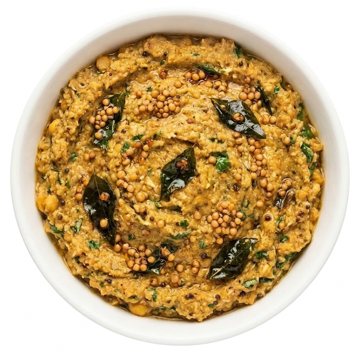
- Same: Both dishes use lentils tempered in vegetable oil with mustard seeds, curry leaves, and asafoetida, alongside fresh coriander leaves.
- Different: Chenigapappu Chutney is a thick ground condiment made from roasted chana dal, fresh coconut, ginger, and green chillies, rather than a boiled masoor dal broth spiced with black pepper, cumin, garlic, and dried red chillies.

- Same: Both broths are built on masoor dal seasoned with black pepper, cumin, coriander, asafoetida, dried red chillies, and a mustard seed and curry leaf tempering.
- Different: Masoor Pappu Charu sours the soup with tamarind extract instead of lime juice, adds ghee, turmeric, and a large quantity of onions, and omits garlic while using far less dal.
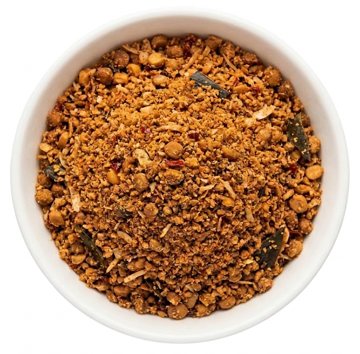
- Same: Molgai Podi shares the use of lentils, dried red chillies, curry leaves, asafoetida, and vegetable oil with this dish.
- Different: Rather than a simmered masoor dal broth tempered with mustard seeds, garlic, and cumin, Molgai Podi is a dry roasted powder made with chana dal and desiccated coconut.

- Same: Veerakkaikura shares a base of lentils and garlic seasoned with ground cumin and coriander, finished with a tempering of mustard seeds, curry leaves, and dried red chillies in vegetable oil.
- Different: Instead of a thin masoor dal broth spiced with black pepper and asafoetida, it is a vegetable curry cooked with ribbed gourd, chana dal, tomatoes, turmeric, and fresh green chillies without lime juice.