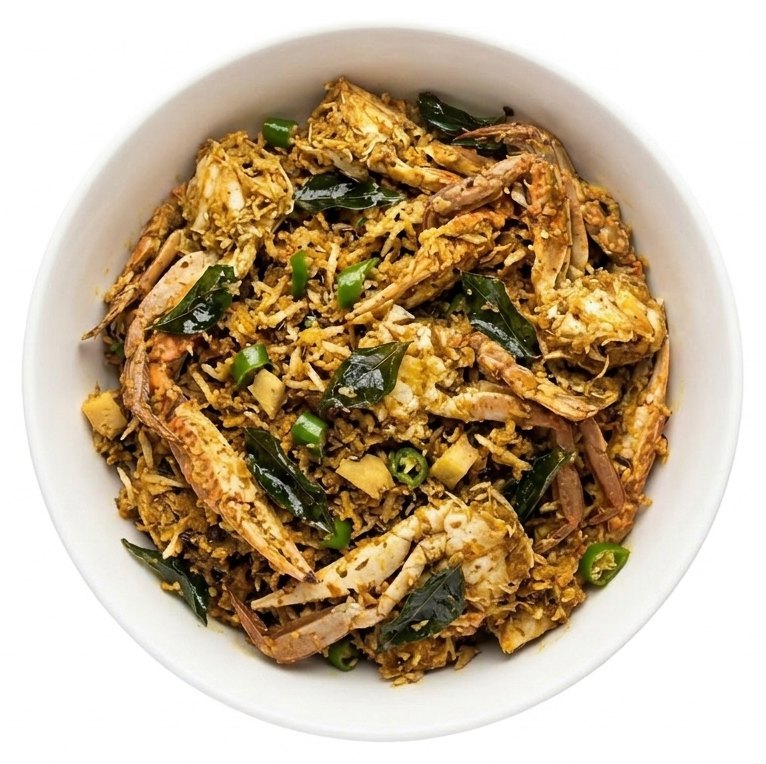
Nejandu Thoran
A dry, fragrant South Indian crab dish coated in freshly grated coconut, aromatic ginger, and tempered curry leaves. It is gently spiced, rich, and intensely savoury with a natural sweetness from the crab.
Paste spices
15 gBlended into the coconut paste (step 2)Everything else

Method
- Sort through 500 g crabmeat and discard any stray pieces of shell.
- Stir the paste spices with 3 tablespoons of water, then transfer to a blender with 800 g coconut, 6 g garlic, and 4 shallots. Process until a coarse paste forms.
- Transfer the crabmeat to a large saucepan and add 12 g green chilli, 14.4 g ginger, the blended paste, and 250 ml of water. Season with salt to taste and simmer over low heat for around 30 minutes, until all liquid has evaporated.
- Heat 1 tablespoon oil in a small frying pan over medium heat. Add 3.8–5 g curry leaf and cook for about 1 minute until they darken, then pour the flavoured oil over the crab and stir thoroughly.
Don't have something?
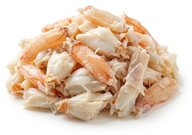
 Crab
Use the same weight, cooked and picked. Same flavour but more work; check for shell.
 White crabmeat
Use the same weight. Sweeter and paler; add near the end so it does not break up.
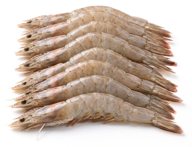 Prawn
Use the same weight, chopped. Firmer and sweeter; cook 2 minutes until just pink.


 Chilli powder
Use 10 to 15% of the weight (about 1/4 teaspoon per chilli); imparts dry pungent heat and reddens the dish without the grassy crunch.
 Dried red chilli
Use 1 dried pod per fresh green chilli; snap in half and temper in hot oil for a deeper, toastier heat.


 Fresh ginger
Use equal weight; scrape off the skin and grate or finely julienne according to the recipe.
 Ginger paste
Use equal weight; stir straight into the sizzling aromatics, taking care as the extra moisture may spit.
 Ground ginger
Use 15 to 20% of the weight; add alongside ground spices, noting it imparts warm, dry heat rather than zesty freshness.


 Vegetable oil
Use the same weight; it is neutral and will not add coconut aroma.
 Groundnut oil
Use the same weight; mild and good for frying, but no coconut flavour.
 Ghee
Use the same weight for richness; it adds a dairy aroma and is not vegan.


 Bay leaf
Fry 1 bay leaf for every 5 curry leaves in hot oil; imparts a warm, woodsy background note, but misses the citrus-sulphury punch entirely.
 Lime juice
Add a small squeeze (about 5 ml per sprig of curry leaves) right before serving; provides sharp citrus top notes without the toasty, herbal aroma.


 Red chilli powder
Use 100% of the weight. Provides direct, sharp heat and red colour in equal measure.
 Kashmiri chilli powder
Use 150% to 200% of the weight if matching colour, but add a pinch of black pepper or hot chilli if you need equivalent fiery heat.
 Cayenne pepper
Use 75% to 100% of the weight. Offers a sharp, clean heat with slightly less earthy depth and less crimson colour.



 Coriander seeds
Dry-roast lightly in a pan and grind to a fine powder; use equal weight (1:1). Offers a noticeably fresher, brighter citrus note.
 Ground cumin
Use 50% to 75% of the weight. Lacks the floral, citrusy profile of coriander and turns the gravy heavier, earthier, and darker.
 Garam masala
Use 50% of the weight and stir in near the end of cooking. Adds warmth and depth since it contains ground coriander, but introduces stronger spices like clove and cinnamon.


- Ground ginger
Use 50% of the weight. Mimics turmeric's warm, earthy, rhizome background, but provides none of the golden-yellow colour.
 Saffron
Steep a tiny pinch (0.1 g per 2 g turmeric) in 2 tbsp warm water; use to match the rich golden hue. Contributes an aristocratic, honeyed floral flavour rather than earthy bitterness.

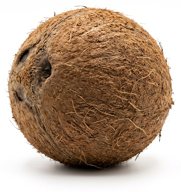
 Fresh coconut
Use equal weight freshly grated or diced. Delivers the identical sweet, milky taste and juicy texture.
 Desiccated coconut
Use 60% of the weight and soak in hot water or milk for 15 minutes before using. The finished dish will be slightly sweeter and less fibrous.
 Dried coconut
Finely grate and use 50% of the weight, soaked in hot water for 20 minutes. Yields a firmer chew and a denser, oilier coconut aroma.



 Garlic paste
Use equal weight. Fry gently in oil or ghee with the ginger; incorporates smoothly into curries without visible minced bits.
 Garlic powder
Use 15% to 20% of the weight (about 1 g for every 5 to 6 g fresh cloves). Whisk into sauces; gives a savoury, toasted garlic flavour without raw pungency.
 Shallot
Use 1.5 times the weight, very finely minced. Sauté until golden; provides savoury allium sweetness, though it lacks garlic's pungent sulphur bite.





- Ground cumin
Use 70% of the weight; add with ground spices or sauce bases rather than hot oil tempering, where it scorches quickly and turns bitter.
 Black cumin seeds
Use equal weight for oil tempering. Delivers an earthy profile with an additional musky, smoky, and slightly bitter edge.
 Fennel seed
Use 60% of the weight for tempering; offers comparable warm aroma, but leans sweet and liquorice-like rather than savoury and earthy.


Similar dishes

- Same: Both dishes season crab with ginger, garlic, green chillies, curry leaves, turmeric, coriander, and chilli powder.
- Different: Nejandu Kari is a saucy gravy cooked in vegetable oil with tomatoes, tamarind, mustard seeds, and fenugreek, omitting the heavy grated coconut and cumin seeds used in this dry dish.

- Same: Chemeen Kari shares seafood cooked with fresh coconut, ginger, curry leaves, green chillies, and a spice base of chilli powder, coriander, and turmeric.
- Different: Chemeen Kari uses prawns in a lightly thickened sauce with shallots, cambodge, and vegetable oil, omitting the garlic and cumin seeds found in this dry crab stir-fry.

- Same: Ga Archa Meen Kari shares with this dish a base of coconut, ginger, garlic, green chillies, curry leaves, turmeric, coriander, and cumin.
- Different: Unlike this dish's dry crab stir-fry loaded with fresh coconut, Ga Archa Meen Kari is a sauced fish curry cooked in vegetable oil with onion, mustard seeds, fenugreek seeds, black pepper, and sour cambodge.

- Same: Kappa Puzhukku shares with this dish a Keralan coconut base, shallots, turmeric, cumin, and curry leaves.
- Different: Kappa Puzhukku uses cassava as its main ingredient and mustard seed tempering with vegetable oil, while this dish uses crabmeat, ginger, garlic, green chilli, chilli powder, coriander, and coconut oil.