
Mangalore Saar
A tangy, aromatic South Indian rasam balanced with sour tamarind, toasted lentils, fresh coconut, and black pepper. It delivers a sharp, warming broth best enjoyed over steamed rice.
Roasting spices
5 gFried with the lentils and curry leaves (step 1)Tempering spices
4.7 gBloomed in hot oil (step 5)Everything else

Method
- Warm 9 g of the 13.5 g vegetable oil in a deep pan or kadhai over medium heat. Add the roasting spices, 8.4 g chana dal, 6.4 g urad dal, and 1 g curry leaf, stirring constantly for 1 to 2 minutes until the lentils turn golden and fragrant. Transfer everything to a bowl.
- Add the remaining 4.5 g vegetable oil to the pan over medium heat. Add 4 g fresh coconut and stir-fry for 2 minutes until lightly browned, then transfer to the bowl with the spiced lentils.
- Add 527 g tamarind extract and salt to taste to the toasted ingredients, then blend in a food processor or small blender until completely smooth.
- Pour the blended paste back into the pan, whisk in 600 ml water, and bring to a boil. Lower the heat and simmer for about 10 minutes until the raw tamarind smell has completely cooked off.
- Heat 9 g vegetable oil in a small pan over medium heat. Add the tempering spices and stir-fry for roughly 1 minute until the mustard seeds crackle and pop.
- Stir the hot tempered oil and spices into the rasam, garnish with 2 g coriander leaf, and serve hot.
Don't have something?


 Peanut oil
Use 1:1 by weight. Handles high-heat frying identically and introduces a very subtle, pleasant nuttiness.
 Ghee
Use 1:1 by weight. Yields a much richer, authentic aroma and a glossy, heavier mouthfeel.
 Mustard oil
Use 1:1 by weight. Heat until smoking, then cool slightly before cooking to temper its intensely pungent, sharp mustard kick.


 Ground cumin
Use 70% of the weight; add with ground spices or sauce bases rather than hot oil tempering, where it scorches quickly and turns bitter.
 Black cumin seeds
Use equal weight for oil tempering. Delivers an earthy profile with an additional musky, smoky, and slightly bitter edge.
 Fennel seed
Use 60% of the weight for tempering; offers comparable warm aroma, but leans sweet and liquorice-like rather than savoury and earthy.


 Mustard seed
Use 50% of the weight, crush or grind. Sharper heat and less maple-bitter; fry briefly in oil before adding.
 Caraway seeds
Use the same weight, crush lightly. Similar bitter-seed note but more aniseed; reduce other sweet spices slightly.
 Ajwain seeds
Use 25–30% of the weight, crush. Much stronger thyme-like flavour; do not overdo.


 Coarsely ground black pepper
Use 75% of the weight. Add midway through simmering; spreads heat evenly through the dish instead of delivering isolated bursts.
 Ground black pepper
Use 50% of the weight. Stir in near the end of cooking; significantly darkens light gravies and provides an immediate, sharp bite.


 Yellow split peas
Use 100% of the weight. Soak for at least 1 hour; takes about 10 minutes longer to cook through and has a marginally earthier flavour.
 Pigeon peas
Use 100% of the weight. Reduces cooking time by about 10 minutes and breaks down softer, giving a smoother consistency rather than distinct grains.
 Black gram
For tempering or tadka only: use 70% of the weight. Browns faster in hot oil, providing a nutty, crunchy bite.


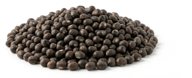 Whole black gram
Use equal weight. Needs longer soaking and cooking; the dark skins impart an earthy flavour and greyish-black hue unless thoroughly rubbed off.
- Chana dal
Use equal weight when tempering (tadka). Provides a comparable nutty, crunchy texture in hot oil, though grains are slightly larger.
 Split mung beans
Use equal weight for batters or dals. Ferments and cooks faster, producing a lighter, less sticky, and less viscous consistency.


 Bay leaf
Fry 1 bay leaf for every 5 curry leaves in hot oil; imparts a warm, woodsy background note, but misses the citrus-sulphury punch entirely.
 Lime juice
Add a small squeeze (about 5 ml per sprig of curry leaves) right before serving; provides sharp citrus top notes without the toasty, herbal aroma.


 Desiccated coconut
Use 50% to 60% of the weight, soaked in equal parts warm water for 15 minutes before grinding. Works well for chutneys, though texture is slightly finer and sweeter.
 Coconut milk
Use 1.2 times the weight in curries. Adds creamy richness and authentic flavour, but makes gravies smoother and eliminates the grated, chewy mouthfeel.



 Tamarind
Use 180% of the weight of compressed tamarind; soak in three times its weight of boiling water for 15 minutes, knead, and strain out the thick pulp.
 Dried mango powder
Use 35% of the weight dissolved in two tablespoons of warm water. Provides sharp tang, though the resulting sauce will be lighter in colour.
 Lemon juice
Use equal weight, added right at the end of cooking. Adds sharp acidity without the deep brown hue or pulpy thickness.


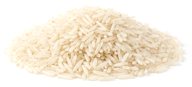 Basmati rice
Use the same weight, rinse and soak for 15 minutes; it cooks firmer and more aromatic.
 Long-grain rice
Use the same weight and similar water; it is less aromatic but behaves much the same.
 Parboiled rice
Use the same weight, soak for 20 minutes and cook with about 1.5 times its volume of water; it takes longer and stays firmer.


 Black mustard seed
Use the same weight. The seeds are smaller and hotter; fry in hot oil until they pop, about 20–30 seconds, and reduce the heat if they darken too fast. The dish will be a little sharper.
 Yellow mustard seeds
Use the same weight. They are milder and larger; fry a few seconds longer until they pop. The finished dish will have less pungency.
 Ground mustard seed
Use 70% of the weight of whole seed, added with the other ground spices rather than fried whole. You lose the popping texture and the heat comes through more evenly.


 Garlic powder
Use double the weight. Stir into hot oil just before adding wet ingredients; mimics the allium savoury background without the sulphurous edge.
 Garlic paste
Use 2 g for every 0.5 g of asafoetida. Sauté in oil until the raw smell clears; adds moisture and sweet allium depth.


Similar dishes
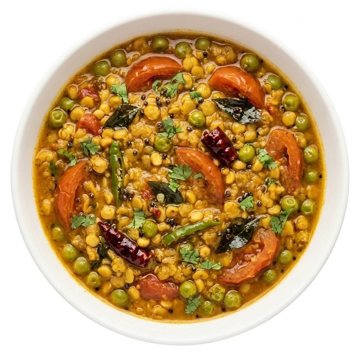
- Same: Both recipes rely on tamarind for sourness and share a roasted spice foundation of cumin, fenugreek, black pepper, chana dal, urad dal, curry leaves, and mustard seeds tempered in vegetable oil.
- Different: Kholamba is a thicker stew that adds toor dal, tomatoes, green peas, coriander seeds, and fresh and dried chillies, whereas this dish includes fresh coconut and stays as a thin broth without whole vegetables.
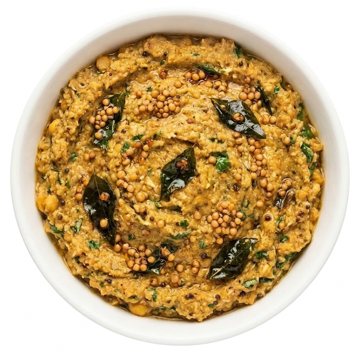
- Same: Chenigapappu Chutney shares chana dal, fresh coconut, vegetable oil, curry leaves, coriander leaf, and a mustard-and-asafoetida tempering with this dish.
- Different: Chenigapappu Chutney is ground into a thick paste centered on chana dal, green chillies, and ginger, omitting the tamarind extract broth, urad dal, cumin, fenugreek, and black pepper used here.

- Same: Kathirikkai Rasam shares a tamarind-based South Indian rasam base with this dish, including 527 g tamarind extract, fresh coconut, chana dal, fenugreek, black peppercorn, mustard seed, asafoetida, curry leaf, coriander leaf, and vegetable oil.
- Different: Kathirikkai Rasam adds 600 g small aubergine, 120 g tomato, 51.6 g toor dal, turmeric, coriander seeds, and dried red chilli, while this dish uses urad dal and has no aubergine, tomato, toor dal, turmeric, coriander seeds, or dried red chilli.

- Same: Both are South Indian broths soured with tamarind extract and seasoned with black peppercorns, cumin, mustard seeds, curry leaves, and asafoetida.
- Different: Masoor Pappu Charu is built on cooked masoor dal, a large amount of onions, ghee, turmeric, and dried red chillies, omitting the fresh coconut, fenugreek, and toasted chana and urad dals used in this dish.