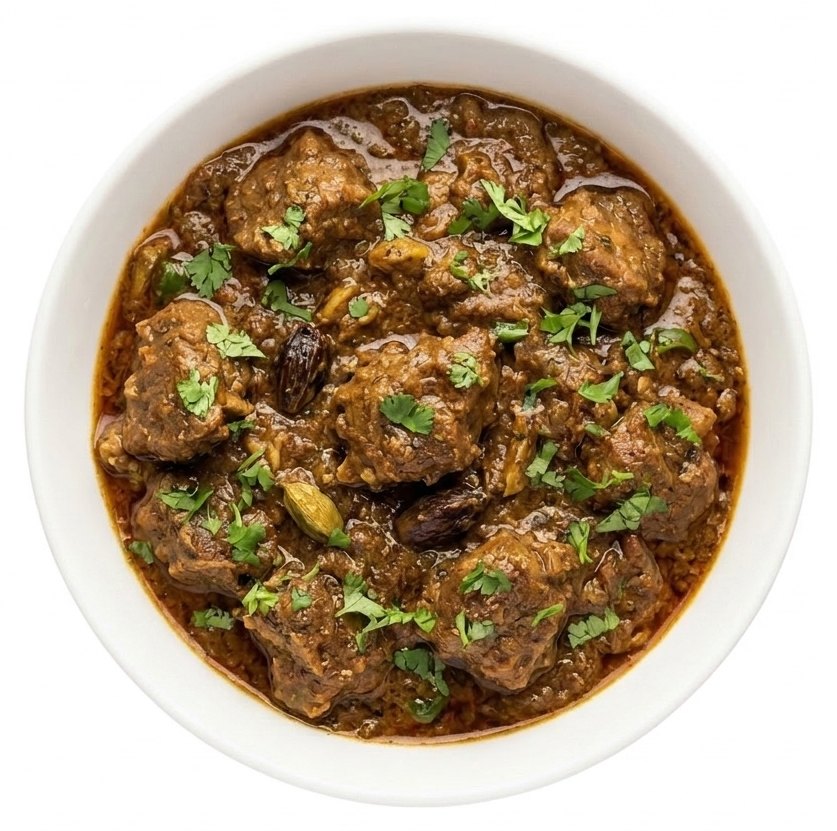
Elayachi Gosht
A fragrant, slow-cooked lamb curry enriched with yoghurt and infused with the contrasting resinous warmth of black and green cardamoms. The finished dish is savoury, mildly fiery, and deeply aromatic.
Whole cardamoms
13 gFried in the ghee at the start (step 1)Yoghurt spice
2.6 gStirred into the whisked yoghurt (step 4)Finishing spices
3.8 gScattered over the tender lamb at the end (step 6)Everything else


Method
- Melt 125 g ghee in a broad, heavy pan over medium heat. Tip in the whole cardamoms and fry for about 1 minute until they begin popping.
- Raise the heat to high, add 1000 g lamb, and sauté for roughly 5 minutes until the exterior is sealed and no longer pink.
- Turn the heat down to medium-low, then stir in 12 g ginger, 500 g onion, and 48–60 g green chilli. Cook for approximately 4 minutes until the onions turn pale golden, then take the pan off the heat.
- In a separate bowl, blend 406 g plain yogurt with the yoghurt spice and salt to taste until smooth.
- Fold the spiced yoghurt into the warm meat, put the pan back over the heat, and bring the liquid close to a simmer. Pour in 1 litre of water, bring near a boil again, then reduce the heat to low, cover with a lid, and simmer gently for 1 to 1½ hours until the lamb is tender.
- Uncover, mix in the finishing spices, and taste to adjust salt if needed. Garnish with 1 g coriander leaf before taking to the table.
Don't have something?


 Unsalted butter
Use 120% of the weight; melt gently over low heat to avoid burning the milk solids, which will yield a softer, creamier richness rather than a nutty aroma.
 Vegetable oil
Use 85% of the weight; holds high cooking temperatures without smoking, but the final dish will lack traditional dairy depth.
 Mustard oil
Use equal weight; heat to smoking point and cool slightly before cooking, bearing in mind it introduces an assertive, pungent edge.


 Green cardamom seed
Use 35 to 40% of the total pod weight; lightly bruise the seeds before frying in oil to release their essential oils.
 Ground green cardamom
Use 20 to 25% of the pod weight (about 1 generous pinch per pod); stir in toward the end of cooking so the delicate floral notes do not dissipate.
 White cardamom pod
Use 1:1 by pod count or weight; crack gently before using, though it is slightly less intensely floral.


 Ground black cardamom
Use 0.5 g of ground seeds for each whole pod. Stir directly into the curry base; delivers identical smoky flavour without woody husks.
- Green cardamom pod
Use equal pod count or weight. Crack slightly and fry whole; tastes sweet, menthol-fresh, and floral rather than dark and smoky.



 Fresh ginger
Use equal weight; scrape off the skin and grate or finely julienne according to the recipe.
 Ginger paste
Use equal weight; stir straight into the sizzling aromatics, taking care as the extra moisture may spit.
 Ground ginger
Use 15 to 20% of the weight; add alongside ground spices, noting it imparts warm, dry heat rather than zesty freshness.






 Chilli powder
Use 10 to 15% of the weight (about 1/4 teaspoon per chilli); imparts dry pungent heat and reddens the dish without the grassy crunch.
 Dried red chilli
Use 1 dried pod per fresh green chilli; snap in half and temper in hot oil for a deeper, toastier heat.


 Yogurt
Use equal weight, whisked thoroughly until smooth before adding to hot dishes to prevent curdling.
 Coconut milk
Use equal weight with 1 teaspoon lemon juice mixed in. Provides rich creaminess in curries, but adds a noticeable coconut flavour.
 Single cream
Use 80% of the weight plus a squeeze of lemon juice for acidity. Enriches sauces nicely, though it is richer and less tangy.


 Red chilli powder
Use 100% of the weight. Provides direct, sharp heat and red colour in equal measure.
 Kashmiri chilli powder
Use 150% to 200% of the weight if matching colour, but add a pinch of black pepper or hot chilli if you need equivalent fiery heat.
 Cayenne pepper
Use 75% to 100% of the weight. Offers a sharp, clean heat with slightly less earthy depth and less crimson colour.


- Green cardamom seed
Grind freshly extracted inner black seeds finely; use equal weight (1:1). Greatly superior aroma with potent eucalyptus and citrus notes.
- Green cardamom pod
Lightly crack whole pods and simmer them in the gravy; use 150% of the weight of ground cardamom. Fish out the pods before serving.
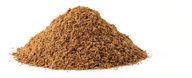 Ground nutmeg
Use 50% of the weight. Delivers warm, sweet aroma, but lacks cardamom's cooling, citrusy top notes.

 Coriander seeds
Dry-roast lightly in a pan and grind to a fine powder; use equal weight (1:1). Offers a noticeably fresher, brighter citrus note.
 Ground cumin
Use 50% to 75% of the weight. Lacks the floral, citrusy profile of coriander and turns the gravy heavier, earthier, and darker.
 Garam masala
Use 50% of the weight and stir in near the end of cooking. Adds warmth and depth since it contains ground coriander, but introduces stronger spices like clove and cinnamon.


Similar dishes

- Same: Dahi ka Dungara Gosht also braises lamb in ghee with an onion, ginger, green chilli, and yogurt base.
- Different: It adds garlic and mint, uses substantially more yogurt and ghee per meat ratio, finishes with charcoal smoke, and omits the cardamoms completely.

- Same: Maas Banjara shares lamb, plain yogurt, ghee, onion, ginger, chilli powder, black cardamom and salt with this dish.
- Different: It adds garlic paste and garlic and dried red chillies, uses less onion and ghee, and lacks this dish's green cardamom, green chilli, ground coriander and coriander leaf.

- Same: Kaleji Kebab shares a foundation of red meat, yogurt, onions, ginger, green chillies, chilli powder, and coriander with this dish.
- Different: Instead of slow-cooking bone-in lamb in a generous yogurt gravy with black and green cardamoms, it deep-fries seasoned minced liver into meatballs spiced with garam masala and ground ginger.

- Same: Dahiwala Meat shares lamb, ghee, onion, yogurt, green and black cardamom, green chilli, chilli powder, ground coriander, salt and coriander leaf with this dish, and both are slow-cooked yoghurt-based lamb curries.
- Different: It adds garlic paste, clove, cinnamon stick and garam masala and uses boneless lamb, less ghee, more yogurt and fewer green chillies, while this dish uses fresh ginger and ground green cardamom and has no garlic, clove, cinnamon or garam masala.