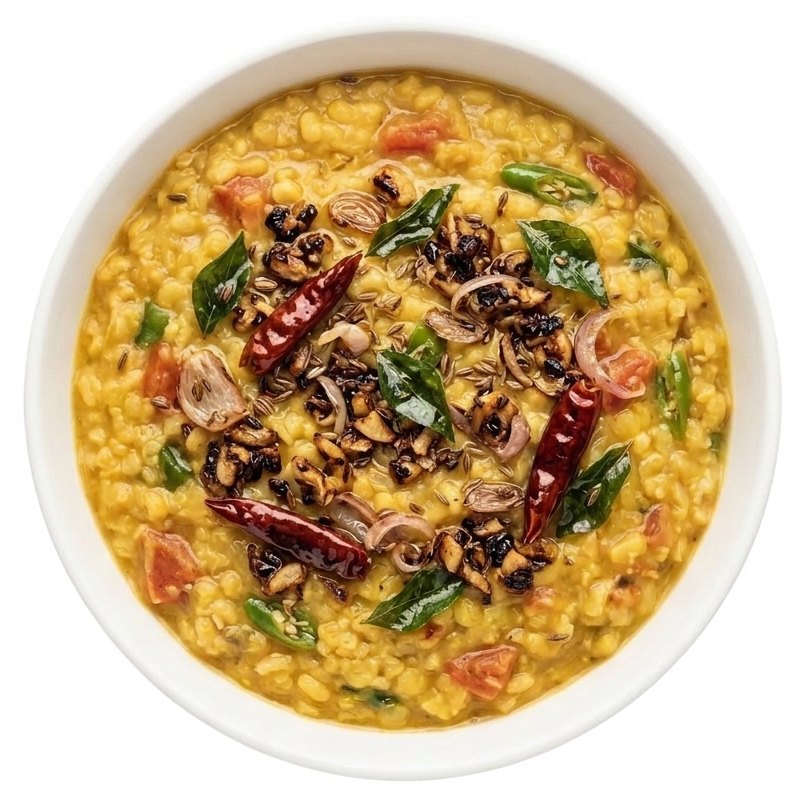
Burnt Garlic Tarka Dal
A thick, soft yellow moong dal topped with a hot garlic and shallot tarka, warm with cumin and dried chilli. It tastes savoury, aromatic and lightly spicy.
Dried chilli for the oil
3 gFried in the oil before the garlic (step 4)Cumin seed for the tarka
6 gAdded with the shallots and aromatics (step 6)Everything else

Method
- Soak 500 g yellow moong dal in water for 20 minutes.
- Drain the dal, put it in a saucepan with 800 ml water and bring to the boil. Simmer for at least 40 minutes, until the dal is fully cooked and has a thick, semi-smooth texture; add more water if it dries out.
- Heat 13.5 g vegetable oil in a separate saucepan.
- Add the dried chilli for the oil and fry for a few seconds.
- Add 15 g garlic and fry until just before it burns.
- Add 80 g banana shallot, ginger to taste, the cumin seed for the tarka, 12 g green chilli, 80 g curry leaf and 240 g tomato.
- Stir over a high heat until the mixture is thoroughly hot and blended.
- Turn the tarka into the dal, season with sea salt to taste and stir to combine.
- Serve hot with chapati or plain rice.
Don't have something?


 Split green mung beans
Use the same weight; slightly earthier and greener, with similar cooking time.
 Split mung beans
Use the same weight; essentially the same dal, so adjust only the colour and slight flavour.
 Red lentils
Use the same weight; cooks faster and softer, and turns pink, so reduce cooking time.


 Peanut oil
Use 1:1 by weight. Handles high-heat frying identically and introduces a very subtle, pleasant nuttiness.
 Ghee
Use 1:1 by weight. Yields a much richer, authentic aroma and a glossy, heavier mouthfeel.
 Mustard oil
Use 1:1 by weight. Heat until smoking, then cool slightly before cooking to temper its intensely pungent, sharp mustard kick.



 Kashmiri chilli powder
Use 1 g powder for every 1.5 g whole dried chilli; whisk with a spoonful of warm water and stir into the masala to provide identical ruby colour and mild heat.
 Dried red chilli
Use 35% to 40% of the weight; discard seeds before tearing into oil to temper. Delivers a much fiercer heat, with significantly less red colouring.



 Garlic paste
Use equal weight. Fry gently in oil or ghee with the ginger; incorporates smoothly into curries without visible minced bits.
 Garlic powder
Use 15% to 20% of the weight (about 1 g for every 5 to 6 g fresh cloves). Whisk into sauces; gives a savoury, toasted garlic flavour without raw pungency.
 Shallot
Use 1.5 times the weight, very finely minced. Sauté until golden; provides savoury allium sweetness, though it lacks garlic's pungent sulphur bite.





 Ginger paste
Use equal weight. Sauté in hot fat until the raw allium smell disappears; slightly wetter, but provides identical warmth and pungency.
 Ground ginger
Use 20% to 25% of the weight (1 g for every 4 to 5 g fresh). Stir into the gravy; adds peppery heat and warmth, though it misses the crisp, zesty kick of raw root.


 Ground cumin
Use 70% of the weight; add with ground spices or sauce bases rather than hot oil tempering, where it scorches quickly and turns bitter.
 Black cumin seeds
Use equal weight for oil tempering. Delivers an earthy profile with an additional musky, smoky, and slightly bitter edge.
 Fennel seed
Use 60% of the weight for tempering; offers comparable warm aroma, but leans sweet and liquorice-like rather than savoury and earthy.


 Chilli powder
Use 10 to 15% of the weight (about 1/4 teaspoon per chilli); imparts dry pungent heat and reddens the dish without the grassy crunch.
- Dried red chilli
Use 1 dried pod per fresh green chilli; snap in half and temper in hot oil for a deeper, toastier heat.


 Bay leaf
Fry 1 bay leaf for every 5 curry leaves in hot oil; imparts a warm, woodsy background note, but misses the citrus-sulphury punch entirely.
 Lime juice
Add a small squeeze (about 5 ml per sprig of curry leaves) right before serving; provides sharp citrus top notes without the toasty, herbal aroma.


 Tomato purée
Use 40% to 50% of the fresh tomato weight mixed with a splash of water. Imparts a deeper red colour, thicker sauce, and slightly sweeter cooked flavour.
 Plain yogurt
Use 60% of the weight, whisked smooth and added on low heat. Provides rich body and sourness, though the gravy becomes paler and creamier.


 Plain boiled rice
Use the same cooked weight; fluff and drain well so it does not make the dish wet.
 Chapati
Use the same cooked weight; about one 30 g chapati per 100 g cooked rice. Warm it and tear or cut as needed.
 Plain boiled rice or roti
Use the same cooked weight; roti is firmer and soaks up less sauce, so keep extra gravy on the side.


Similar dishes
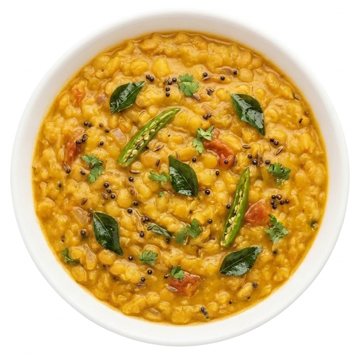
- Same: Tadka Dal shares with this dish a tomato-based dal base, green chilli, garlic, cumin and curry leaf, finished with a vegetable-oil tempering.
- Different: Tadka Dal uses masoor dal instead of yellow moong dal, adds turmeric, mustard seed, onion, sugar and coriander leaf, and lacks this dish’s dried kashmiri chilli, ginger and banana shallot; it is lightly mashed rather than thick and soft.

- Same: Payatham Parappu Dosa shares moong dal, cumin seed, green chilli, curry leaf, ginger, vegetable oil and salt with this dish.
- Different: Payatham Parappu Dosa is a fermented rice-and-moong batter cooked as crisp crêpes and adds fenugreek and coriander leaf, while this dish is simmered moong dal with tomato, garlic, shallot and dried Kashmiri chilli tarka.

- Same: Both are soft yellow dal topped with a hot garlic tarka and include tomato, green chilli, cumin and curry leaf.
- Different: Hyderabadi Khatti Dal uses toor dal and tamarind paste plus mustard seed and turmeric, while this dish uses moong dal, banana shallot, ginger and dried Kashmiri chilli and has no tamarind.

- Same: Ankur ka Raita shares green chilli, cumin seed and salt with this dish, and both use mung beans in different forms.
- Different: Ankur ka Raita is a yogurt-based side with raw mung bean sprouts, onion, sugar and coriander leaf, while this dish is a cooked yellow moong dal with oil, garlic, banana shallot, tomato, ginger, curry leaf and dried Kashmiri chilli.