Indian cooking
Indian cooking / Dishes / Payatham Parappu Dosa
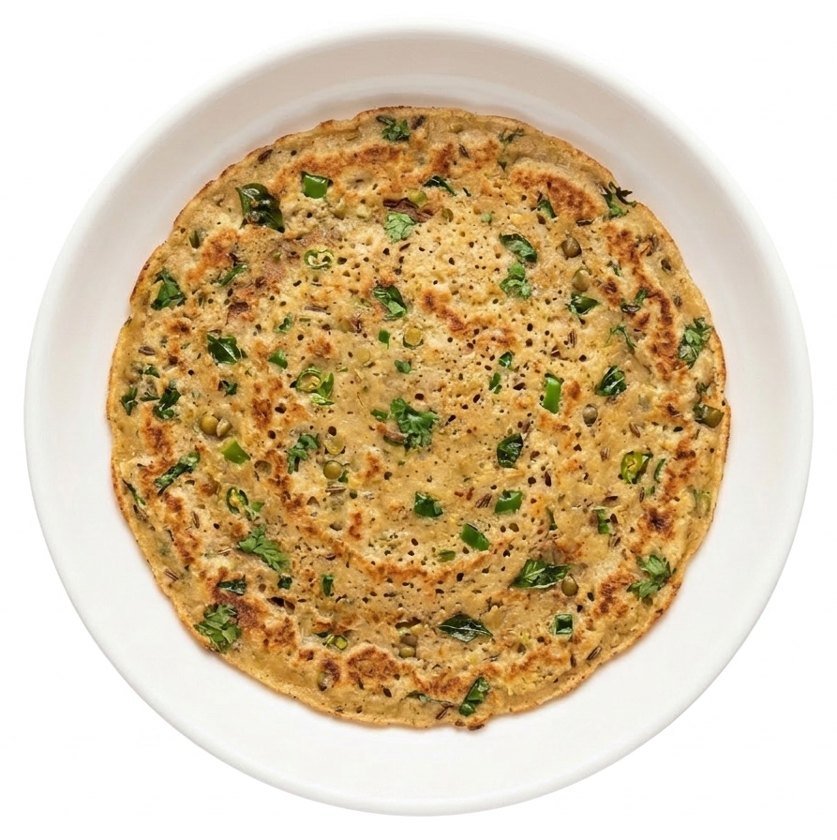
Payatham Parappu Dosa (Green Lentil Pancakes)

Payatham Parappu Dosa

Green Lentil Pancakes
Vegetarian●●●Origin AndhraPrep 30 minutes, plus soaking and fermenting timeCook 40–45 minutes

Crisp, savoury South Indian crêpes made from fermented rice and moong dal, flavoured with fresh herbs, ginger, and warming spices.

Soaking spices

7 gSoaked and blended with the dal (step 1)
01
7 g2 teaspoons
spice
Keep whole to soak alongside the lentils.

Batter spices

2.1 gMixed into the fermented batter (step 4)
01
2.1 g1 teaspoon
spice
Keep whole to fold into the batter.

Everything else

01
187 g1 cup
grain
02
48 g4 tablespoons
legume
03
Ginger · Adrakpeeled and grated
4.8 g1 cm
aromatic
04
Green chilli · Hari Mirchde-seeded and finely chopped
18–24 g3–4 chillies
vegetable
05
~1 g1 sprig
herb
06
1–2 g1–2 tablespoons
herb
07
Vegetable oil · Telfor shallow-frying
to taste
oil/fat
08
to taste
salt

Method

  1. Submerge 1 cup rice in a bowl of water. In a second bowl, cover 4 tablespoon moong dal and the soaking spices in water. Leave both to soak for 6 hours.
  2. Drain the soaked rice and transfer it to a blender. Process until completely smooth, trickling in 125 ml water as needed, then scrape into a clean mixing bowl.
  3. Drain the dal and fenugreek seeds, then blend them with 3 tbsp water until fine and creamy. Stir this lentil paste into the ground rice along with salt to taste. Cover and leave to ferment for 8 hours.
  4. Stir 4.8 g ginger, 18–24 g green chilli, 1 g curry leaf, 1–2 g coriander leaf, and the batter spices into the fermented mixture. If needed, thin with a splash of water to achieve a thick, pourable consistency.
  5. Set a flat griddle or frying pan over high heat until a few flicked droplets of water immediately sizzle and evaporate. Turn down the heat and wipe the surface with a bare film of vegetable oil.
  6. Pour a ladle of batter onto the middle of the pan and quickly swirl outward with the bottom of the ladle to produce a 15 cm (6 inch) circle. Trickle 1 tsp vegetable oil around the circumference, increase the heat, and fry for roughly 2 minutes until the underside is deep golden.
  7. Gently flip the pancake and fry the second side for another 2 minutes until browned. Transfer to a plate, keep warm, and cook the remaining dosas in the same manner.

Don't have something?

Parboiled rice
  • Long-grain rice

    Use the same weight; it cooks softer and faster, so use about 10–15% less water and check earlier.

  • Basmati rice

    Use the same weight; it is less stout and cooks faster, so reduce water and simmer gently.

  • Rice

    Use the same weight; any plain rice will work but will not have the firm bite of parboiled rice.

Moong dal
  • Red lentils

    Use equal weight. It cooks in about the same time and breaks down to a similar soft, creamy consistency, though the colour will be slightly pinkish-orange.

  • Pigeon peas

    Use equal weight. Requires longer soaking and cooking time, and produces a slightly earthier, denser dal.

Fenugreek seed
  • Mustard seed

    Use 50% of the weight, crush or grind. Sharper heat and less maple-bitter; fry briefly in oil before adding.

  • Caraway seeds

    Use the same weight, crush lightly. Similar bitter-seed note but more aniseed; reduce other sweet spices slightly.

  • Ajwain seeds

    Use 25–30% of the weight, crush. Much stronger thyme-like flavour; do not overdo.

Ginger
  • Fresh ginger

    Use equal weight; scrape off the skin and grate or finely julienne according to the recipe.

  • Ginger paste

    Use equal weight; stir straight into the sizzling aromatics, taking care as the extra moisture may spit.

  • Ground ginger

    Use 15 to 20% of the weight; add alongside ground spices, noting it imparts warm, dry heat rather than zesty freshness.

Green chilli
  • Chilli powder

    Use 10 to 15% of the weight (about 1/4 teaspoon per chilli); imparts dry pungent heat and reddens the dish without the grassy crunch.

  • Dried red chilli

    Use 1 dried pod per fresh green chilli; snap in half and temper in hot oil for a deeper, toastier heat.

Curry leaf
  • Bay leaf

    Fry 1 bay leaf for every 5 curry leaves in hot oil; imparts a warm, woodsy background note, but misses the citrus-sulphury punch entirely.

  • Lime juice

    Add a small squeeze (about 5 ml per sprig of curry leaves) right before serving; provides sharp citrus top notes without the toasty, herbal aroma.

Coriander leaf
  • Coriander

    Use equal weight finely chopped; this is the exact same fresh herb.

  • Mint

    Use half the weight finely chopped; provides vibrant green freshness, though the flavour profile becomes noticeably cooler and sharper.

Cumin seed
  • Ground cumin

    Use 70% of the weight; add with ground spices or sauce bases rather than hot oil tempering, where it scorches quickly and turns bitter.

  • Black cumin seeds

    Use equal weight for oil tempering. Delivers an earthy profile with an additional musky, smoky, and slightly bitter edge.

  • Fennel seed

    Use 60% of the weight for tempering; offers comparable warm aroma, but leans sweet and liquorice-like rather than savoury and earthy.

Vegetable oil
  • Peanut oil

    Use 1:1 by weight. Handles high-heat frying identically and introduces a very subtle, pleasant nuttiness.

  • Ghee

    Use 1:1 by weight. Yields a much richer, authentic aroma and a glossy, heavier mouthfeel.

  • Mustard oil

    Use 1:1 by weight. Heat until smoking, then cool slightly before cooking to temper its intensely pungent, sharp mustard kick.

Similar dishes

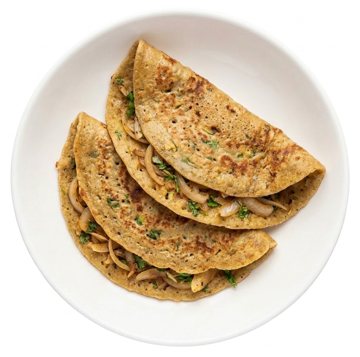
Pesarattu
Spicy Lentil Pancakes
Pesarattu tastes more savoury and pungent from the warm garam masala and cooked onions, lacking the mild sourness of this dish's fermented batter.
  • Same: Both are savoury South Indian moong dal pancakes griddled in vegetable oil and seasoned with fresh ginger, green chillies, cumin, and coriander.
  • Different: Pesarattu uses an unfermented moong dal batter topped with a spiced onion filling and garam masala, omitting the fermented rice, fenugreek seeds, and curry leaves found in this dish.
Tali Mangori
Fried Moong Dal Dumplings
Tali Mangori tastes richer and more sour from its tomato-ginger gravy and deep-fried dumplings, while this dish is crisp and tangy from fermentation with herbs and warming spices.
  • Same: Tali Mangori shares moong dal, salt, and coriander leaf with this dish, and both are savoury.
  • Different: Tali Mangori lacks this dish's rice, fenugreek, curry leaf, cumin, green chilli, and fresh ginger; it uses mustard oil for deep-frying and a ginger-tomato gravy, while this dish is a fermented rice-and-moong-dal batter cooked as crêpes in vegetable oil.
Ankur ka Raita
Mung Bean Sprout Raita
Ankur ka Raita is cool, creamy, and mildly sweet and tangy, contrasting with the warm, crisp, and savoury profile of this dish.
  • Same: Ankur ka Raita shares mung dal, cumin seeds, fresh green chillies, coriander leaves, and salt with this dish.
  • Different: Ankur ka Raita is an uncooked, yogurt-based dish mixed with sprouted beans, raw onions, chilli powder, and sugar, whereas this dish is made by griddling a ground lentil batter in vegetable oil with ginger, fenugreek, and curry leaves.
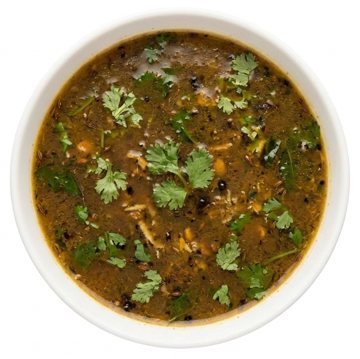
Mangalore Saar
Rasam from Mangalore
Mangalore Saar tastes sharply sour, peppery and warming as a thin broth, whereas this dish is crisp and savoury with herb and chilli notes.
  • Same: Mangalore Saar shares fenugreek, cumin, curry leaf, coriander leaf, vegetable oil and salt with this dish, and both are South Indian.
  • Different: Mangalore Saar is a tamarind-based broth with toasted chana dal, urad dal, fresh coconut, black pepper and a mustard-asafoetida tempering, while this dish is a fermented rice-and-moong-dal crêpe batter flavoured with ginger and green chilli.