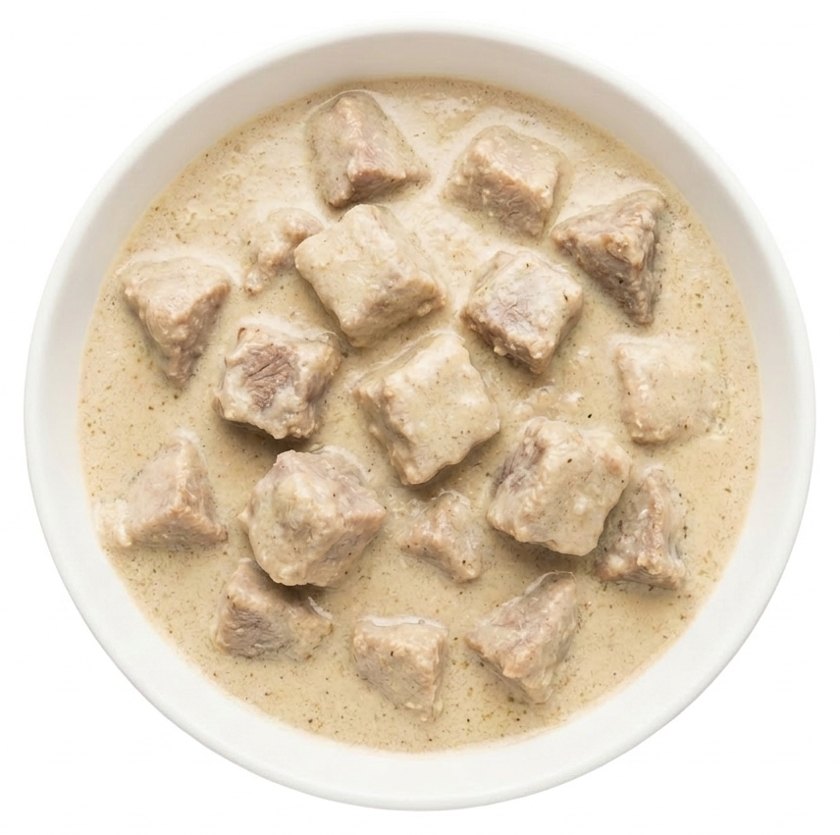
Safed Maas
A pale, luxurious Rajasthani lamb curry cooked in an aromatic, rich sauce of ground almonds, poppy seeds, milk, and khoya. It is mildly spiced, creamy, and gently scented with aniseed and vetiver.
Marinade spices
10 gStirred into the yogurt marinade (step 3)Everything else

Method
- Blend 10 blanched almonds with a small splash of water until completely smooth, then set aside. Pound or blend 6 tsp poppy seeds with a little water into a paste. Separately, grind 12 g fresh coconut until fine.
- Bring 1 litre of water to a rolling boil in a large pot. Add 1000 g lamb cubes and boil for 5 minutes to remove the colour from the meat, then drain thoroughly and transfer to a bowl.
- Whisk 75 g plain yogurt with the marinade spices and salt to taste. Coat the drained lamb thoroughly in this mixture, cover, and refrigerate for 2 to 3 hours.
- Heat 250 g ghee or vegetable oil in a large, heavy saucepan over medium heat. Tip in the marinated lamb and stir-fry for 5 minutes.
- Add a splash of water, followed by the almond paste, poppy seed paste, ground coconut, 2 tbsp khoya, and 129 g milk. Stir thoroughly to combine, then simmer gently over low heat for 1 to 1½ hours, until the meat is tender and the fat has separated to the surface.
- Fold in 45.9 g lemon juice and 2 tsp ground aniseed, then drizzle over 2 tbsp khus essence just before removing from the heat.
Don't have something?


 Cashew nut
Use equal weight. Soak in warm water and grind to a paste or fry identically; yields a slightly creamier and sweeter sauce.
 Shelled peanut
Use equal weight. Lightly roast, skin, and grind; introduces a heavier body and a pronounced roasted-nut aroma.


- Cashew nut
Use equal weight. Soak in warm water for 20 minutes and grind to a smooth paste; produces an even creamier, slightly richer gravy than poppy seeds.
 White sesame seed
Use equal weight. Soak and grind finely; provides similar thickening and body with a slightly nuttier, faintly bitter edge.
- Almond
Use equal weight. Blanch, peel, and grind finely with a splash of water; lends a velvety body and gentle sweetness to gravies.


 Desiccated coconut
Use 50% to 60% of the weight, soaked in equal parts warm water for 15 minutes before grinding. Works well for chutneys, though texture is slightly finer and sweeter.
 Coconut milk
Use 1.2 times the weight in curries. Adds creamy richness and authentic flavour, but makes gravies smoother and eliminates the grated, chewy mouthfeel.






 Yogurt
Use equal weight, whisked thoroughly until smooth before adding to hot dishes to prevent curdling.
- Coconut milk
Use equal weight with 1 teaspoon lemon juice mixed in. Provides rich creaminess in curries, but adds a noticeable coconut flavour.
 Single cream
Use 80% of the weight plus a squeeze of lemon juice for acidity. Enriches sauces nicely, though it is richer and less tangy.


 Red chilli powder
Use 100% of the weight. Provides direct, sharp heat and red colour in equal measure.
 Kashmiri chilli powder
Use 150% to 200% of the weight if matching colour, but add a pinch of black pepper or hot chilli if you need equivalent fiery heat.
 Cayenne pepper
Use 75% to 100% of the weight. Offers a sharp, clean heat with slightly less earthy depth and less crimson colour.


 Fresh ginger
Use equal weight; peel and grate very finely on a microplane or pound to a fine paste in a mortar.
 Ginger
Use equal weight; mince finely and crush with the flat of a knife before frying.
 Ground ginger
Use 20% of the weight; add directly with the dry spice powders, though it yields an earthier, less pungent profile.


 Peanut oil
Use equal weight; handles high tempering heat well and keeps flavours neutral.
 Butter
Use equal weight; cook over gentle heat to prevent browning the milk solids too quickly.


 Milk powder
For 100 g khoya use 40 g milk powder whisked with 60 g full cream milk; simmer to a thick paste. Stir often.
 Condensed milk
Use 70% of the weight for khoya and cut sugar by about 30%. Add 10 g milk powder to thicken if needed.
 Full cream milk
For 100 g khoya use about 500 g full cream milk; reduce slowly, stirring, until thick. Takes much longer.



 Whole milk
Use equal weight; provides the standard rich dairy fat and body expected in creamy Indian bases.
- Single cream
Dilute 3 parts cream with 1 part water to match the weight; yields a richer, glossier gravy that resists curdling.
- Plain yogurt
Whisk thoroughly and use equal weight; adds extra body and a mild pleasant acidity, best added off the heat.


 Lime juice
Use equal volume or weight; delivers almost identical sharp acidity with a faintly more aromatic, bitter-edged profile.
 Dried mango powder
Use 25% of the weight (about 1 g amchoor for 4 g juice); provides clean fruity tartness without thinning the sauce.
 White vinegar
Use 75% of the volume; gives direct sourness without any citrus floral fragrance.



 Fennel seed
Use equal weight. Fry or grind as directed; slightly greener and less intensely sweet, but the closest liquorice-adjacent match.
 Star anise
Use 50% of the weight. Grind finely or infuse whole in simmering liquid and discard before serving; delivers a stronger, woodier liquorice profile.


 Screwpine water
Use 5-10 times the weight, added off the heat. Floral but not woody; taste before adding more.
 Rosewater
Use 5-10 times the weight, off the heat. Rosy and softer than khus.
 Rose syrup
Use 3-5 times the weight and reduce sugar. Sweet and floral, not earthy.


Similar dishes
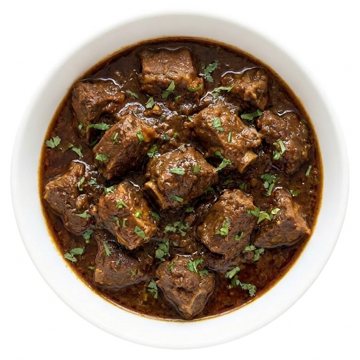
- Same: Chippa Gosht shares the same base of lamb seasoned with chilli powder, ginger paste, and lemon juice.
- Different: Chippa Gosht is cooked in a clay pot with garlic and turmeric, but omits the milk, yogurt, khoya, almonds, and coconut used in this dish.

- Same: Both dishes use a base of lamb seasoned with ginger paste and salt.
- Different: Aso Adin is a minimalist, fat-free stew cooked with green chillies that omits the ghee, milk, khoya, yogurt, almonds, coconut, and lemon juice used in this dish.

- Same: Both dishes slow-cook a kilogram of lamb in ghee using yogurt, ginger, and chilli powder.
- Different: Maas Banjara incorporates onions, garlic, dried red chillies, and black cardamom into a heavier yogurt base, omitting this dish's milk, khoya, almonds, coconut, and lemon juice.

- Same: Kofta Curry shares with this dish lamb, yogurt, poppy seed, aniseed, chilli powder, ginger, and a creamy gravy cooked with ghee or oil.
- Different: Kofta Curry uses pan-fried lamb meatballs, onion, dried coconut, egg, turmeric, saffron, clove, cardamom, and cinnamon, while this dish uses ground almonds, fresh coconut, milk, khoya, lemon juice, and khus essence.