
Chippa Gosht
Tender chunks of lamb slow-cooked in an earthenware pot with warming aromatics and finished with a sharp squeeze of citrus.
Marinade aromatics
25 gCombined with salt to coat the lamb (step 1)Everything else


Method
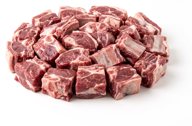
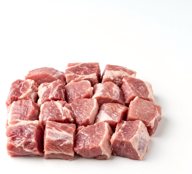
- In a shallow dish, stir together the marinade aromatics with salt to taste. Add 1000 g lamb, tossing thoroughly to coat every piece evenly. Cover and leave to marinate in the refrigerator for 1½ hours.
- Set an earthenware pot or heavy casserole over low-medium heat and warm 114 g vegetable oil. Tip in the marinated meat and cook for about 15 minutes, stirring occasionally, until all released liquid has evaporated.
- Pour in 125 ml of water, cover tightly, and gently simmer for 1 to 1½ hours until the lamb is fully tender, splashing in a small amount of additional water if the pot turns dry.
- Stir through 15.3 g lemon juice and scatter over 1 g chopped coriander leaf just before serving.
Don't have something?


 Ground ginger
Use 50% of the weight. Mimics turmeric's warm, earthy, rhizome background, but provides none of the golden-yellow colour.
 Saffron
Steep a tiny pinch (0.1 g per 2 g turmeric) in 2 tbsp warm water; use to match the rich golden hue. Contributes an aristocratic, honeyed floral flavour rather than earthy bitterness.


 Red chilli powder
Use 100% of the weight. Provides direct, sharp heat and red colour in equal measure.
 Kashmiri chilli powder
Use 150% to 200% of the weight if matching colour, but add a pinch of black pepper or hot chilli if you need equivalent fiery heat.
 Cayenne pepper
Use 75% to 100% of the weight. Offers a sharp, clean heat with slightly less earthy depth and less crimson colour.


 Fresh ginger
Use equal weight; peel and grate very finely on a microplane or pound to a fine paste in a mortar.
 Ginger
Use equal weight; mince finely and crush with the flat of a knife before frying.
- Ground ginger
Use 20% of the weight; add directly with the dry spice powders, though it yields an earthier, less pungent profile.


 Garlic
Use equal weight; crush or finely grate to a smooth pulp to replicate the same fresh, pungent moisture in your base gravy.
 Garlic powder
Use 20 to 25% of the weight; mix with a teaspoon of water before adding to oil so it does not burn, noting it lacks the fresh bite.


 Green papaya paste
Use the same weight; blend peeled green papaya. Very close, but may be slightly weaker as a tenderiser.
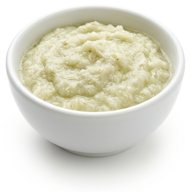 Unripe papaya paste
Use the same weight; blend peeled unripe papaya. Similar, with a little more sweetness.
 Raw papaya
Use the same weight; peel, deseed and blend to a paste. Fresher and stronger than a stale paste.




 Peanut oil
Use 1:1 by weight. Handles high-heat frying identically and introduces a very subtle, pleasant nuttiness.
 Ghee
Use 1:1 by weight. Yields a much richer, authentic aroma and a glossy, heavier mouthfeel.
 Mustard oil
Use 1:1 by weight. Heat until smoking, then cool slightly before cooking to temper its intensely pungent, sharp mustard kick.


 Lime juice
Use equal volume or weight; delivers almost identical sharp acidity with a faintly more aromatic, bitter-edged profile.
 Dried mango powder
Use 25% of the weight (about 1 g amchoor for 4 g juice); provides clean fruity tartness without thinning the sauce.
 White vinegar
Use 75% of the volume; gives direct sourness without any citrus floral fragrance.


Similar dishes

- Same: Bhuna Keema uses the same base of lamb cooked in vegetable oil with turmeric, chilli powder, ginger, garlic, coriander leaf, and lemon juice.
- Different: Bhuna Keema uses dry-fried ground lamb instead of clay-pot-stewed meat chunks, incorporating a large amount of sliced onions, fresh green chillies, mint, and twice as much lemon juice.

- Same: Bhuna Gosht (I) also slow-cooks lamb in vegetable oil using ginger paste, garlic paste, ground turmeric, and chilli powder.
- Different: It adds a large base of onions and reduces the sauce dry rather than cooking in a clay pot with lemon juice and fresh coriander.

- Same: Tala Gosht also features lamb seasoned with ginger paste, garlic paste, ground turmeric, and chilli powder cooked in vegetable oil.
- Different: Tala Gosht is pan-fried in twice as much vegetable oil rather than slow-cooked in an earthenware pot, and it omits the lemon juice and coriander leaf.

- Same: Rarha Meat shares lamb, turmeric, chilli powder, ginger paste, garlic paste, salt and coriander leaf with this dish, and both are slow-cooked lamb dishes.
- Different: Rarha Meat uses yogurt as the souring agent, ghee or vegetable oil, whole cinnamon, black cardamom and bay leaf, plus onion, tomato and garam masala; it lacks this dish's lemon juice, raw papaya paste and clay-pot cooking.