
Lassi Masalewali
A cooling, savoury yoghurt drink spiked with green chilli, warm ground spices, and rock salt. It is tangy, thirst-quenching, and textured with crisp toasted nuts and fragrant dried herbs.
Ground spices
2.8 gWhisked into the yoghurt (step 3)Everything else


Method
- Warm a dry frying pan over medium heat, add 1 tablespoon almonds and 1 tablespoon pistachios, and toast for 2 to 3 minutes until lightly browned.
- Whisk 517 g yogurt together with 250 g water in a large jug until completely smooth.
- Add the ground spices, 0.3 g rock salt, 12 g green chilli, and salt to taste, then whisk thoroughly until evenly distributed.
- Pour into tall glasses and garnish with the toasted nuts, 4 g fresh coriander, 0.3 g dried mint, and rose petals to taste.
Don't have something?
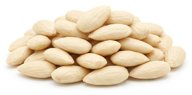
 Almond
Use the same weight; cover with hot water for 5 minutes, then slip off the skins.
 Blanched split almond
Use the same weight; they are already peeled and split, so use whole or chop as needed.
 Cashew nut
Use the same weight; soak in warm water before grinding. They are softer and richer, so the dish will be creamier.


 Pistachio
Use the same weight; blanch and peel for a bright paste. This is the closest match.
- Almond
Use the same weight; blanch and peel. It is firmer, so grind a little longer and add a drop of milk if needed.
- Cashew nut
Use the same weight; soak in hot water for 15 minutes. It is softer and sweeter, so reduce sugar slightly.


 Plain yogurt
Use 100% of the weight. Whisk thoroughly until smooth before stirring into warm gravies to prevent curdling.
 Single cream
Use 90% of the weight combined with 10% lemon juice to replicate the lactic tang and rich body in marinades and curries.


 Ginger paste
Use 300% to 400% of the weight (e.g. 3–4 g paste for 1 g ground). Fry in oil alongside onions; provides a juicy, pungent kick rather than a dry, baking-spice heat.
 Fresh ginger
Peel and grate finely; use 300% to 400% of the weight. Add to the hot oil early; delivers bright, peppery warmth rather than the mellow, woody heat of dry ginger.
 Ground mace
Use 50% of the weight. Imparts a warm, spicy undertone in rich gravies, but lacks ginger's fiery, sharp zest.


 Cumin seed
Dry-roast briefly and grind finely; use equal weight (1:1). Imparts an even punchier, nuttier, toasty aroma than pre-ground cumin.
 Ground coriander
Use equal weight (1:1). Adds mild, lemony sweetness rather than cumin's smoky, earthy bite; curries will taste lighter and less savoury.
 Black cumin seeds
Grind finely; use 60% to 75% of the weight. Produces a darker, more complex, smoky-herbal flavour suited to rich gravies.


 Black peppercorn
Use 1:1 by weight; pulverise in a spice mill or mortar to a fine powder for immediate, punchy heat.
 Coarsely ground black pepper
Use equal weight; offers the same bite, though it gives a visibly speckled finish and firmer crunch.


 Chilli powder
Use 10 to 15% of the weight (about 1/4 teaspoon per chilli); imparts dry pungent heat and reddens the dish without the grassy crunch.
 Dried red chilli
Use 1 dried pod per fresh green chilli; snap in half and temper in hot oil for a deeper, toastier heat.


 Coriander leaf
Use equal weight, chopped fresh and stirred in off the heat or used as garnish. Matches the citrus-herbal profile identically.
 Mint
Use 40% to 50% of the weight; chop finely and add at the very end. Adds fresh herbal brightness, but shifts the aroma toward cool menthol.


- Mint
Use 3 to 4 times the weight, finely chopped. Stir in towards the very end of cooking; provides a fresher, brighter herbal lift rather than deep, concentrated menthol.
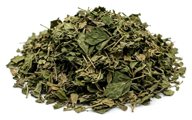 Dried fenugreek leaves
Use equal weight, crushed between your palms. Offers savoury, earthy bitterness rather than cooling mint, but works nicely in marinades and rich gravies.


 Dried rose petals
Use 30–40% of the fresh weight; soak in warm water for 10 minutes before use.
 Pink rose petal
Use the same weight if edible and unsprayed; check for bitterness.
 Rosewater
Use about 1 tsp per 100 g of petals for aroma only; it gives no texture.


Similar dishes

- Same: Namkin Lassi shares a savoury yoghurt base seasoned with ground cumin, black pepper, and salt.
- Different: It uses more cumin but omits the fresh green chilli, ground ginger, and dried mint included in this dish.
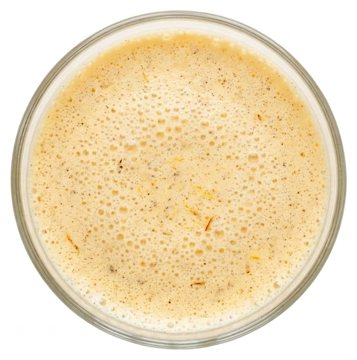
- Same: Meethi Lassi shares the same blended yogurt base as this dish.
- Different: It replaces the green chilli, cumin, ginger, black pepper, mint, and salt with granulated sugar, cardamom, rosewater, and saffron.
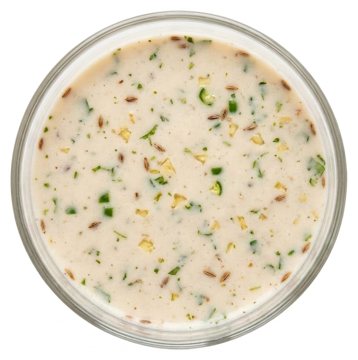
- Same: Mattha/Chaas shares with this dish a chilled yoghurt base flavoured with green chilli, cumin, ginger, coriander, and salt.
- Different: Mattha/Chaas uses Greek yoghurt thinned with water and fresh ginger plus cumin seed, while this dish uses plain yoghurt with ground ginger, ground cumin, black pepper, rock salt, almonds, pistachios, dried mint, and rose petal.

- Same: Burnt Onion Raita and this dish are both savory yogurt preparations made with thick yogurt and salt.
- Different: Burnt Onion Raita uses blackened ground shallots, caster sugar, and sea salt, while this dish uses green chilli, ground cumin, ground ginger, ground black pepper, rock salt, almonds, pistachios, coriander, dried mint, and rose petal and is a drink rather than a relish.