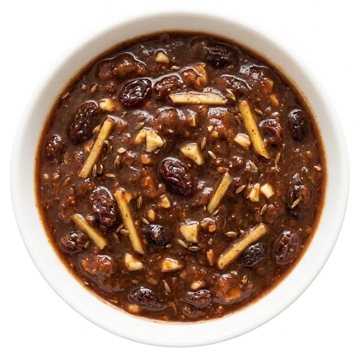
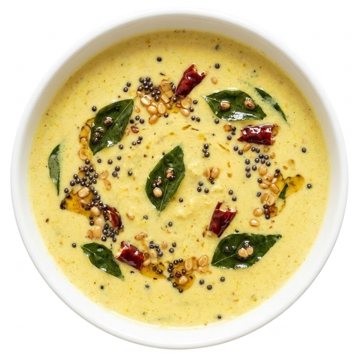
Warm about 15 g of the 54 g vegetable oil in a small frying pan over medium heat. Tip in 40 g fresh coconut and the spices for the coconut paste, stirring constantly for roughly 1 minute until the coconut turns lightly golden, then take off the heat. Transfer the mixture to a blender and process dry until finely ground.
Pour the remaining vegetable oil into a large pan set over medium heat. Add the tempering seeds and fry for about 1 minute until they begin popping. Add 18 g green chilli, 5–7.5 g curry leaf, 10 g fresh ginger and 30 g fresh coconut pieces, cooking for 3 to 4 minutes.
Stir in the ground coconut paste, 15.6 g tamarind extract and salt to taste. Pour in 500 ml water and bring to a boil. Simmer for approximately 15 minutes until the curry thickens to a rich sauce.
Use 50% to 60% of the weight, soaked in equal parts warm water for 15 minutes before grinding. Works well for chutneys, though texture is slightly finer and sweeter.
Use 1.2 times the weight in curries. Adds creamy richness and authentic flavour, but makes gravies smoother and eliminates the grated, chewy mouthfeel.
Steep a tiny pinch (0.1 g per 2 g turmeric) in 2 tbsp warm water; use to match the rich golden hue. Contributes an aristocratic, honeyed floral flavour rather than earthy bitterness.
Use the same weight. The seeds are smaller and hotter; fry in hot oil until they pop, about 20–30 seconds, and reduce the heat if they darken too fast. The dish will be a little sharper.
Use 70% of the weight of whole seed, added with the other ground spices rather than fried whole. You lose the popping texture and the heat comes through more evenly.
Use 20% to 25% of the weight (1 g for every 4 to 5 g fresh). Stir into the gravy; adds peppery heat and warmth, though it misses the crisp, zesty kick of raw root.




 Peanut oil
 Ghee
 Mustard oil



 Desiccated coconut
 Coconut milk


 Dried kashmiri chilli
 Red chilli powder


 Ground ginger
 Saffron


 Black mustard seed
 Yellow mustard seeds
 Ground mustard seed


 Chilli powder


 Bay leaf
 Lime juice


 Ginger paste


 Grated coconut


 Tamarind
 Dried mango powder
 Lemon juice